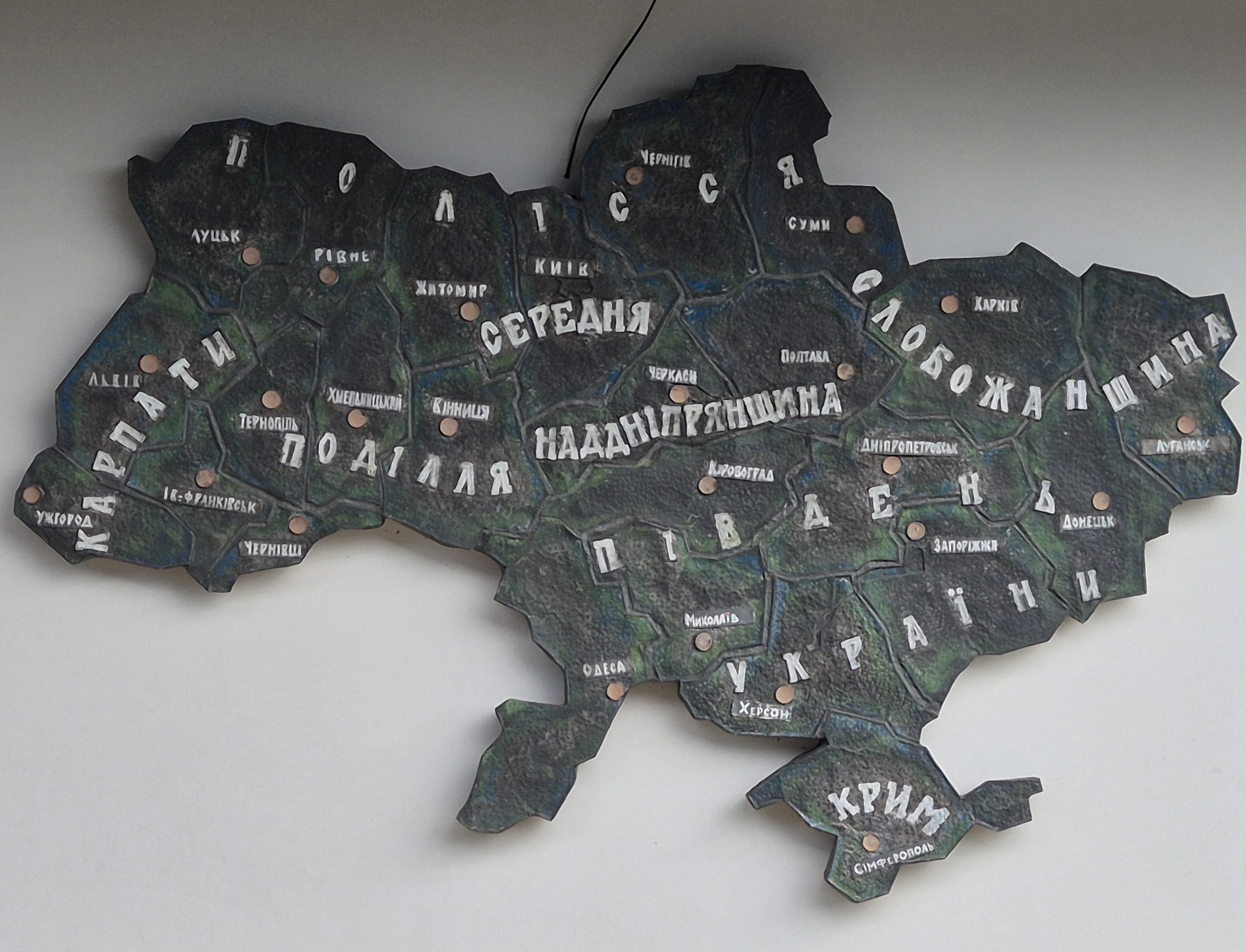
After our 21st transport was successfully completed, the 22nd trip was right around the corner.
Preparations
The preparations were time-consuming. Procuring the 12 vehicles was an unprecedented task. We had to search across multiple platforms for them, find them, organize test-drives, and purchase them here in the region. Several of our team members were able to inspect and buy vehicles in their own areas. At this point, we would like to thank Christian, Andreas, and Fabian for their efforts! The subsequent logistics, including registrations, inspection by Roman, and finally the preparation of export documents, took up a lot of Michael’s time and nerves. Our organization has reached a size we never imagined. We are grateful for everyone who helps us – also here in the region – with vehicle preparation.
With some “aches and pains” or even bigger problems, most of the vehicles were brought up to speed by Roman, our Ukrainian friend and workshop manager, who checks our vehicles in his free time.
Two vehicles had special backstories.
For the unit of a former SAP colleague who now serves in the Ukrainian armed forces, our colleague Oleg was able to organize a special fundraiser among colleagues, which contributed significantly towards the procurement of an excellent used VW Amarok.
In addition, working with author Stephan Orth, who joined us on a convoy in April 2025, we were able to highlight fundraising for an SUV needed by a newly established unit of psychologists with combat experience. This unit conducts training for frontline leaders on the topic of soldiers’ mental health and also provides psychological support to the troops themselves.
Two vehicles, a VW Transporter and an SUV, were again financed with funds from our partner organization 1019.ch – they will be converted into evacuation vehicles in Kyiv. Thank you, Martin!
And two more vehicles were each fully financed by two very large private individual donations.
This time, we also were able to bring a very large amount of hospital supplies with us: Several clinics donated materials, some from incorrect orders, so they were brand new, and still in their original packaging. A new supporter, Markus, got in touch and spent two days driving around the Rhein-Neckar-Pfalz area to collect the boxes and bags and bring them to Walldorf.
A week and a half before departure, we met with Kati and other helpers to sort, pack, and label the materials in bags and boxes, and then load them into some of the vehicles. We had previously had detailed phone conversations with Mariia Zivert from Ukraine’s Frontline Hospitals to discuss which materials would be most useful. Nova Poshta has now restricted the free shipping of relief supplies, so we were only supposed to bring with us what was most urgently needed in the hospitals, since we would have to pay for the transport from Kyiv to the clinics ourselves.
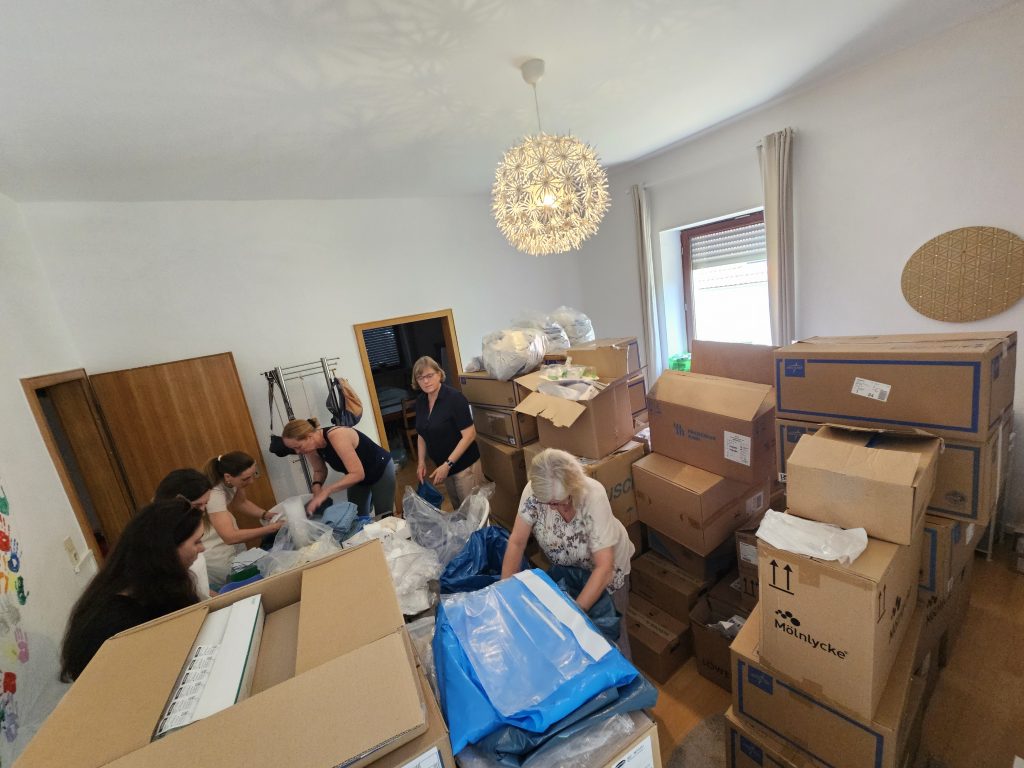
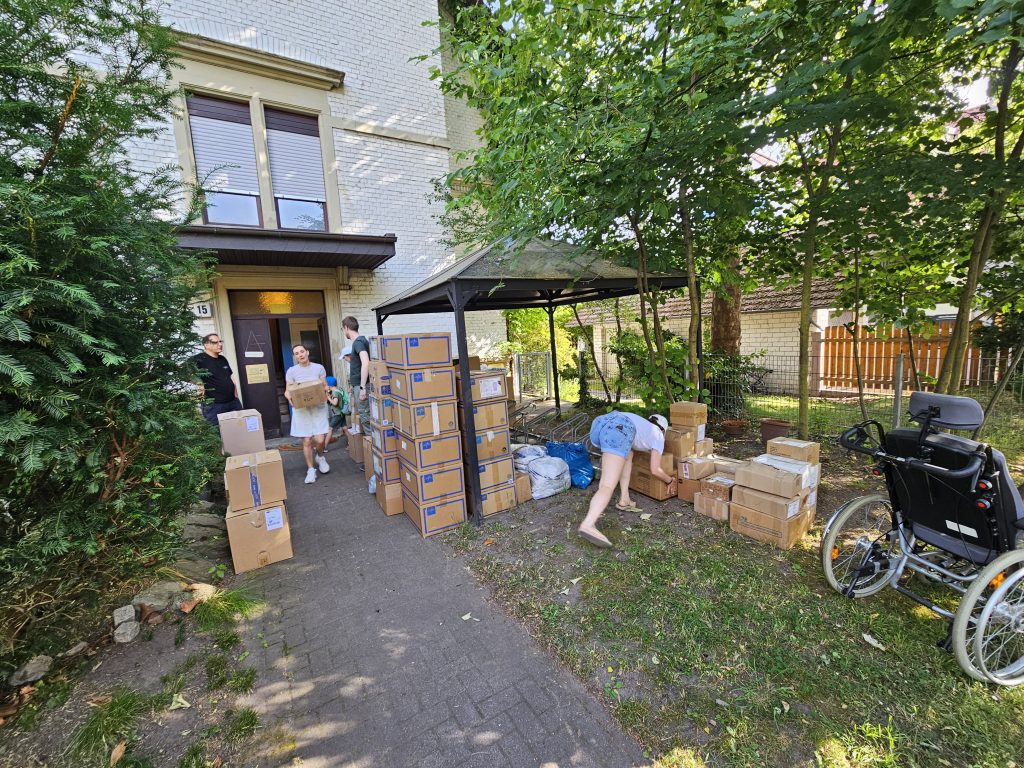
This limited us to consumables and instruments that were in their original packaging, sterile, or could be sterilized. Nevertheless, the volume was so large that we needed an entire room for sorting and then the entire stairwell area in the Walldorf Begegnungshaus for the packed boxes. In addition, there were donated wheelchairs, walkers, and other equipment. The approximately 350 heating candles made by the refugee community for the Ukrainian fighters out in the front-line positions were packed, but since it was summer, we didn’t take them this time and instead stored them in Annette’s garage for the fall transport. We loaded VW buses, pickups, and SUVs and prepared for the trip.
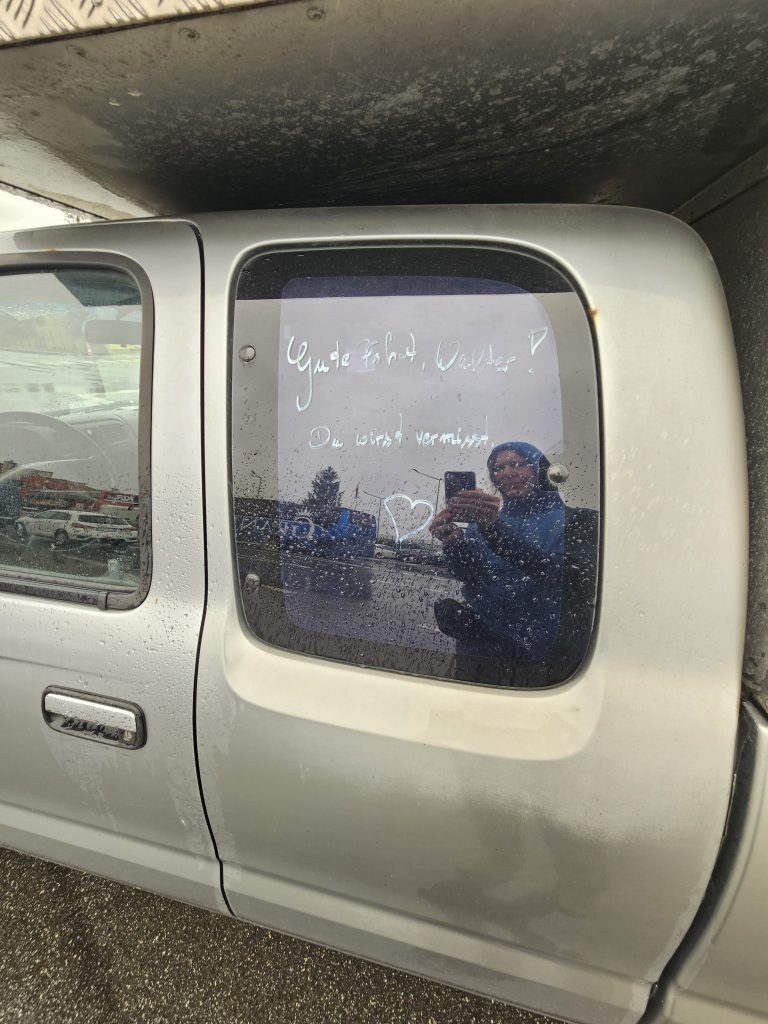
In total, for this 22nd trip, we had four VW Transporters, five pickups of various makes (including a two-door Toyota Hilux with but with a camper setup on the bed, which was jokingly referred to as a “rocket launcher” during the trip because of its appearance), and three SUVs at the start.
At the last minute, two vehicles still needed repairs. While Roman could easily replace headlight bulbs, we were worried until the day before departure about the roadworthiness of a VW bus with turbocharger problems. Roman worked on it and was ultimately able to fix it well enough to make the trip.
Wednesday / Thursday, June 10-11, 2026
Seven vehicles of the convoy, set off with Michael and others on Wednesday to cover the distance to the Ukrainian border in two days. They spent the first night in Wrocław / Breslau and see a little of the city. They continued the journey in Poland on Thursday. The VW T5 with the turbocharger problem caused some anxiety, but with some coaxing, it was able to keep up with the convoy.
The remaining five vehicles started on Thursday morning with Annette from the Rhein-Neckar and Rhein-Main regions, met up halfway through the German leg, and drove without incident to Poland, where Roxana and Didi joined us just across the border.
The onward journey to Radymno was smooth, and there we met up with the group of vehicles that had set out on Wednesday. Taking a group photo with 12 vehicles and 26 drivers was a challenge, so it took several takes
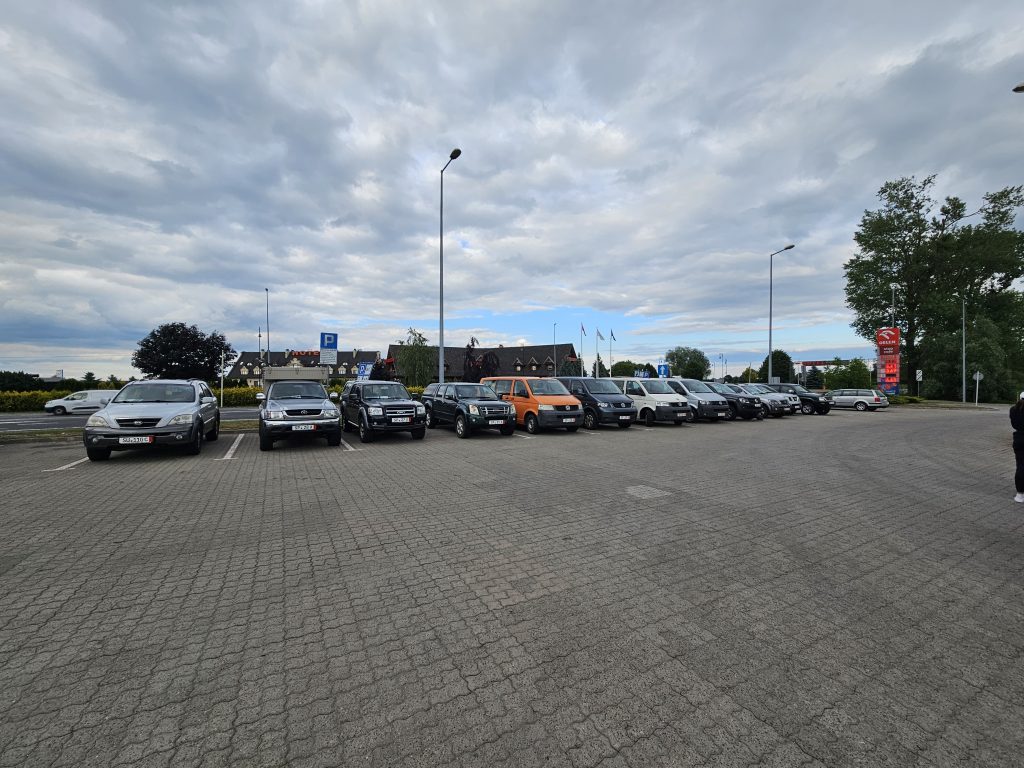
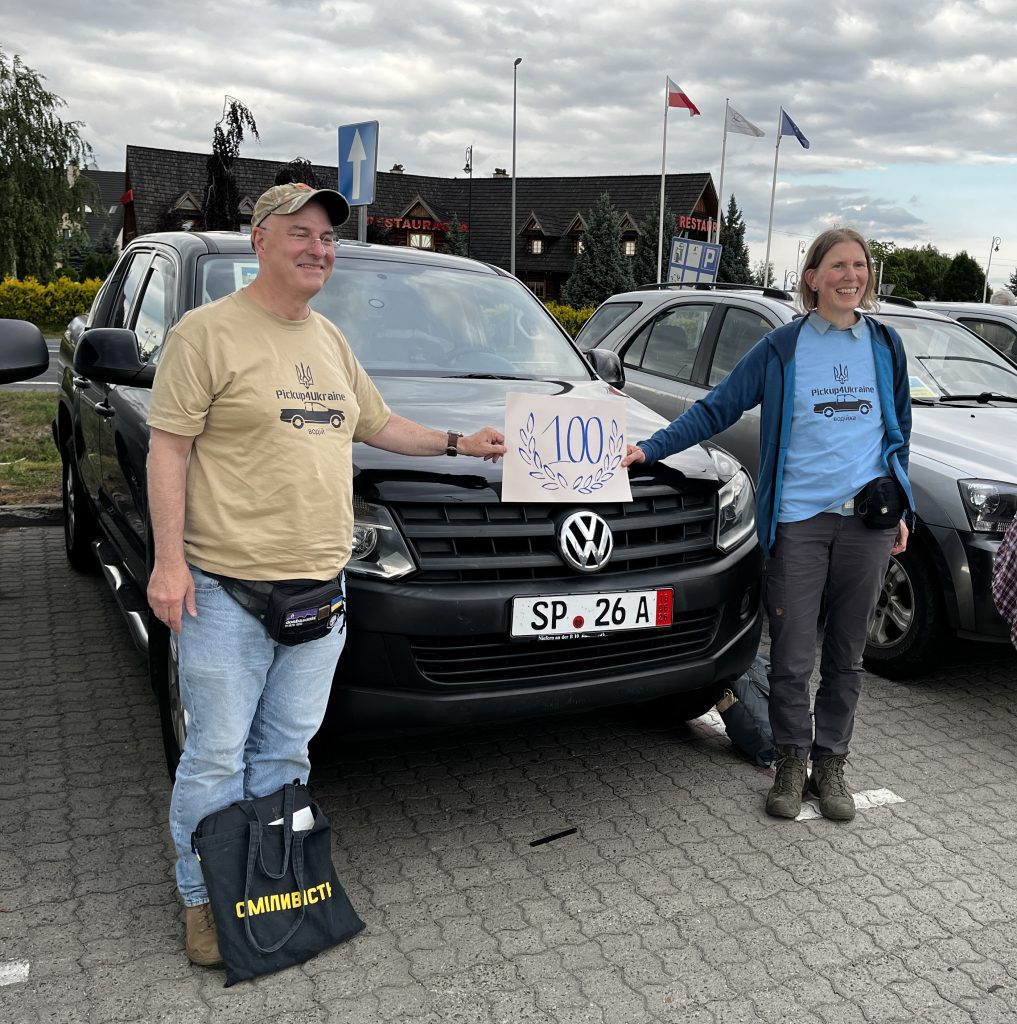
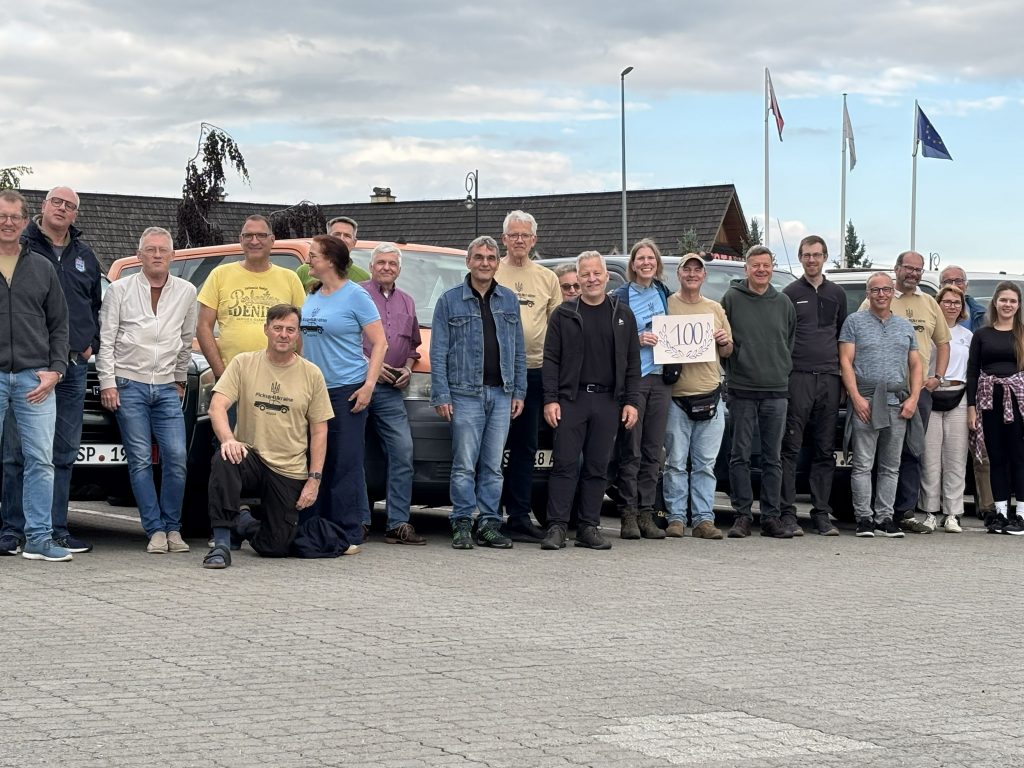
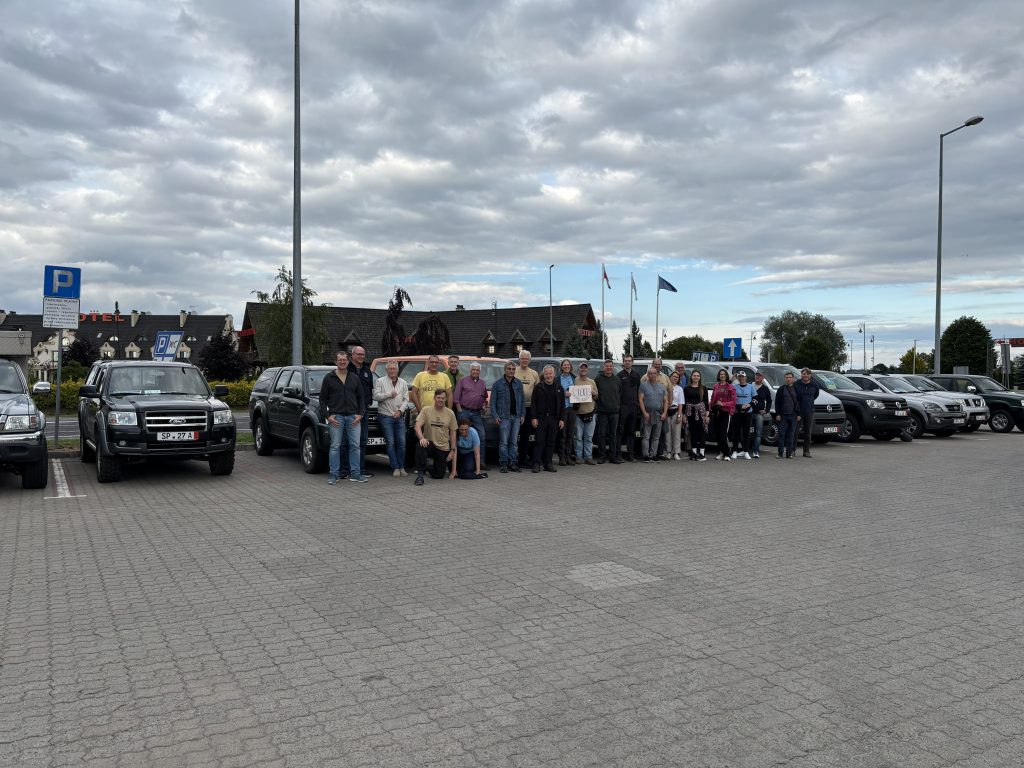
and ultimately a little video.
Friday, June 12, 2026
On Friday morning, we said goodbye to Roland and our two Ukrainian SAP colleagues Viktor and Roman, who began their return journey to Germany. In good spirits and after a delicious hotel breakfast, the remaining 23 people set off for the Korczowa-Krakovets border crossing. Ahead of us were our friends from the Swiss aid organization 1019.ch, led by Niklas. One of their three-vehicle convoy was forced by Polish border officials to turn back. Their donated hospital beds were deemed not to be relief supplies, and they had to be processed at the Budomierz border crossing. This gave us a bad feeling.
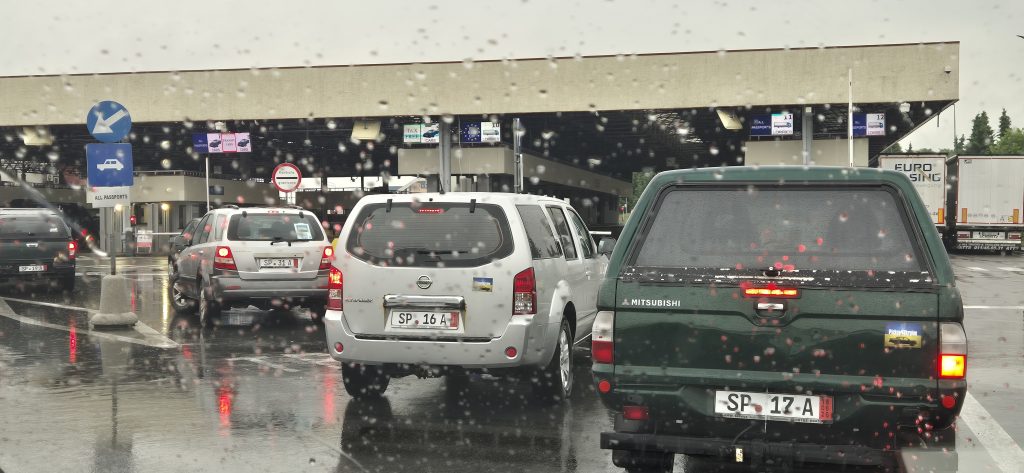
Michael and Eva drove ahead, then the other 11 vehicles followed, with Annette bringing up the rear. At first, processing on the Polish side went smoothly for us: The first two vehicles, only one of which had hospital supplies on board, made it to the Ukrainian side. Of the remaining vehicles, some entered the border processing area, and then Polish customs stopped the first VW bus with boxes of hospital supplies. We had Andreas, a native Polish speaker, in the second-to-last car, who then ran up front to try to mediate. It didn’t help.
The customs official had strict orders from her boss not to let these boxes through. The materials were considered “merchandise” and not relief supplies. The regulations actually state that up to a value of EUR 1,000 per vehicle, relief supplies can simply be declared verbally at the border. So Andreas and Annette went to the head of the border crossing authority. His office is on the first floor of the large border facility building. Andreas already knows it from previous negotiations. This time, we were taken aback by the downright hostile attitude of the head of customs. We hadn’t even fully opened the slightly warped wooden door, with its squeaking and sticking, when he snapped at Andreas for not “opening the door properly.” Andreas apologized profusely and presented our request with a politeness I could only admire. The customs head was not appeased. He remained curt and dismissive, and finally, in an aggressive tone, sent us out of his office, opened the door for us – just as squeakily – and pointed to the hallway to throw us out.
The message was clear, just as it had been for our Swiss friends: Your relief supplies are commercial merchandise. It cannot be processed here in Korczowa together with the vehicles for export, so go to Budomierz. Andreas tried again to convince the border official of the charitable nature of the contents by opening the boxes, but without success.
Ad hoc, we decided to have as few vehicles as possible turn back, so we unloaded the boxes from one vehicle on the spot and transferred them, allowing this empty vehicle, together with two other empty vehicles, to leave the Polish border facilities toward Ukraine. In the end, five vehicles had to return to Poland—but not before first being fully checked in and then checked out again by the Polish border guards. This process took more than two hours. Annette tried, at least for the vehicles whose processing had not yet begun, to ensure that they could simply drive back out of the facilities “unencumbered,” but—unlike with the small convoy the previous week — the passport inspector now spoke neither German nor English, but only replied, “Polish please, we are in Poland!”
Michael had meanwhile been in contact with our friend and mechanic Roman, who recommended that we try again at the smaller Medyka border crossing, and as a plan B, we could temporarily store the relief supplies nearby in a container. We agreed, even though, we now at least did not have the appropriate customs documentation for the Ukrainian side because the distribution of the cargo did not match the customs declarations. Michael also had to put some effort into explaining to the Ukrainian authorities why the vehicles that made it to the Ukrainian side, registered as bearing cargo, were now empty.
The five of us drove through the Polish border villages to Medyka. There, at midday, we were met with long queues. Andreas convinced those waiting to let us, as a humanitarian convoy, go ahead. There was a brief discussion with the first border guard, which brought back bad memories for Annette of the very first trip to Ukraine. Back then, with our first pickup, we had dared to switch lanes in the waiting line, causing a Polish border guard to run toward us with his weapon drawn, shouting at us that it was forbidden.
The rest of the border processing at this small, now apparently popular with aid organizations, border crossing then went smoothly, both on the Polish side, where no one asked any in-depth questions, and on the Ukrainian side, where people were super friendly, used to aid organizations, and had no problem with the discrepancy between the actual cargo and the issued Ukrainian customs papers.
The first seven vehicles were already on their way to Lviv for the first vehicle handover, which took place at the planned stop at a gas station. The recipients, representatives of an air defense unit, received a VW bus and the documents. It first had to be registered with the unit’s administration in western Ukraine, then taken by an officer to the Donbas. Meanwhile, the second half of the convoy entered Ukraine with a five-and-a-half-hour delay. The group tested the southern bypass around Lviv and then, just past the city, decided to try to make it to Kyiv that Friday. After experiencing torrential rain at the border, the weather was on our side for the rest of the journey.
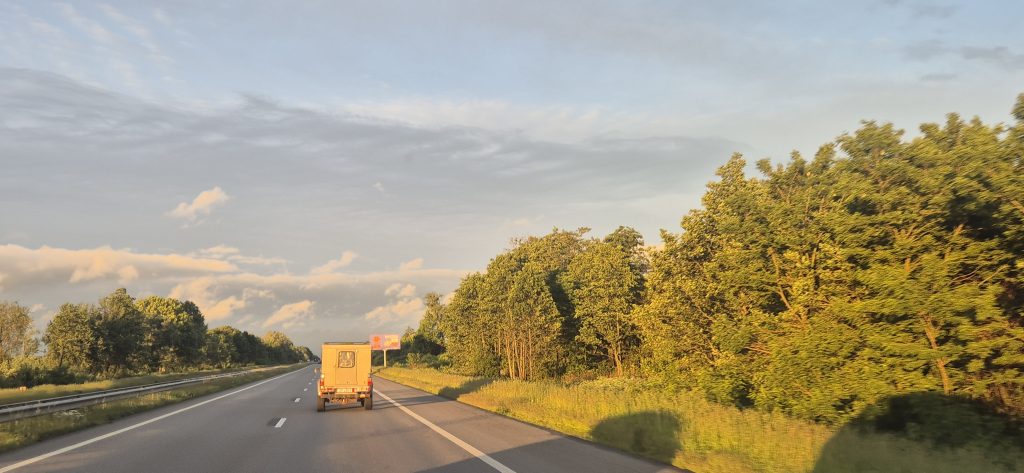
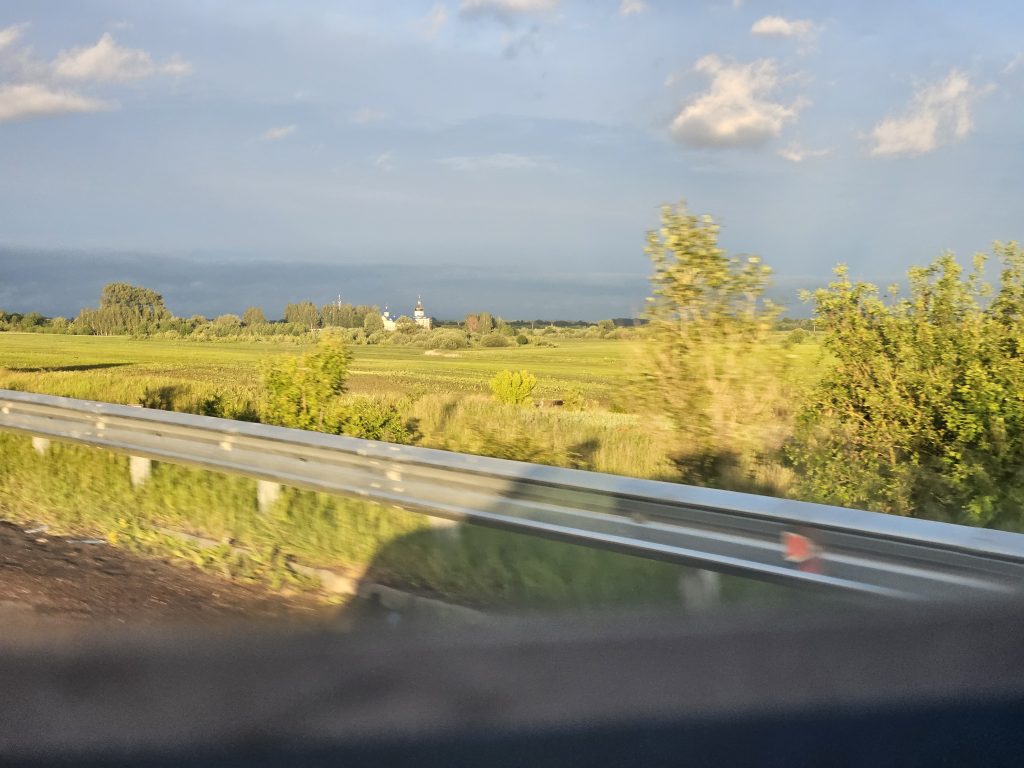
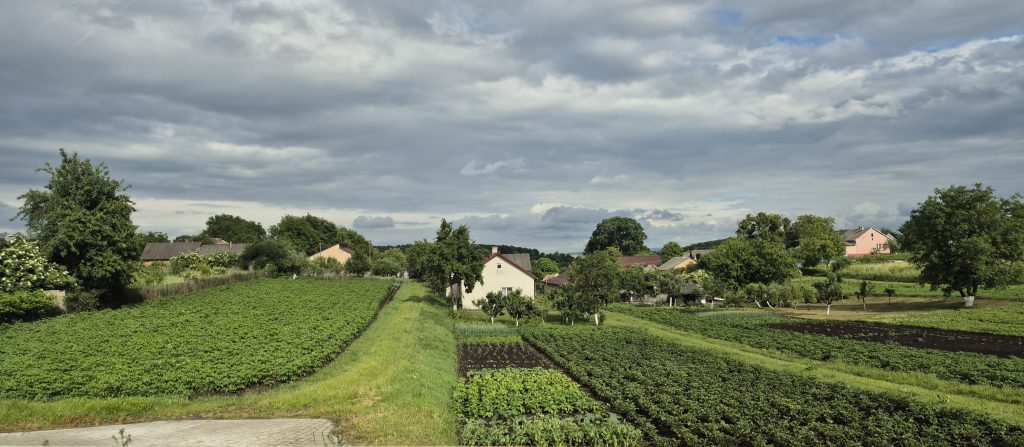
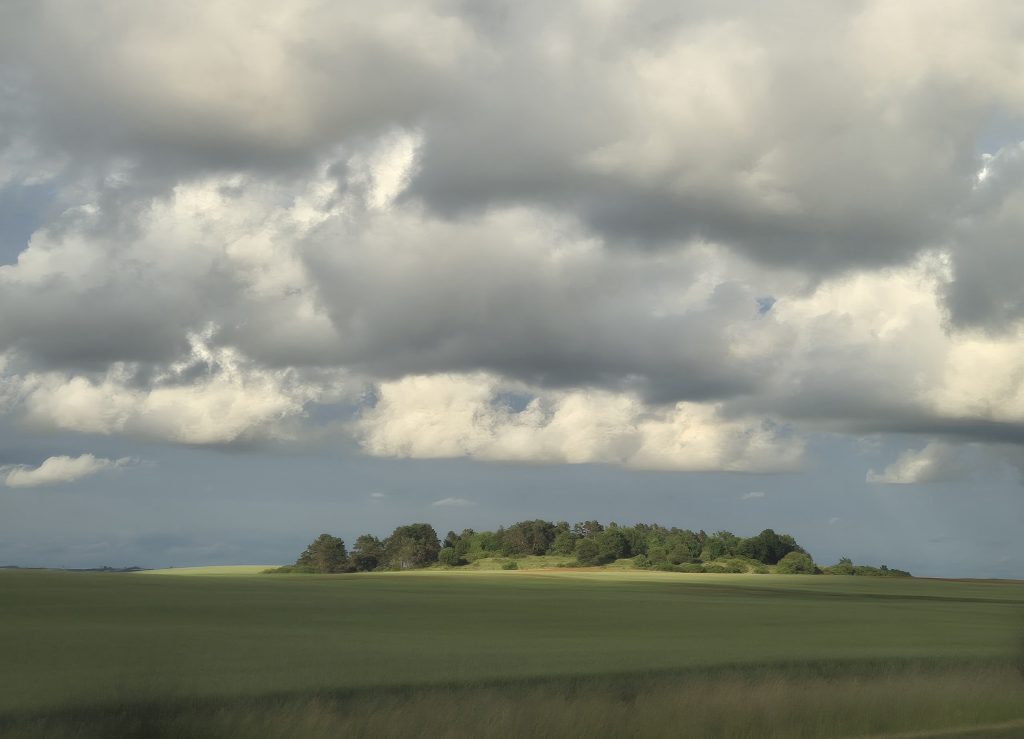
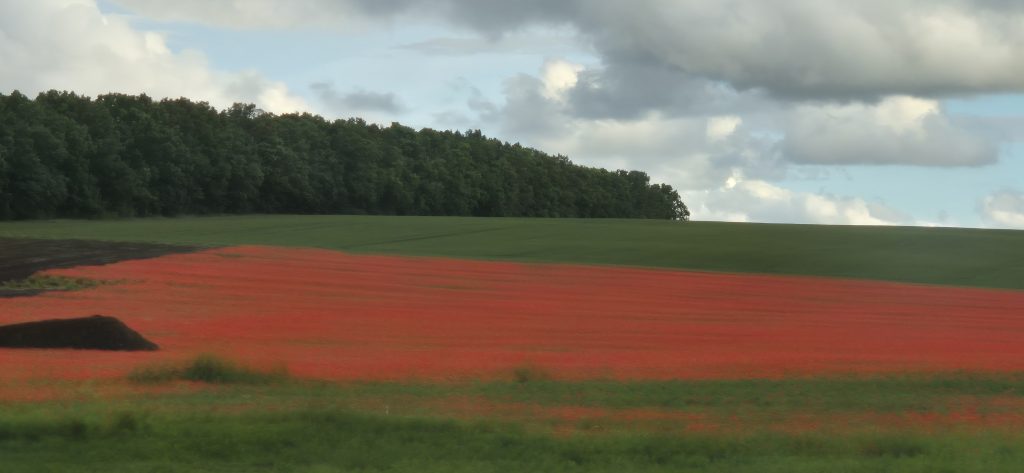
The roads themselves were — compared to February — now in excellent condition. Entire sections, that we had to pass slowly in winter due to potholes, were now repaired and newly paved and smooth. All vehicles made good progress, and even the drivers of the five vehicles that had taken the detour at the border managed to check into the hotel in Kyiv just a few minutes before the midnight curfew.
The night was unexpectedly quiet, and we were able to sleep in our beds.
Saturday, June 13, 2026
For the morning, we had planned to go and ship the hospital materials via the logistics company Nova Poshta, followed by a trip to the workshop, and then, in parallel, do various vehicle handovers to the receiving units of the Ukrainian Armed Forces. Some therefore had a really early and rushed breakfast, others joined later. At the “Hub” — the workplace of our partner organizations Lawyers’ Move and Ukraine’s Frontline Hospitals — we did some reloading, and then we all drove the short distance to the spacious yard of Nova Poshta. There we met Mariia and Anya from Ukraine’s Frontline Hospitals. We quickly unloaded all the vehicles, and Mariia and Anya sorted the boxes, sacks, and equipment while simultaneously calling the surgeons, especially in Kharkiv and Mykolaiv, to clarify their needs.
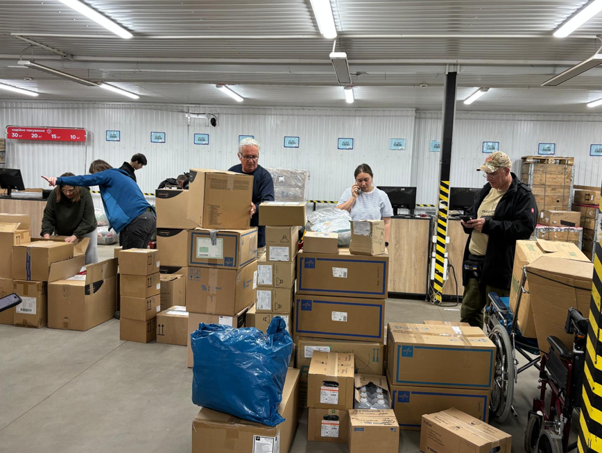
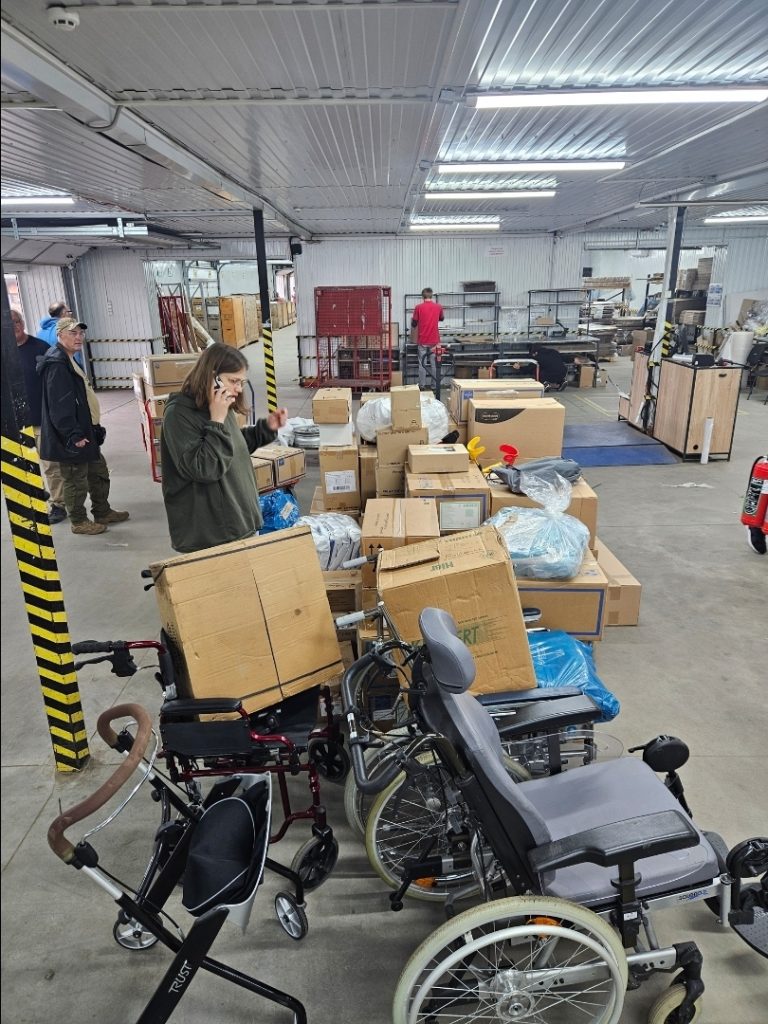
A small group, together with Ruslan, drove two of the unloaded vehicles, a VW transporter and an SUV, to the workshop, where they received for the planned conversion into evacuation vehicles. The others drove the remaining vehicles back to the Hub, where in the meantime some recipients had already arrived. Some had been waiting for a while, others were in a particular hurry.
Together, we tried to prioritize the most urgent handovers.
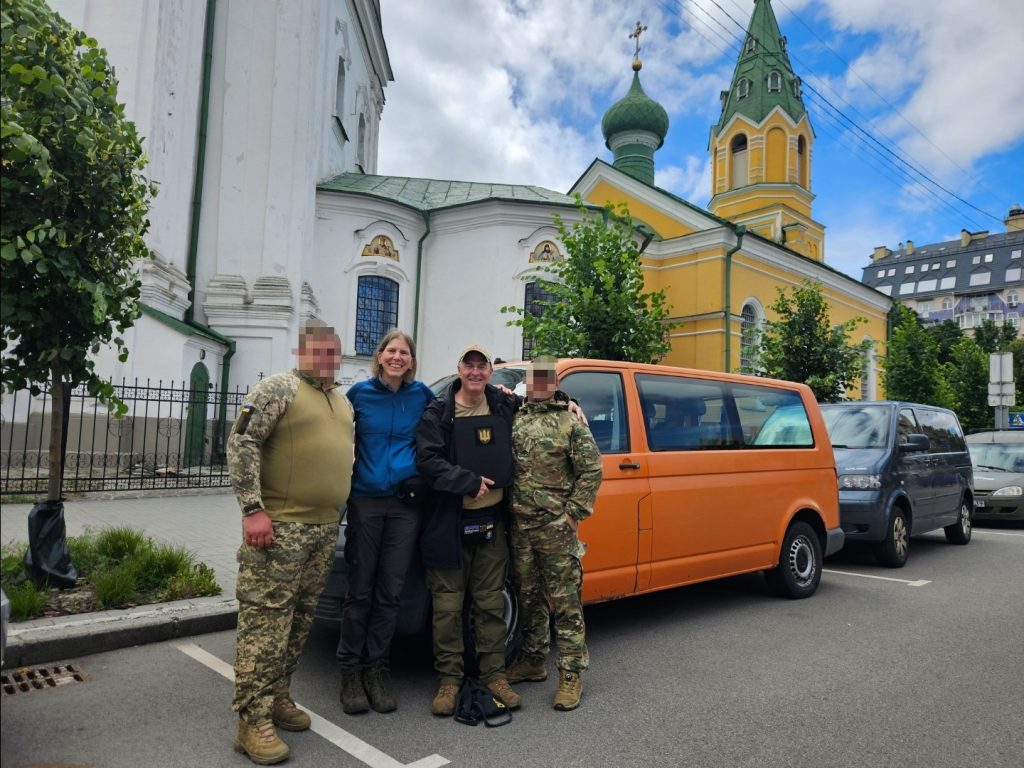
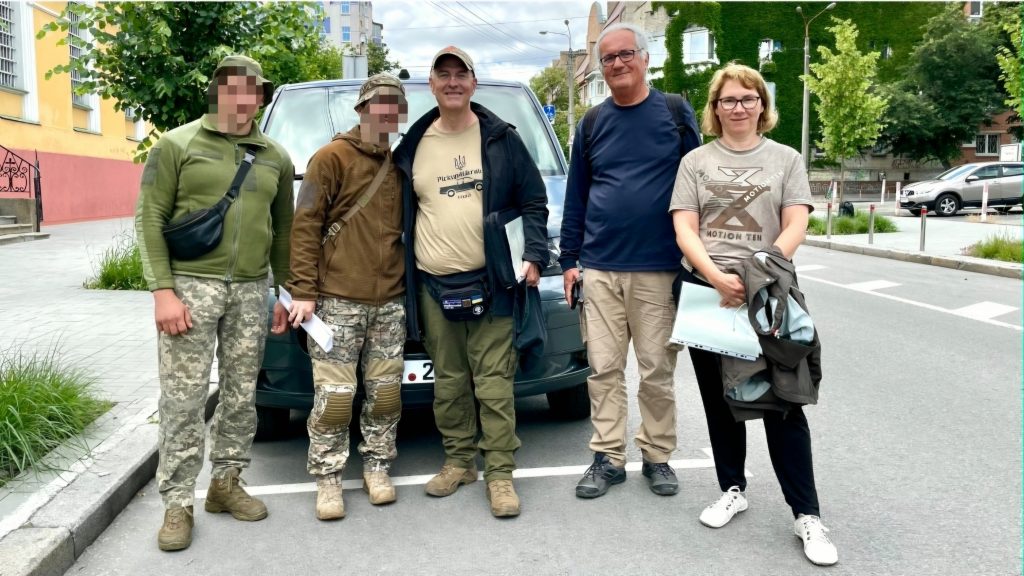
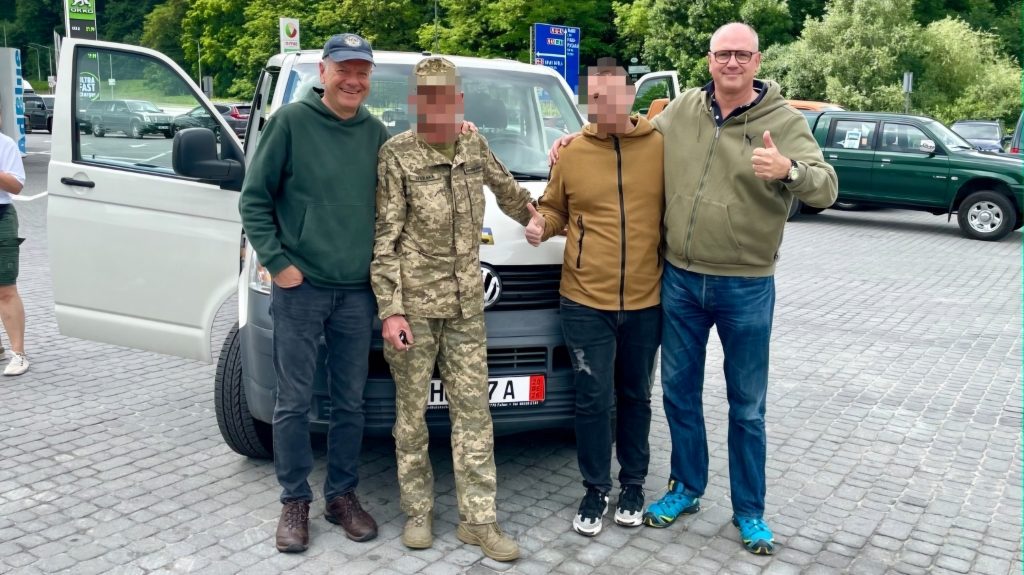
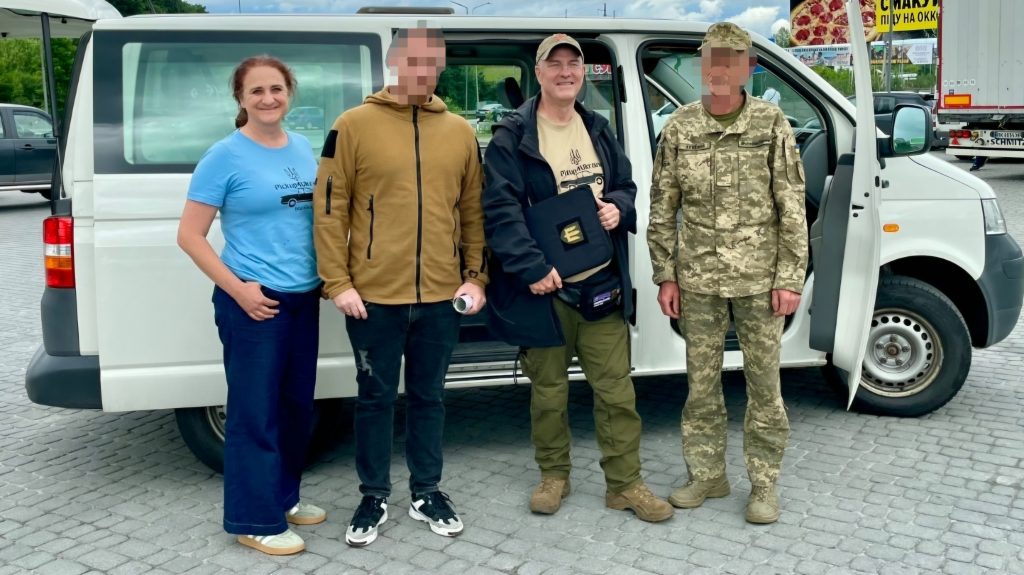
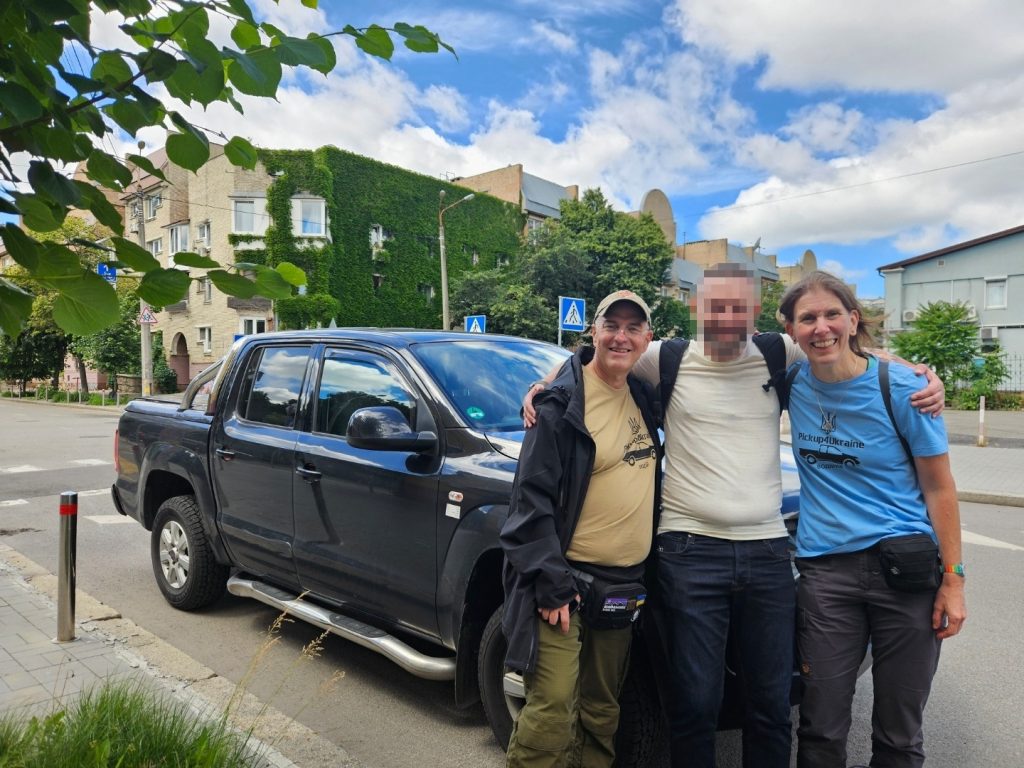
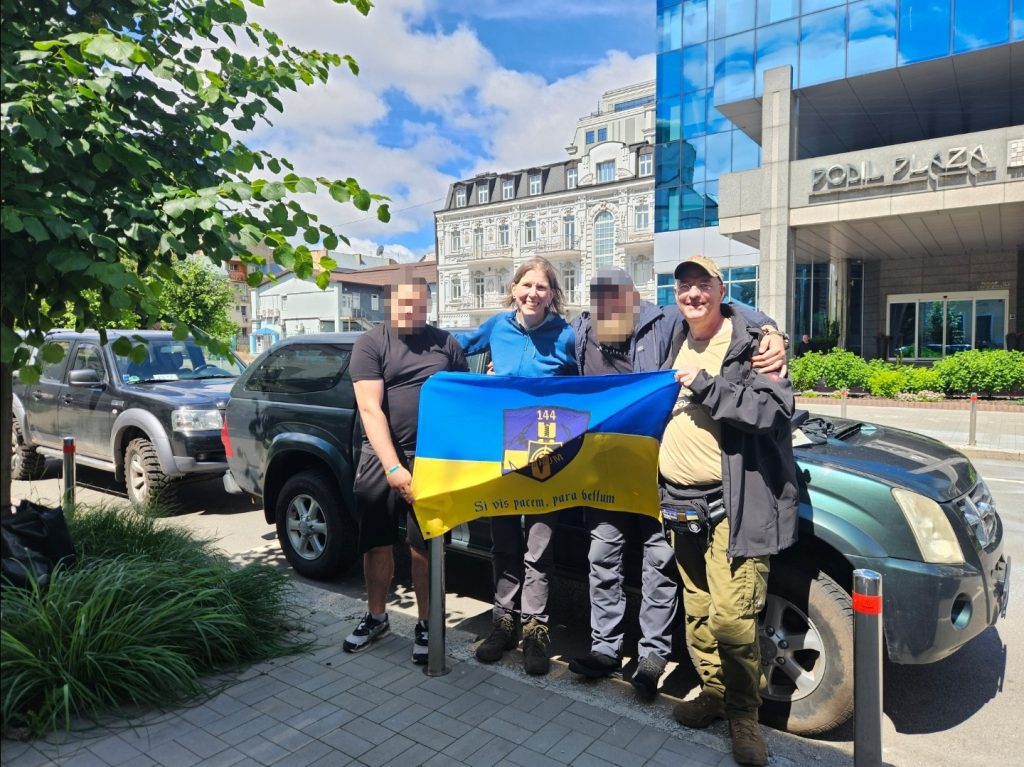
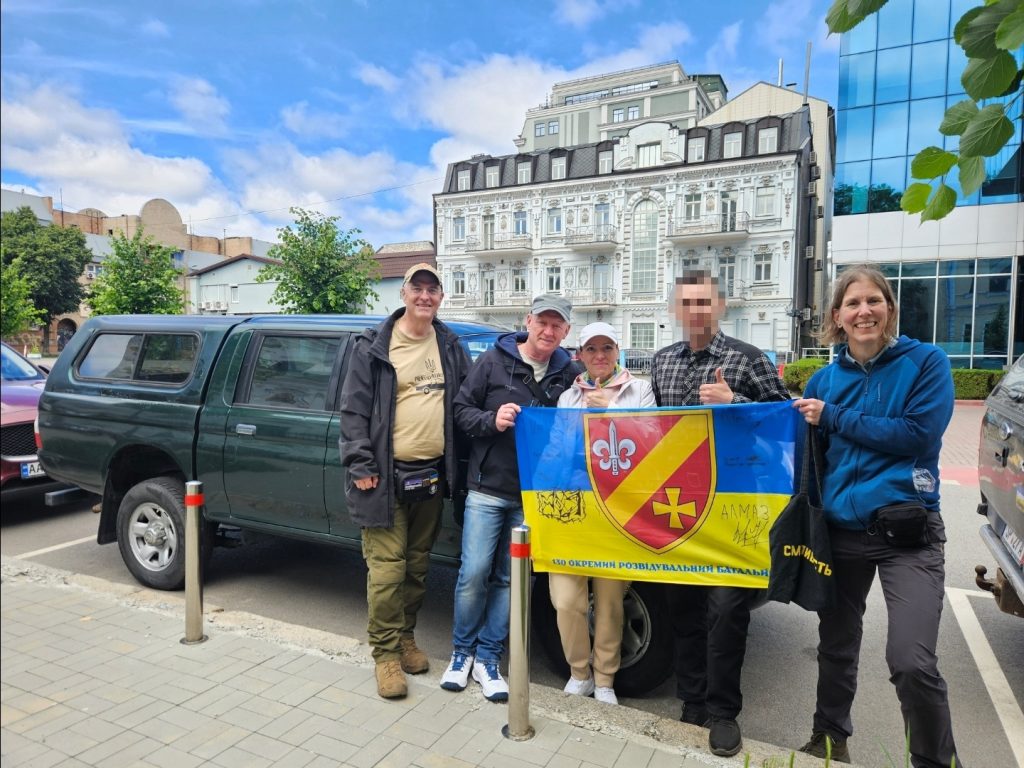
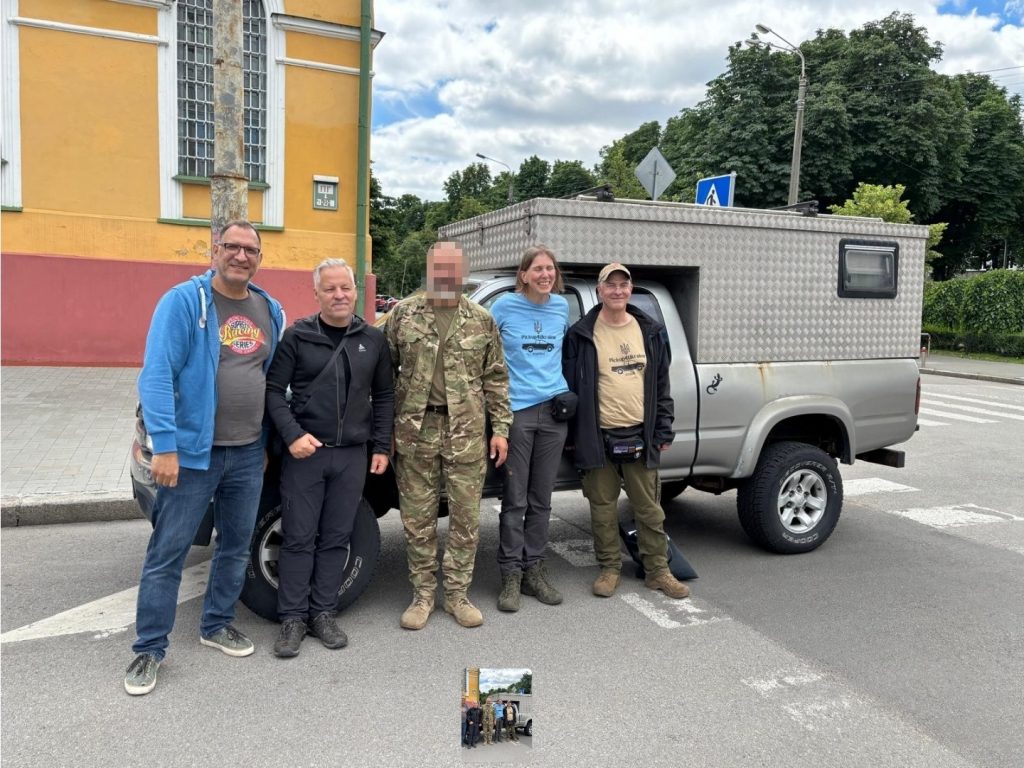
To our delight, we met the former SAP colleague, to whom we could directly hand over the VW Amarok for his unit. He was moved, but also very composed. Some recipients had time to take a handover photo, others used the handover as an opportunity to meet their family in Kyiv. The family of the recipient who received the Toyota with the camping setup had traveled 500km (more than 300 mi) from Odesa to meet their father/husband/brother in Kyiv.
Ihor, the supervisor of the psychologists’ unit, and his daughter Yuliia, had some time.
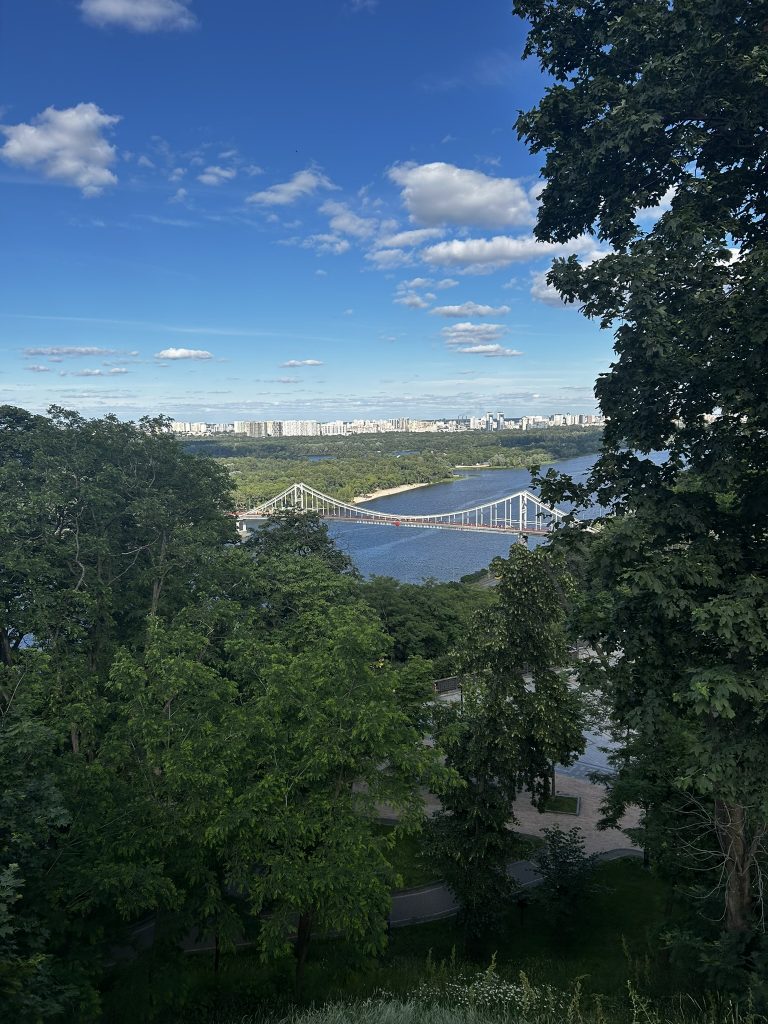
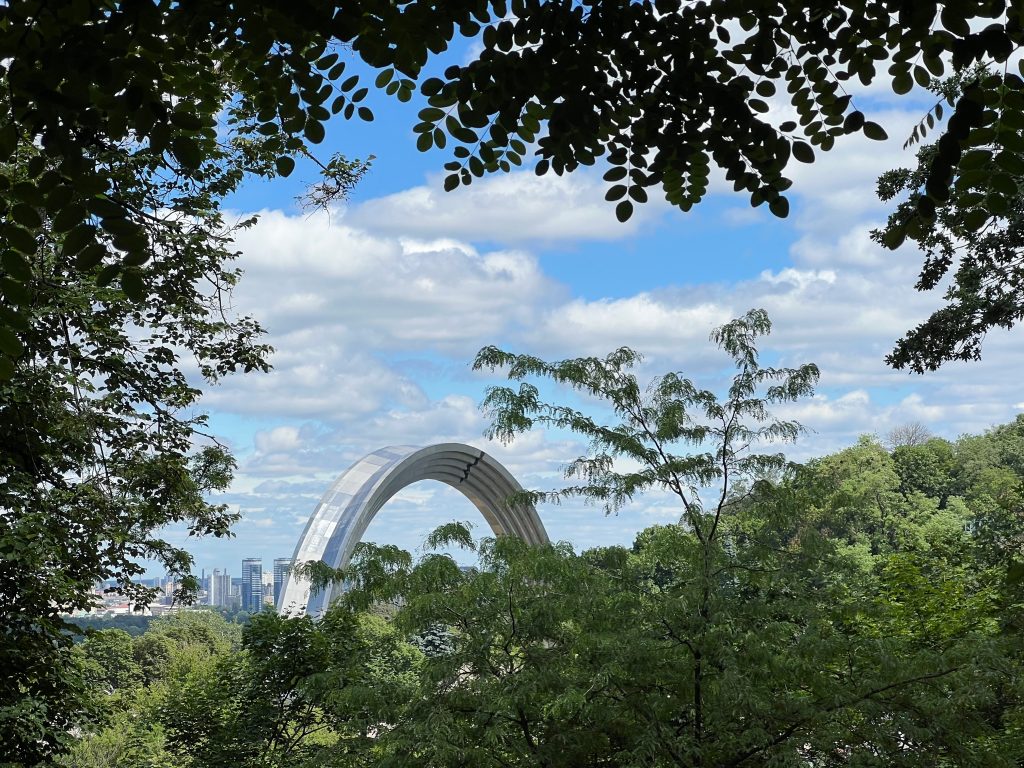
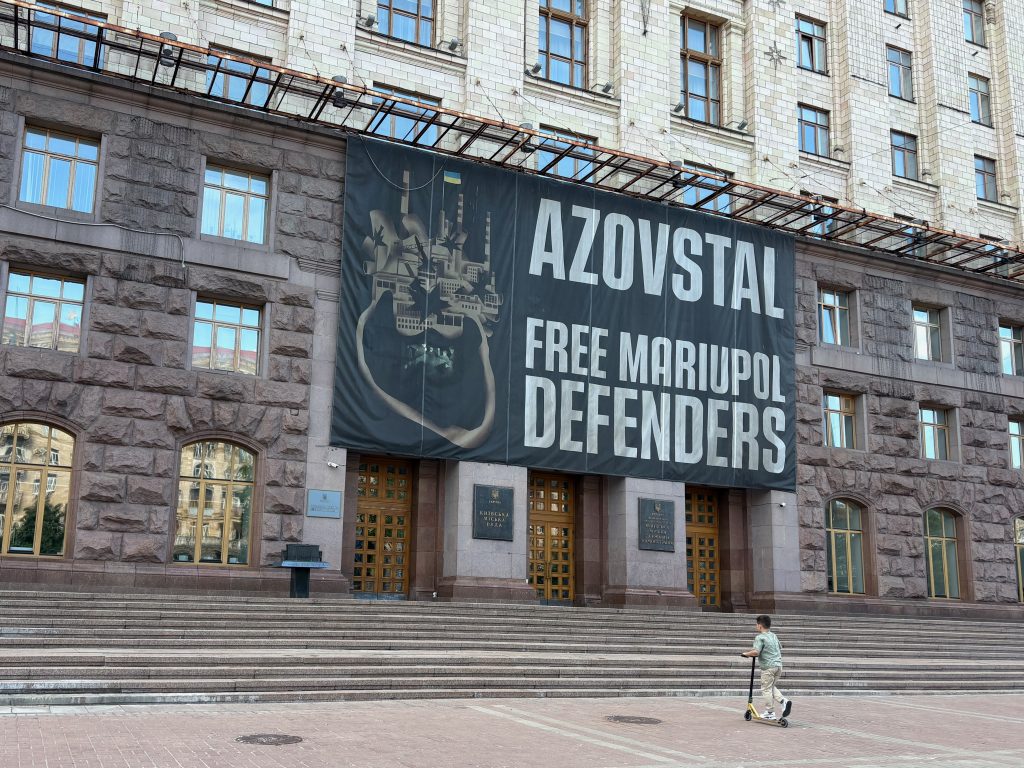
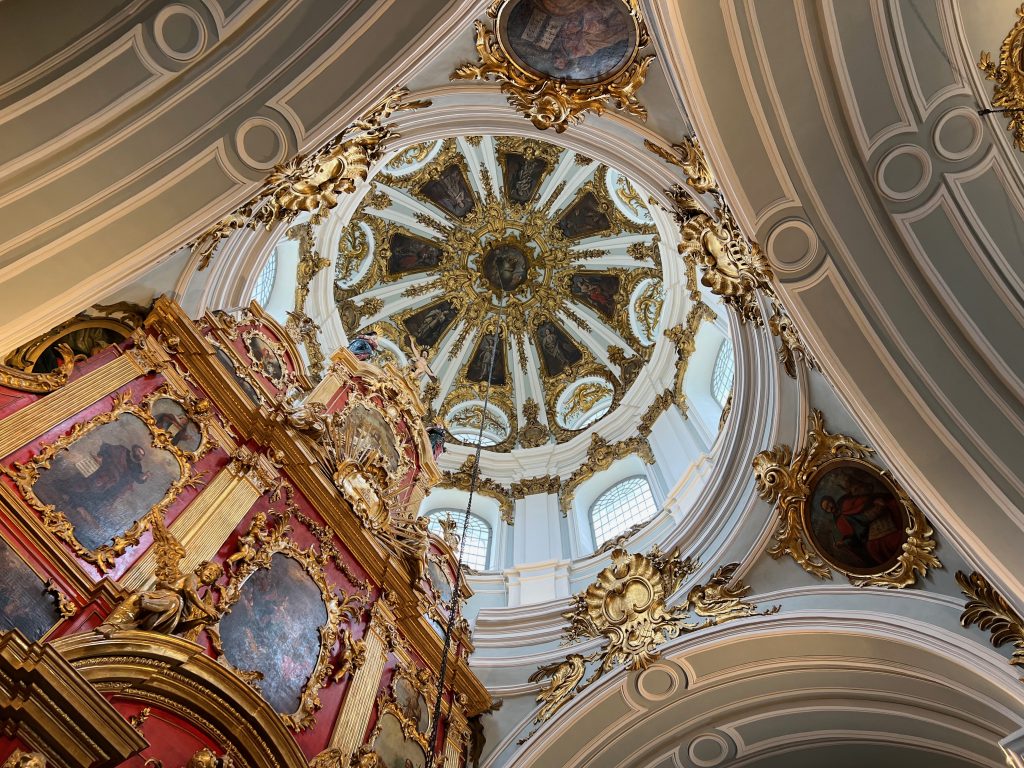
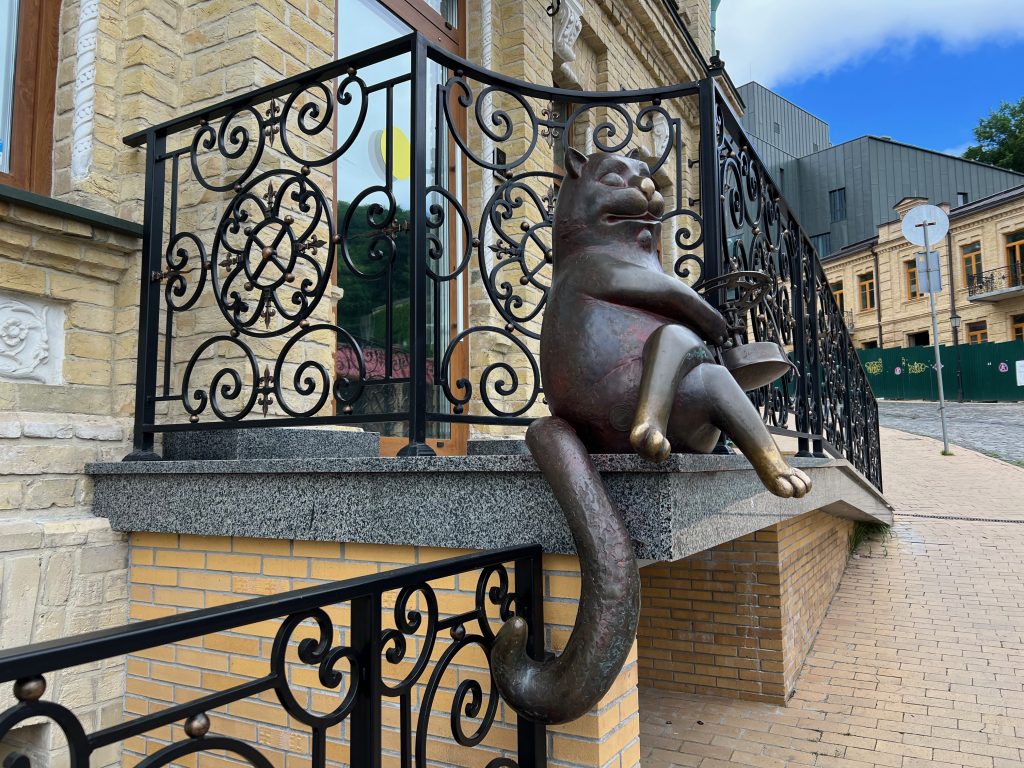
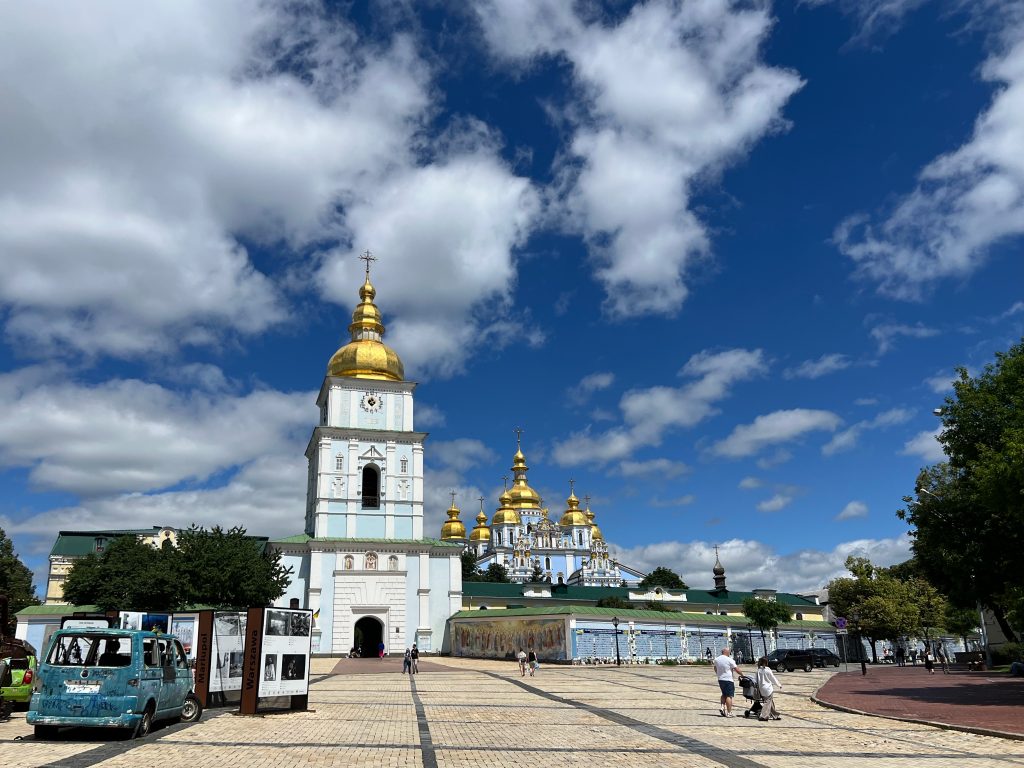
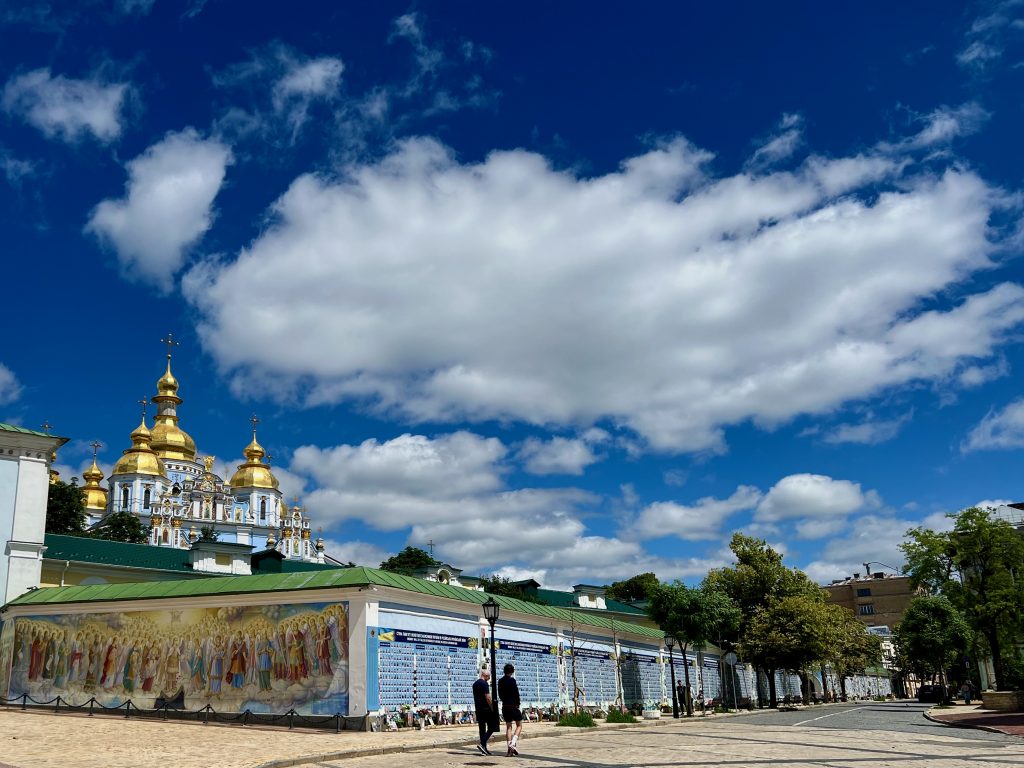
Nadia from Lawyers’ Move and a group of drivers set off for a guided tour of St. Sophia’s Cathedral and parts of downtown Kyiv.
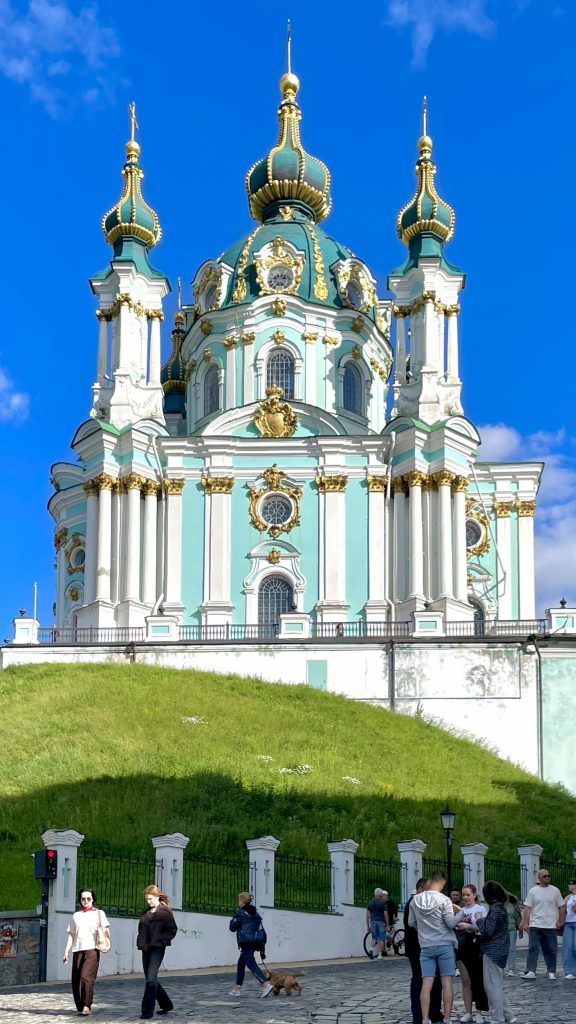
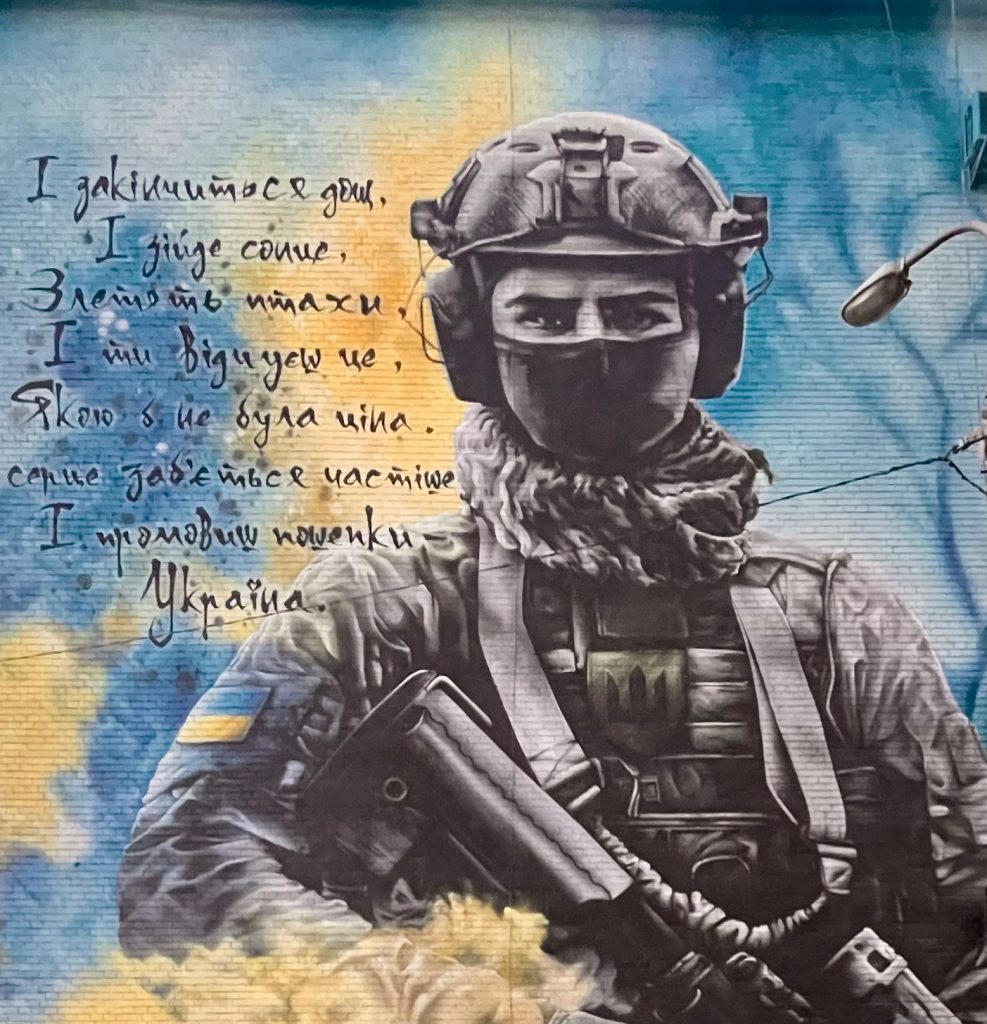
Michael and Annette sat down with Ihor and Yuliia. Ihor talked about his work in the relatively newly established psychological service of the Ukrainian Armed Forces. The large and constantly increasing number of people with post-traumatic stress disorder (PTSD) requires broader and more specialized care. Ihor not only advises affected soldiers but especially officers, so that they can recognize symptoms in time and recommend treatment. For this, he regularly travels to units to train and support them. He will use the SUV we delivered for just this purpose. As a former front-line soldier, Ihor also has a deep understanding of the constant strain on people whose lives and health are at risk every day.
Afterwards, Annette visited the family of the SAP colleague a little outside Kyiv, whose three children lived with Annette’s family for four months shortly after the start of the full-scale invasion. The two older children have now completed their International Baccalaureate and are applying to English-language degree programs in Europe. They are full of courage, curiosity, and drive.
Andreas, Roxana, and Didi began their return journey to Germany in the evening.
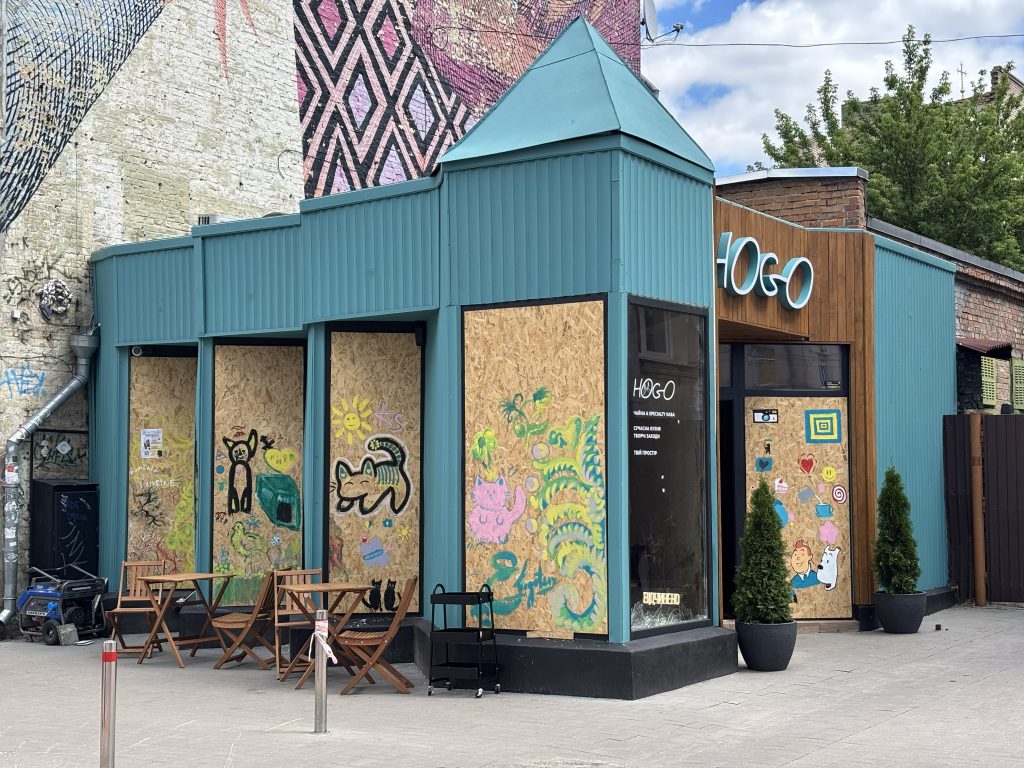
Nadia had organized a get-together in a craft beer bar for those who stayed. On the streets of the Podil district, everyone was out and about that night. The weather was pleasant, the night mild — people just refuse to be beaten down by the war; instead, couples and groups of friends enjoy the early summer evenings until curfew.
The second night was also quiet, and we were able to start Sunday somewhat refreshed.
Sunday, July 14, 2026
On Sunday morning, we sped up breakfast organizationally to start the excursion on time with our SAP colleagues from Kyiv. We drove to Pirogov to the National Museum of Folk Architecture and Folkways of Ukraine. This extensive open-air museum (among the largest in Europe) is located in the south of the capital and displays traditional buildings from different regions of Ukraine, such as churches, windmills, and houses.
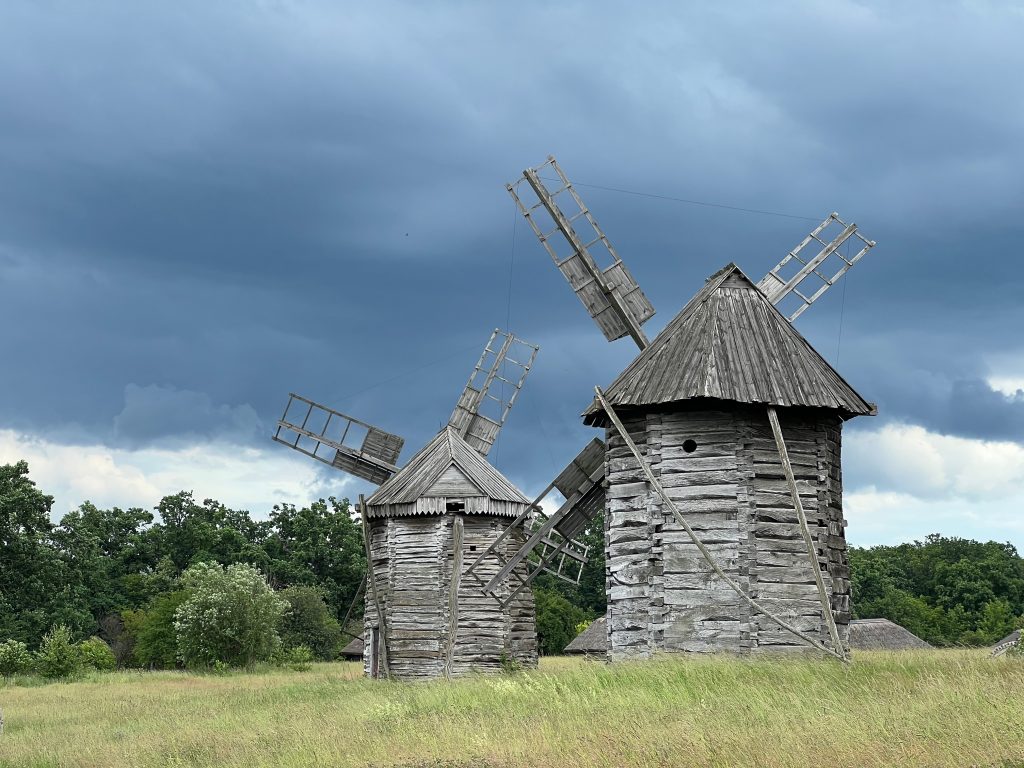
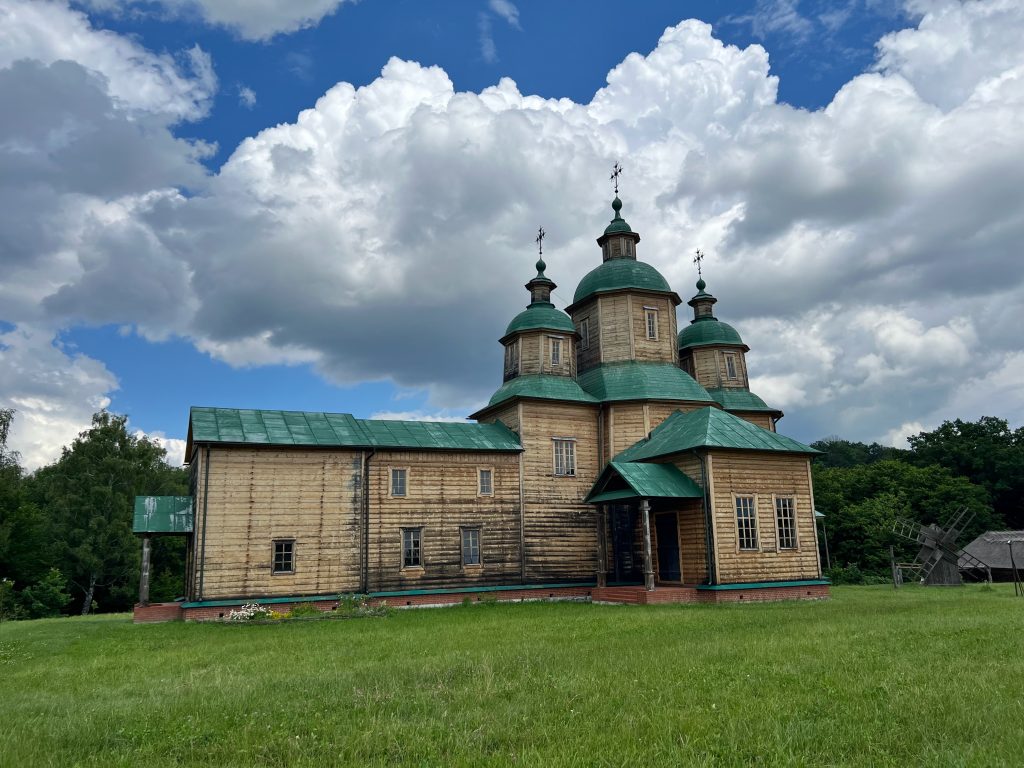
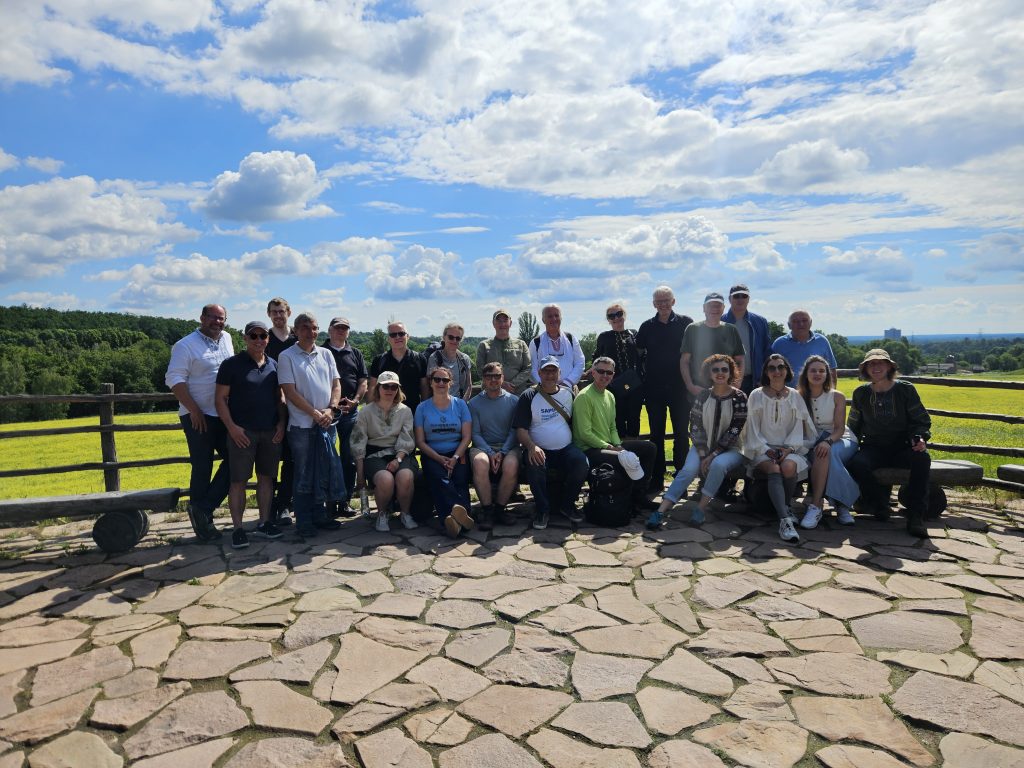
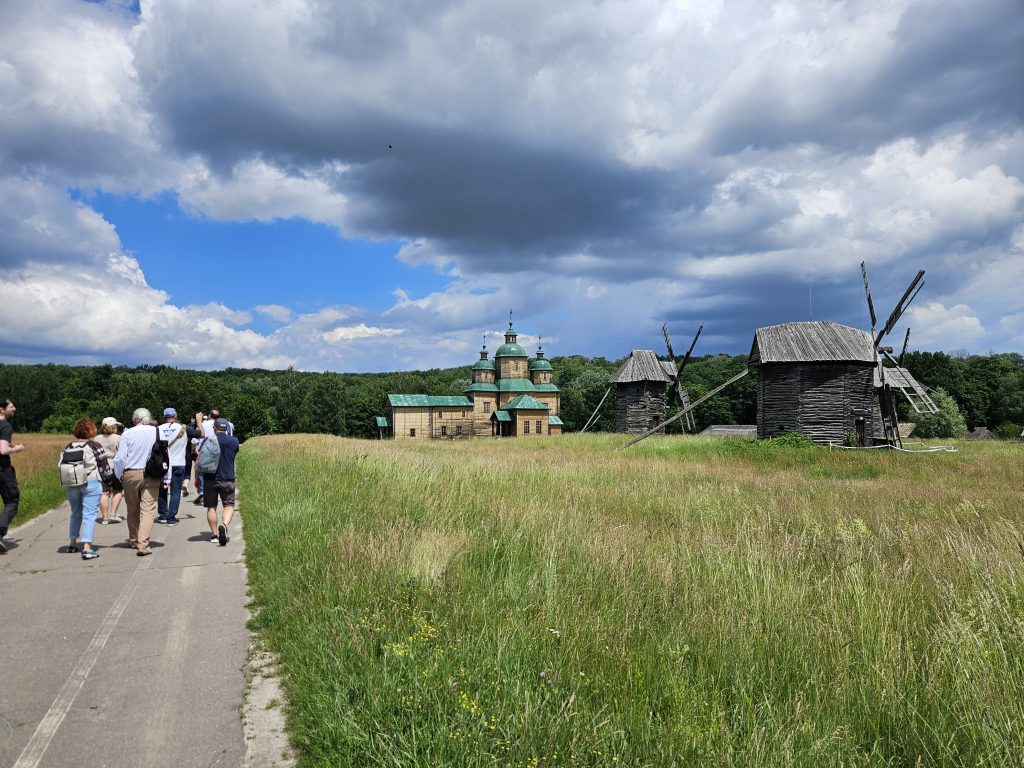
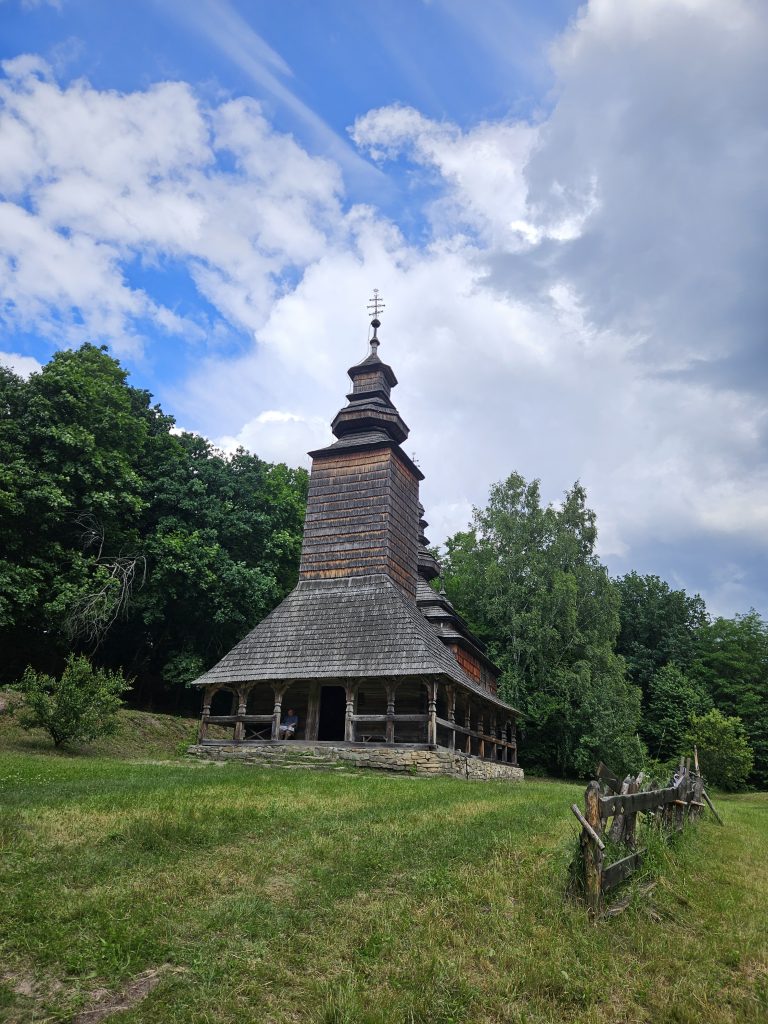
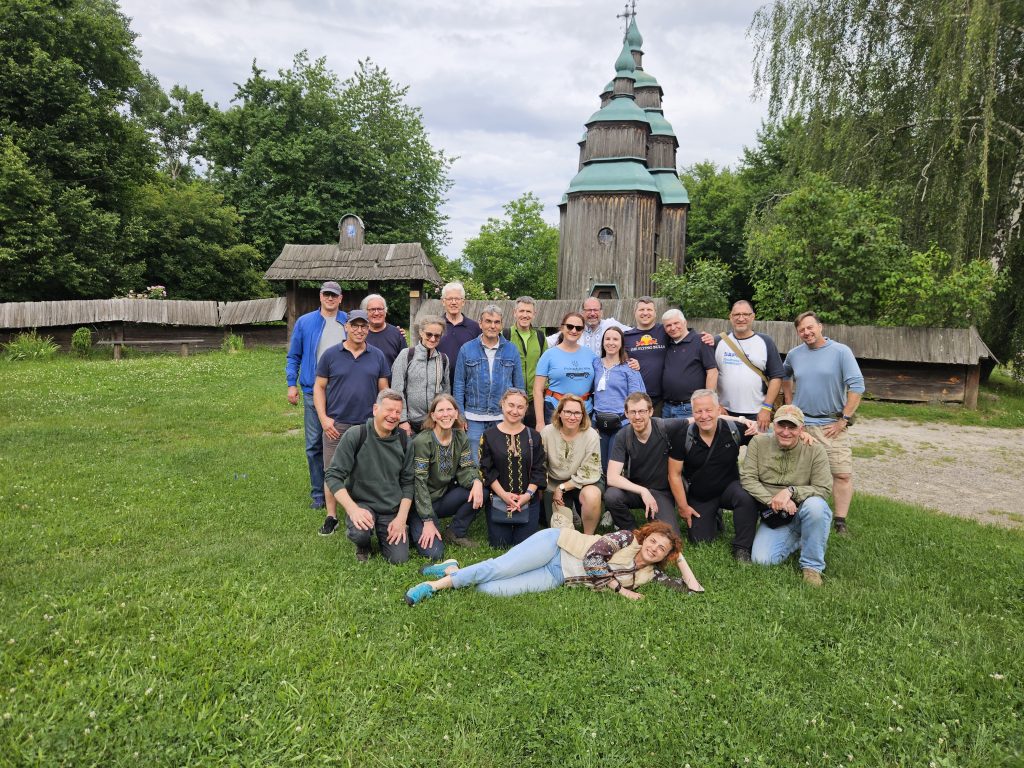
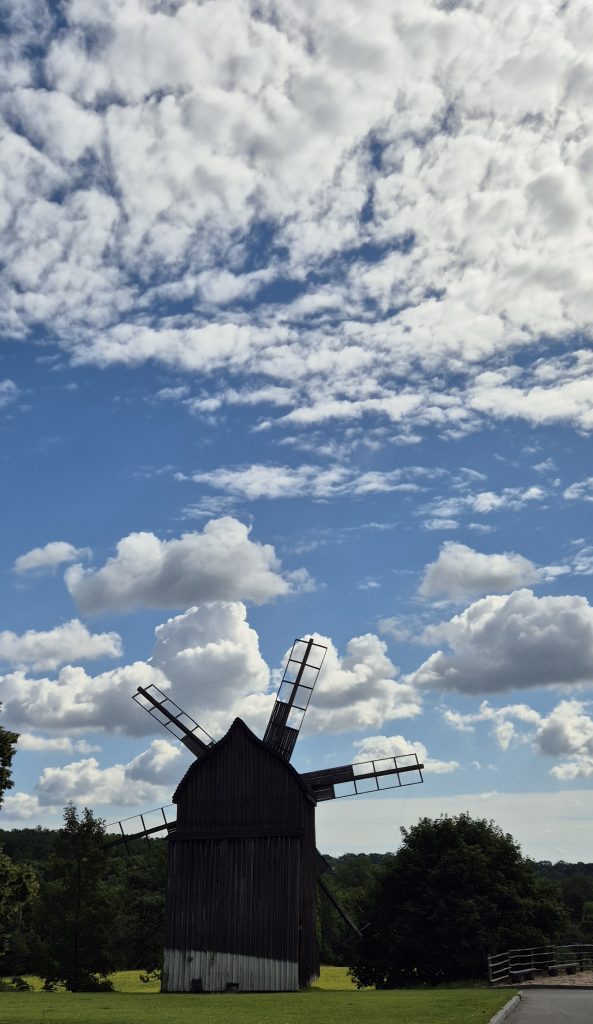
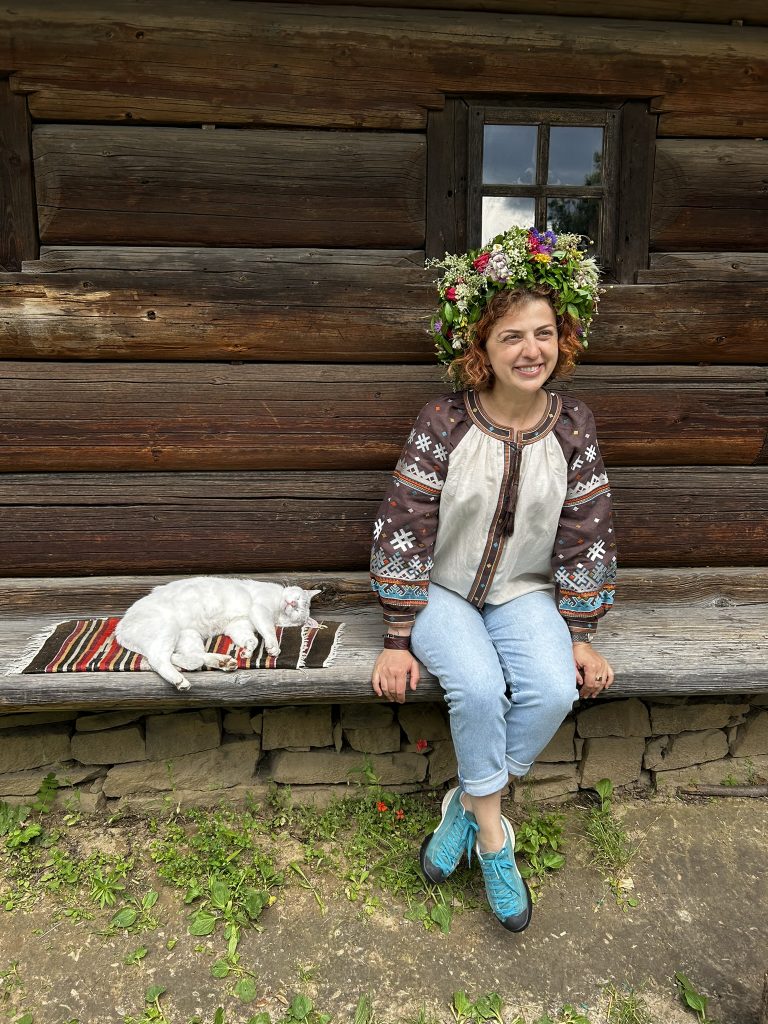
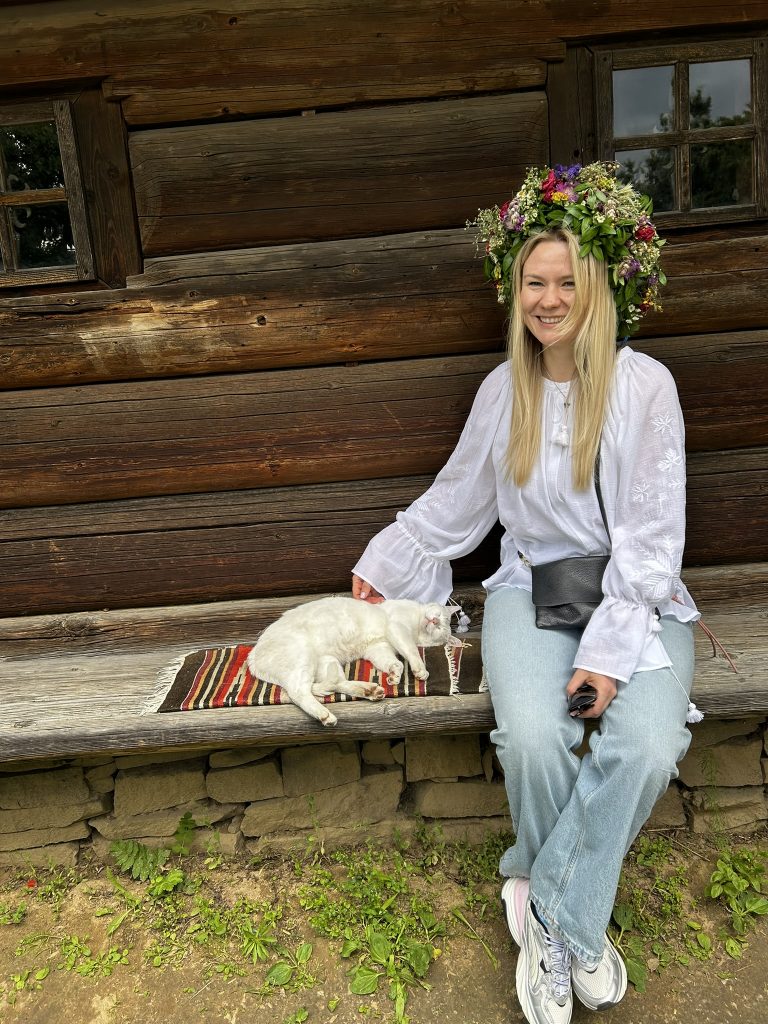
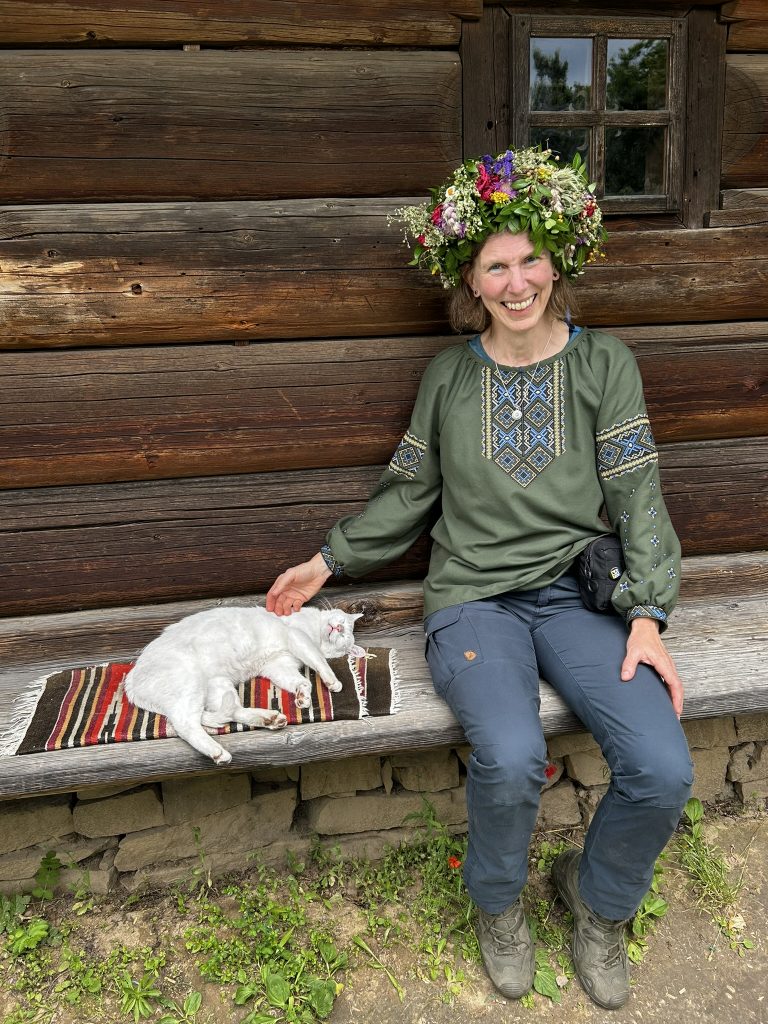
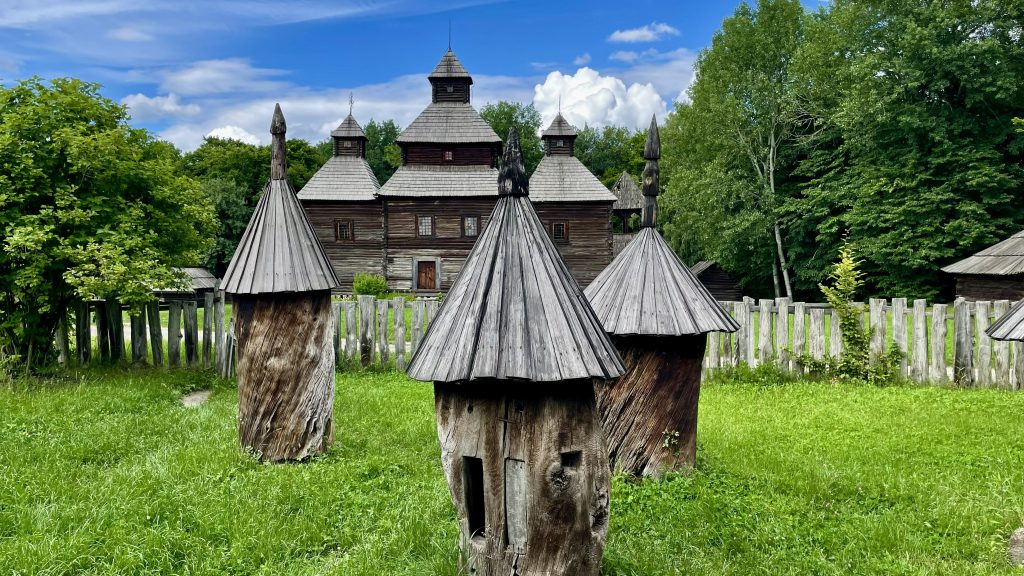
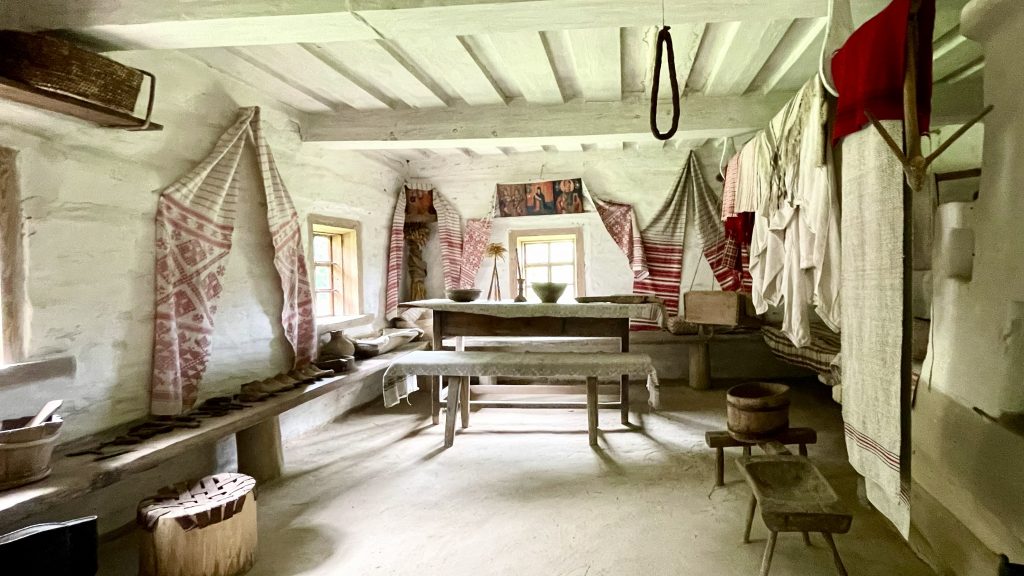
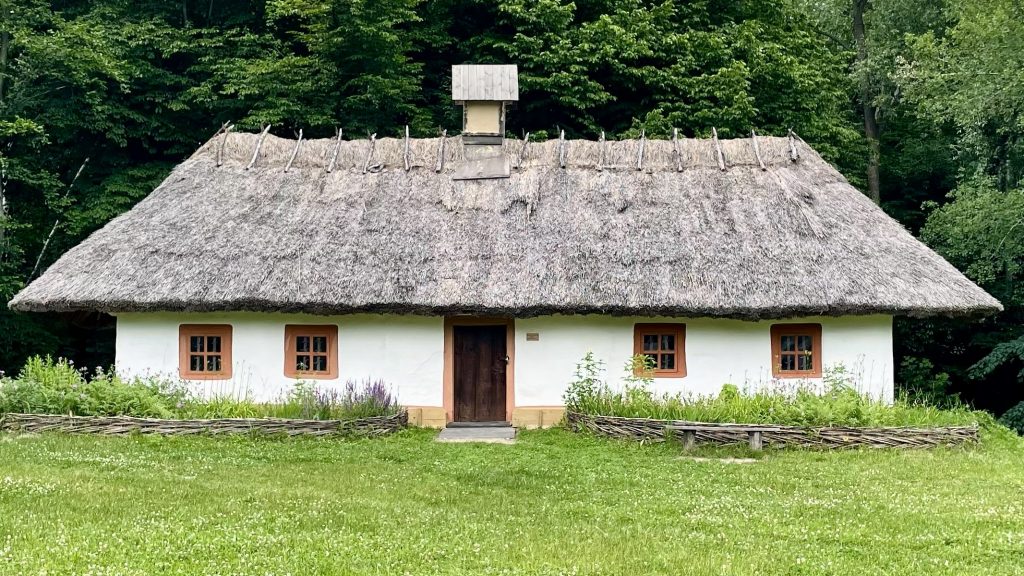
We received a very entertaining English-language tour—during which we had to master the challenges our tour guide posed.
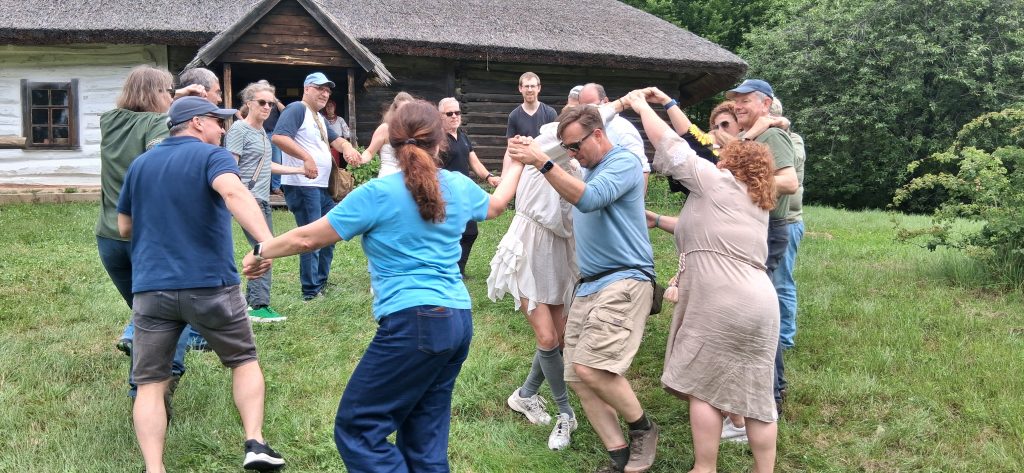
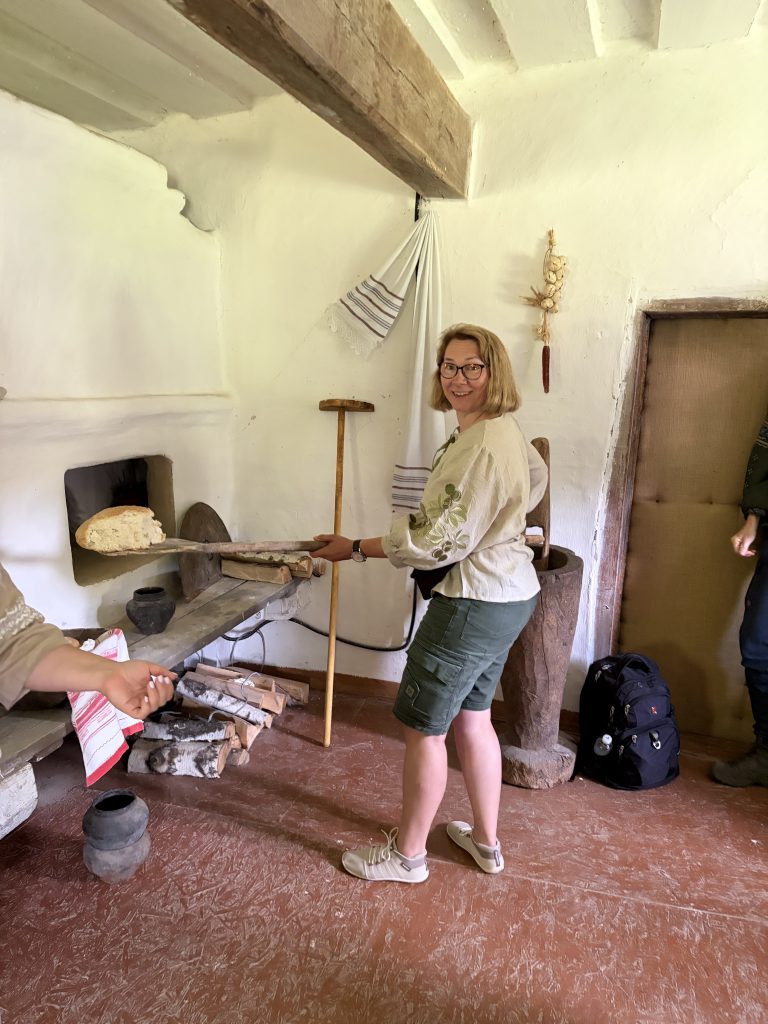
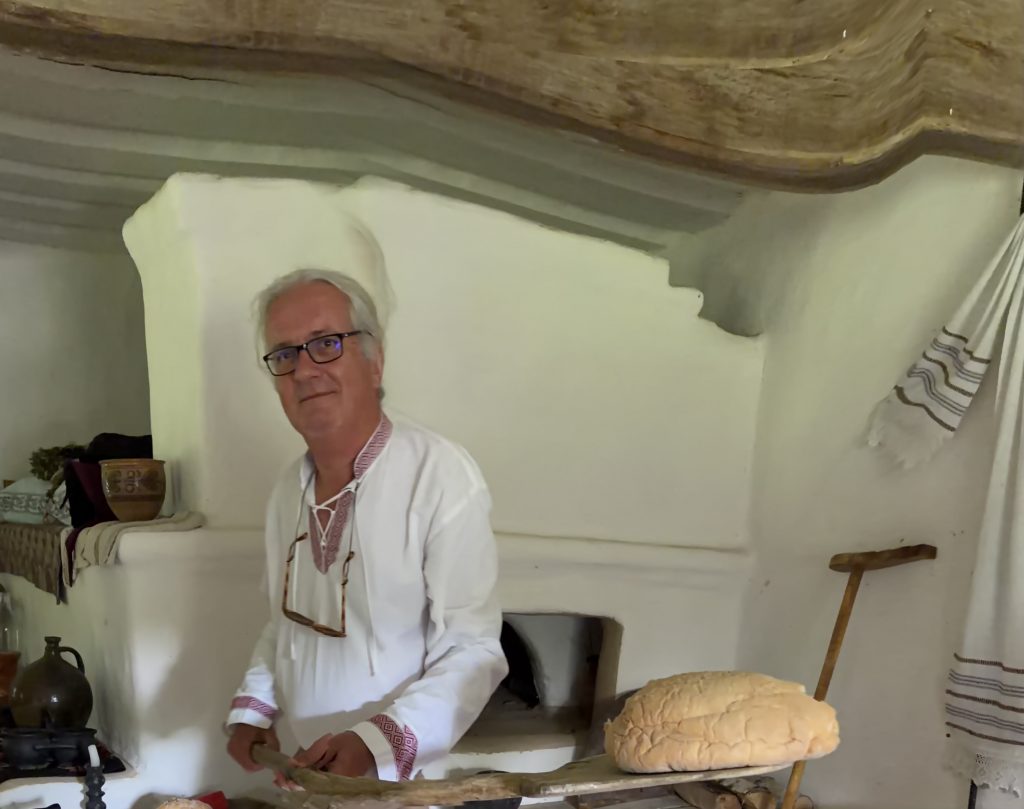
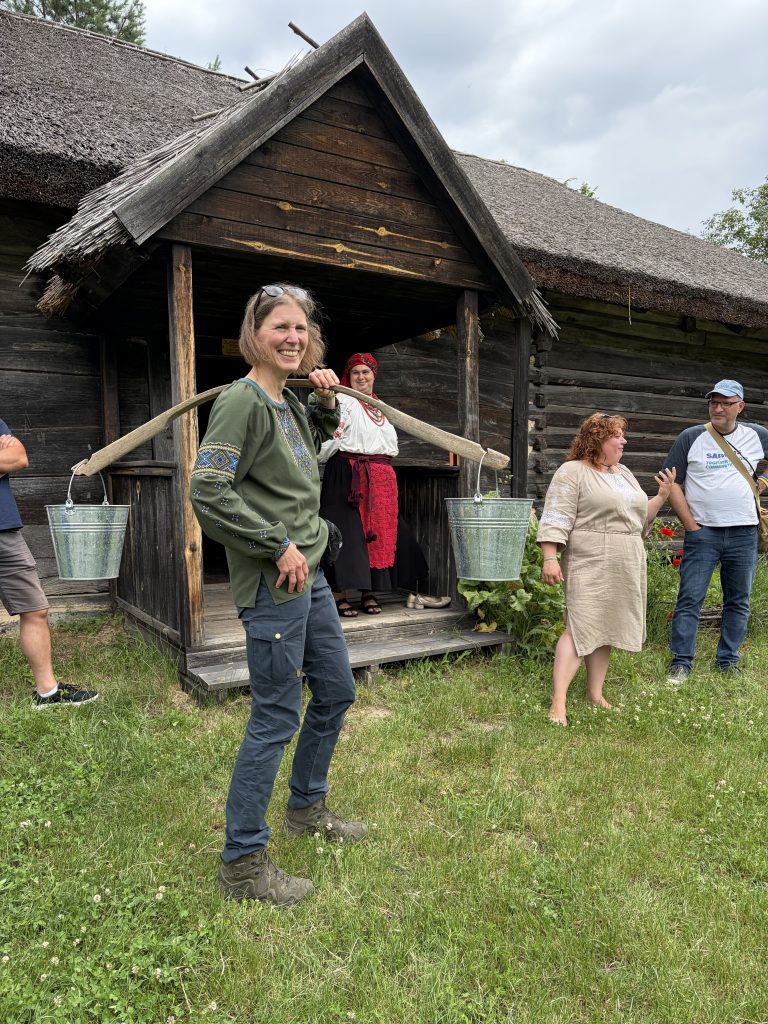
After being told that Ukrainian children in the villages used to have to take on household tasks from early childhood, we were allowed to try for ourselves to take bread out of the oven with a long wooden spatula, or to carry two (though only half-filled) buckets of water around the group. We also successfully met the challenge of responding to the Ukrainian folk songs presented by the guide (and our Kyiv SAP colleagues) with German folk songs. However, we still need some practice with the folk dance, which used to be a kind of rite of passage among the village youth.
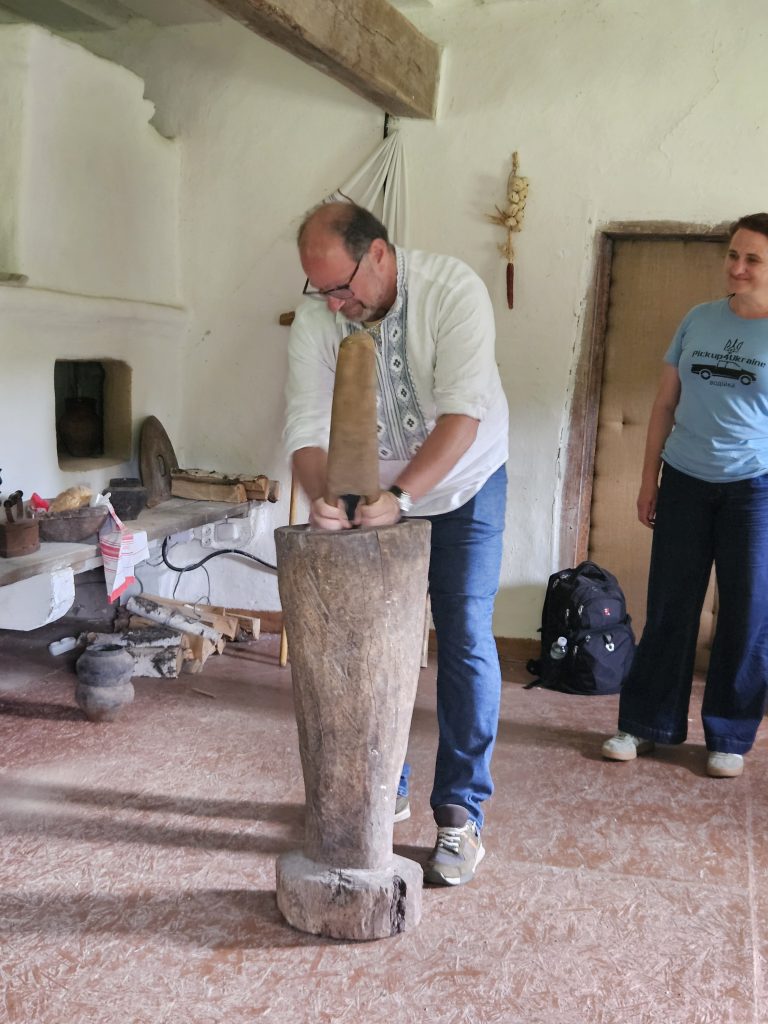
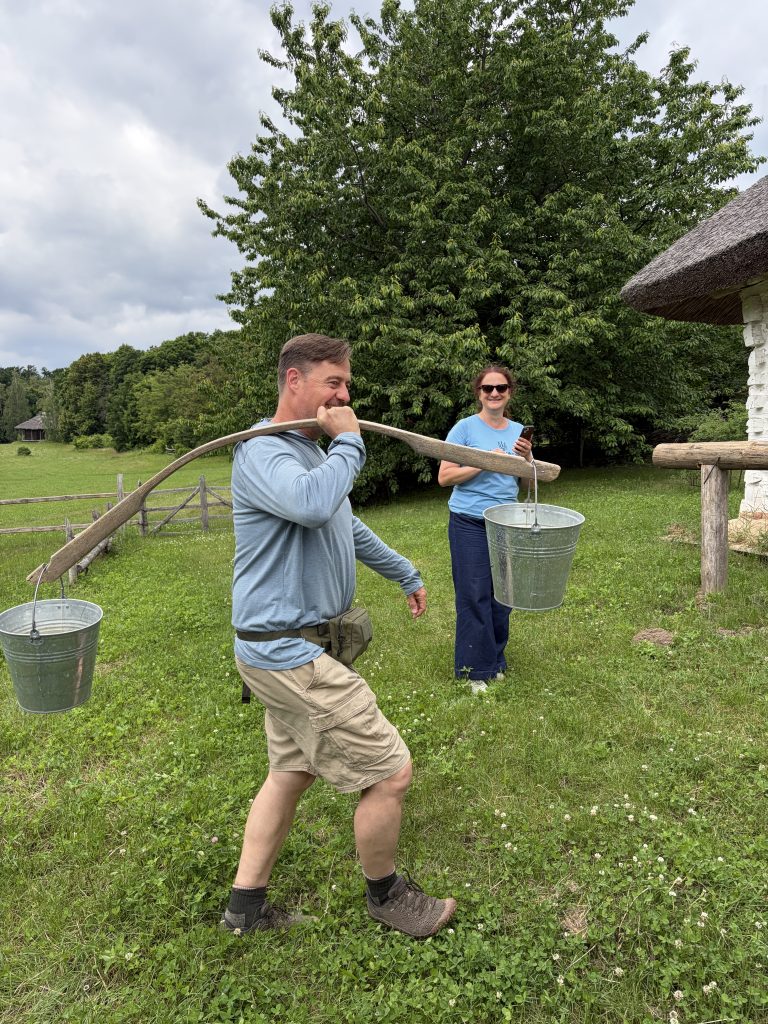
After a large meal under a tent outdoors , our SAP colleagues drove us and our luggage to the main train station. Our train left Kyiv on time.
Return journey
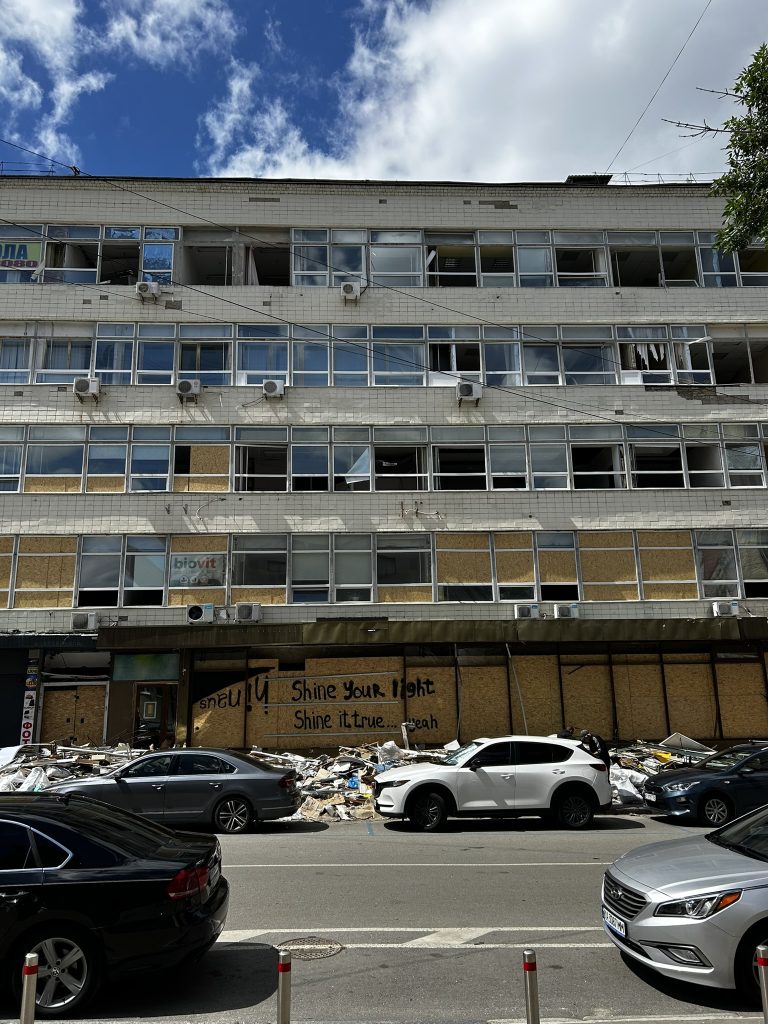
While en route to Poland, we learned that Russia was carrying out one of the largest attacks that night, during which, among other things, buildings of the historic Pechersk Monastery in Kyiv were destroyed — some of which people from our group had just visited on Saturday. When you have just been in this vibrant, colorful, noisy city, this news and the accompanying images and reports hit you with a very different impact.
In Przemyśl, there was a big rush at the Polish customs control. We were given priority with EU documents, while in the line of Ukrainians, people with leg prostheses had to wait. Only wheelchair users were allowed to go ahead.
The return journey from Poland took very different routes: by plane from Kraków to Frankfurt or Stuttgart, or by night train from Przemyśl.


