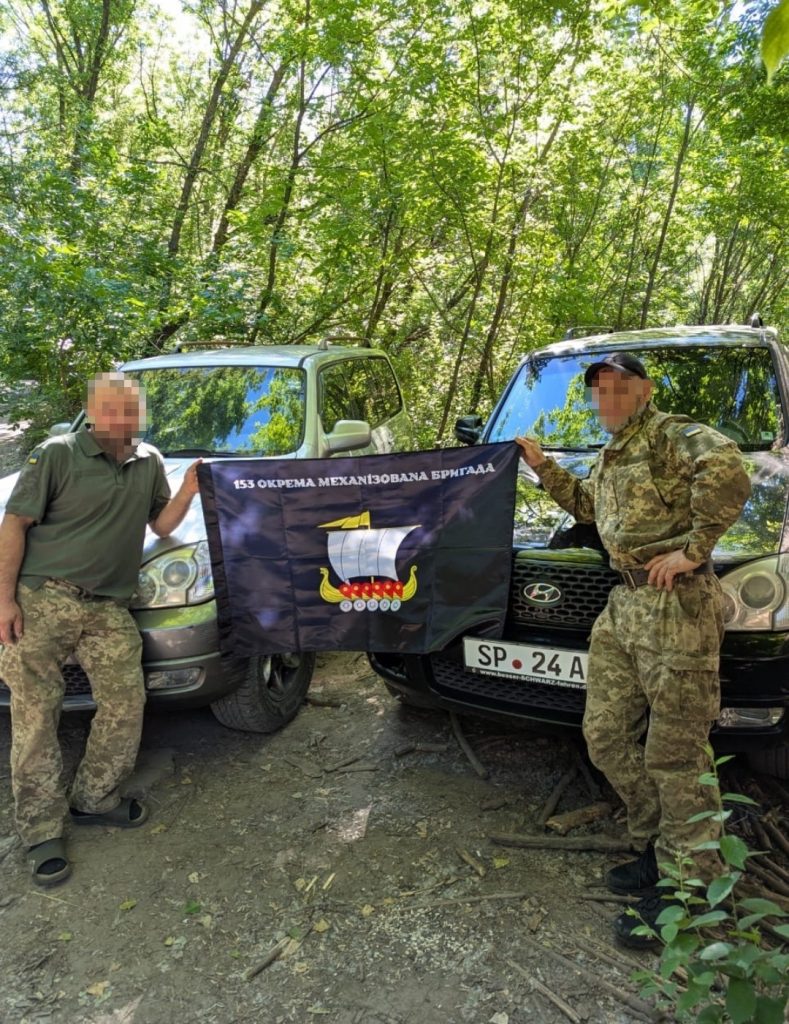
It has been a while since our last deliveries 19 and 20, but in June 2026, we managed to organize two more – on two very different runs – and deliver a total of 15 vehicles to Ukraine.
We had originally set our sights on a large convoy of 10 vehicles for June 2026, but then everything changed. First came the classic scope creep: our planned convoy grew from 10 to 12 through a series of circumstances. We always want to get as many vehicles into Ukraine as possible. They are urgently needed, and if we can source them, we do – and if we find enough drivers, we bring them all over. This time, though, 12 planned vehicles really was our limit.
Then three more vehicle requests came in, two of which had already been funded in Ukraine: an urgent VW T5 for a unit that had reached out to our partner organization Lawyers Move, and two SUVs for the unit in which an SAP colleague serves. Friends and family of our SAP colleague Anton had already raised the funds needed for either a pickup truck or two SUVs by the time he approached us. The decision to go with two affordable SUVs rather than one expensive pickup was an easy one, and they were sourced very quickly. The VW Transporter we had been able to procure earlier than planned – originally intended for conversion into an evacuation vehicle.
The handover to the unit was planned for western Ukraine, so our first question was whether drivers who only wanted to go as far as the Polish-Ukrainian border on behalf of Pickup4Ukraine could bring the vehicles to Poland, where Ukrainians could collect them and drive them across the border. While the logistics of this plan were being worked out on the Ukrainian side, we found in Markus, Jürgen, Ingar, and Stephan a team willing to drive the three vehicles – as on any other run – all the way to Radymno, and then make the short hop across the border into Ukraine, rather than going all the way to Kyiv. Preparing the transport – and in particular sorting the export paperwork for the three vehicles – fell to Michael in Speyer on top of the already planned large convoy. The logistics of four drivers for three vehicles were also a challenge, and since a border crossing with customs clearance always carries its share of unknowns, Annette decided three days before departure to come along after all – meaning the two vehicles aiming to cover the distance to the Ukrainian border in a single day each had two drivers. Markus drove to Radymno over two days. Our mechanic and friend Roman had put us in touch with a contact in western Ukraine: Taras, an Orthodox priest, who allowed us to leave the vehicles at the premises of a relief organization, from where the recipients could collect them later.
On the 21st transport – a short convoy with just 3 vehicles and five drivers – nearly everything that could go smoothly did.
Wednesday / Thursday, 3 / 4 June 2026
While Markus set off for Poland in the VW T5 on Wednesday, Ingar and Jürgen, Stephan and Annette – as is customary, at the crack of dawn – headed out from around the region in the two Hyundai Terracans and met at a highway rest stop at 04:30. With just two vehicles, stops were quick, even if we refueled a little more often than usual: the fuel gauge on one of the Terracans was broken, so we wanted to play it safe. It also had a tendency to sway slightly on small bumps, especially going downhill, but over time – and after a brief check with Roman – we had that under control as well.
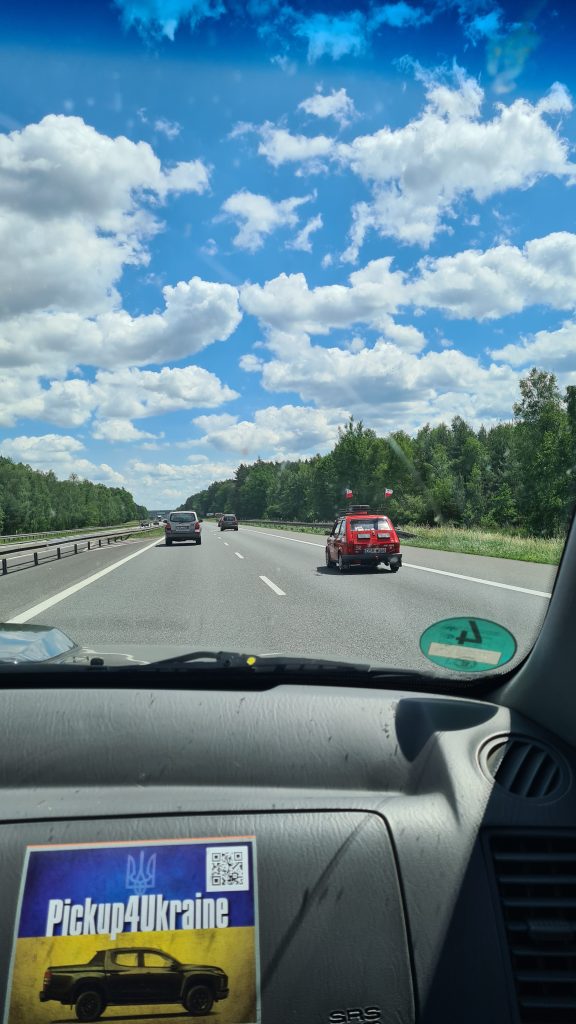
We made good progress; it was a public holiday in both Germany and Poland, so the roads were notably less congested.
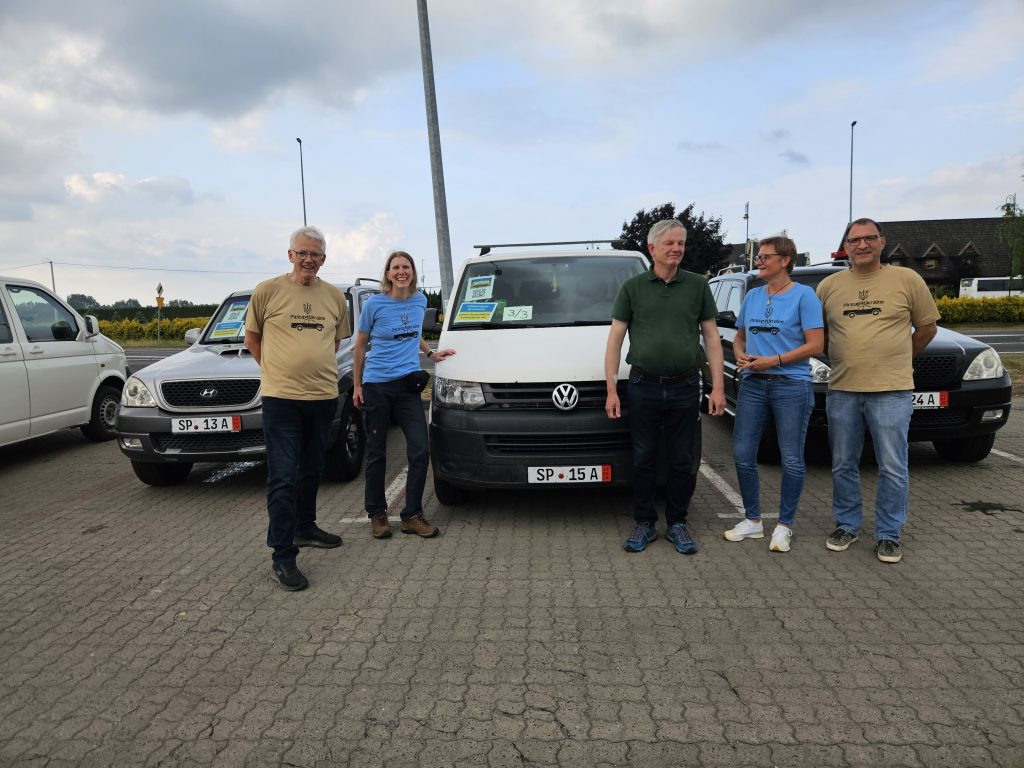
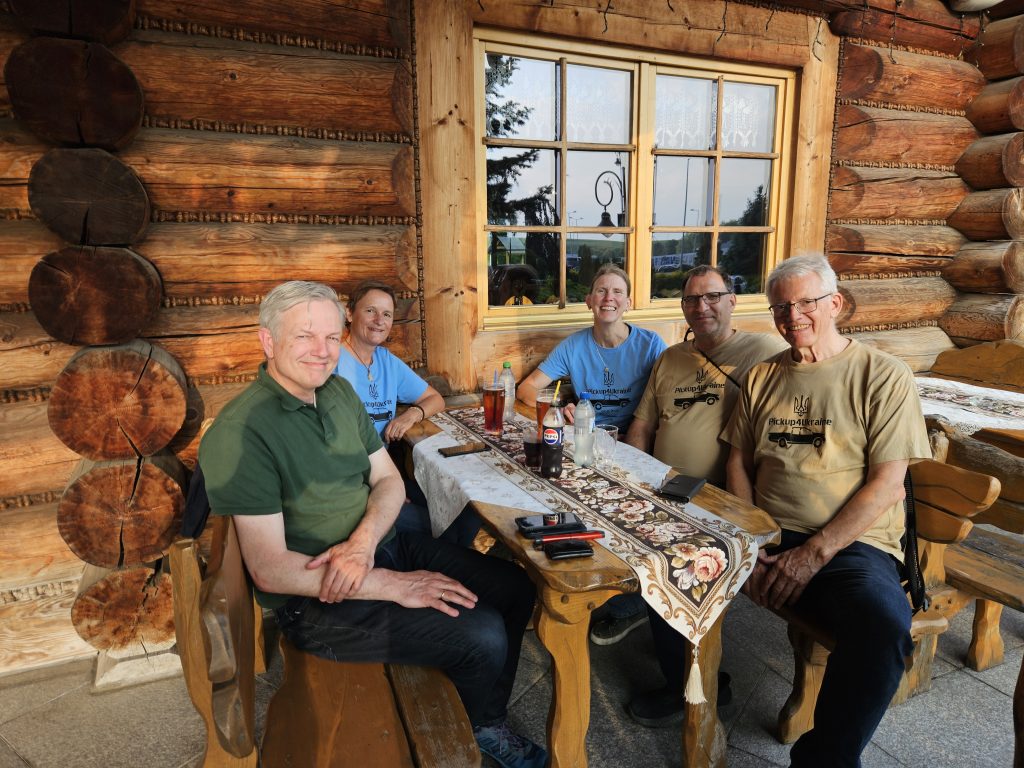
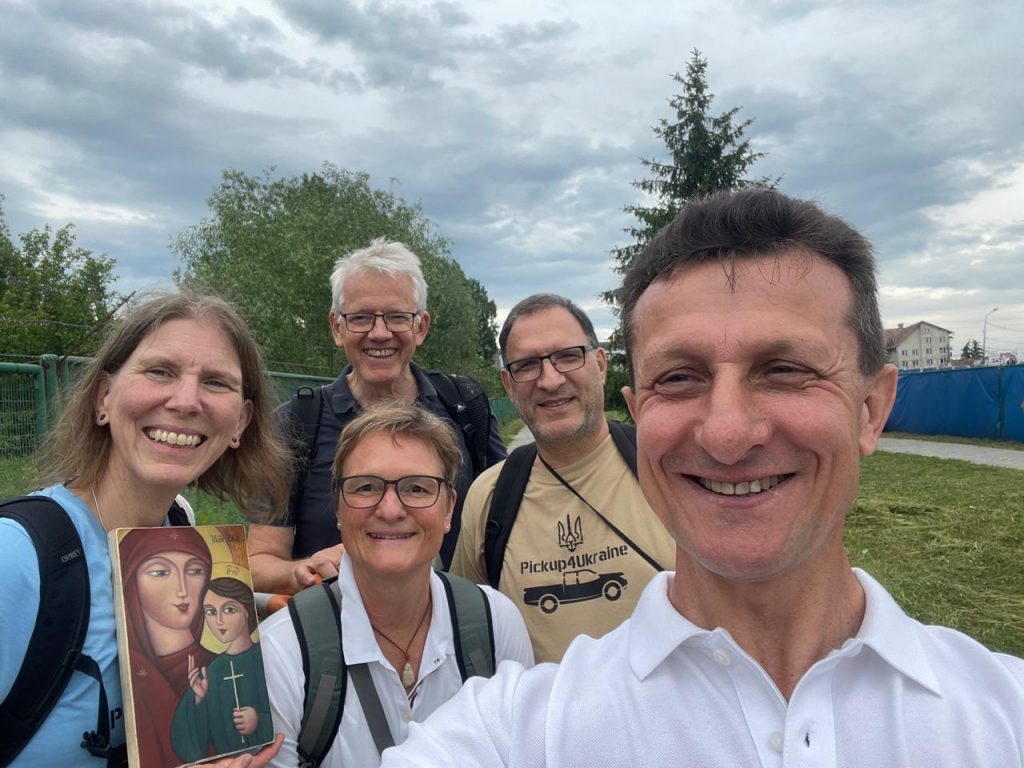
In Radymno we met up with Markus, took a group photo, submitted the customs paperwork, and rounded off the evening with a shared dinner. The weather was glorious and we sat out on the restaurant terrace.
Friday / Saturday, 5 / 6 June 2026
On Friday we headed straight to the border after breakfast. No queue, all very straightforward. The Polish customs officer who checked our passports was relaxed and even spoke German – quite unexpected, and very courteous.
We were travelling without cargo, which meant clearance on both the Polish and Ukrainian sides went quickly. The only surprise, as so often, was the question of where and from whom you need to get stamps on the “talon” at the Ukrainian border – the little slip of paper recording the number of passengers. It is a bit like Pokémon: depending on the guards’ instructions for the day, you have to collect three or four stamps at various checkpoints, and you need to have all the ones required for that particular day. This time only three stamps were needed, and none of them from the person at the weighbridge.
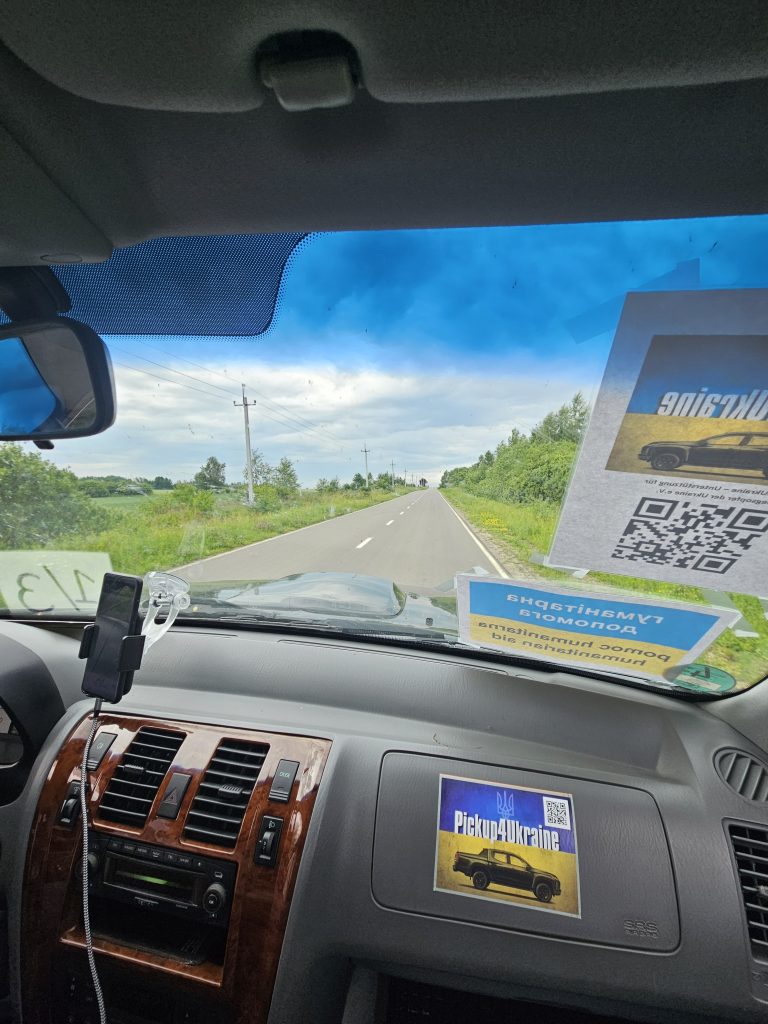
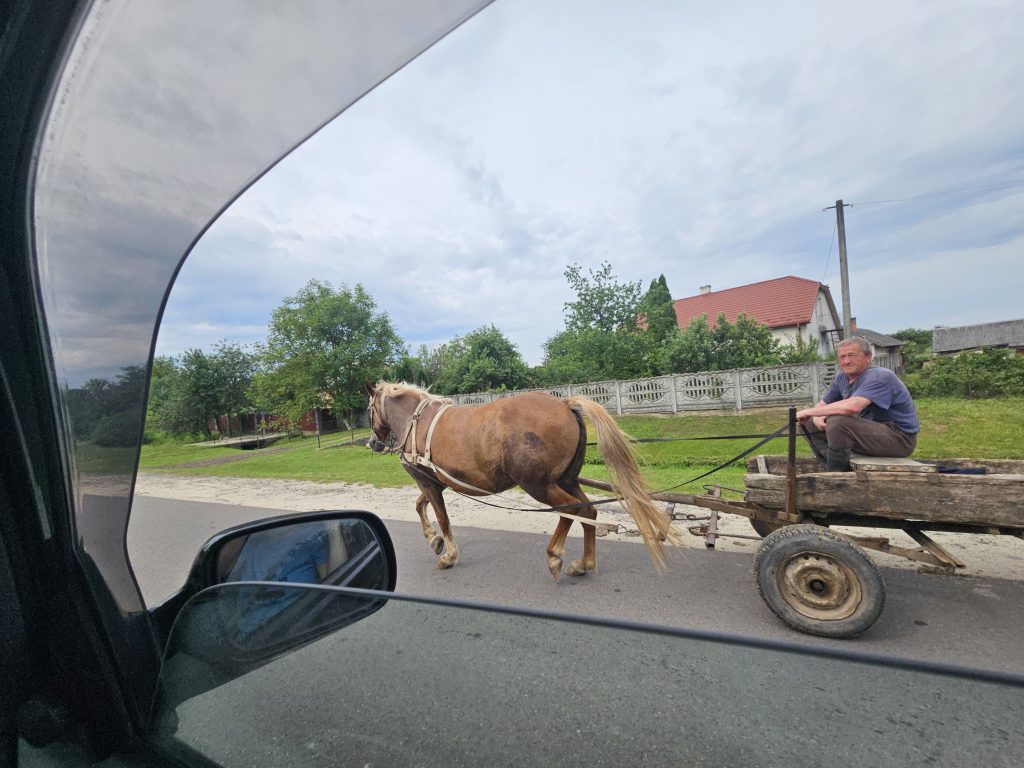
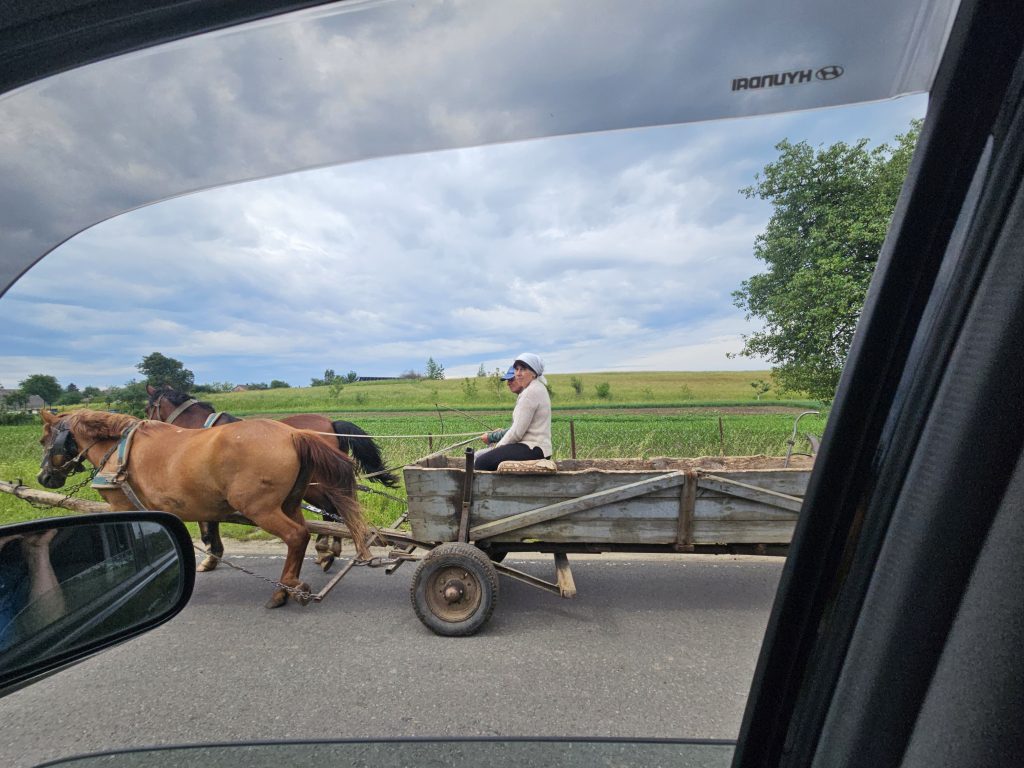
We still remembered the state of the roads back in February this year, when even the well-built country roads had been riddled with potholes and all manner of bumps. So we approached the prospect of driving through the hinterland to our agreed meeting point in a small town with a degree of trepidation. But that too turned out to be no problem at all. The roads were asphalted; now and then a car would pass, or we would overtake a horse-drawn cart, and it took us only half an hour to reach the little town.
There Taras was waiting for us with his youngest son, who spoke excellent English. We parked the vehicles, handed Taras the documents, and then he asked whether we might like a coffee or something to eat. We gratefully accepted and drove with him to a restaurant where a sort of banquet was already being set up for the evening. We were able to sit down in a side room. The “breakfast,” however, would have consisted of something resembling a goulash, and, at 10:30 AM, that felt a little early. So we had coffee and tea and enjoyed a conversation with Taras and his son.
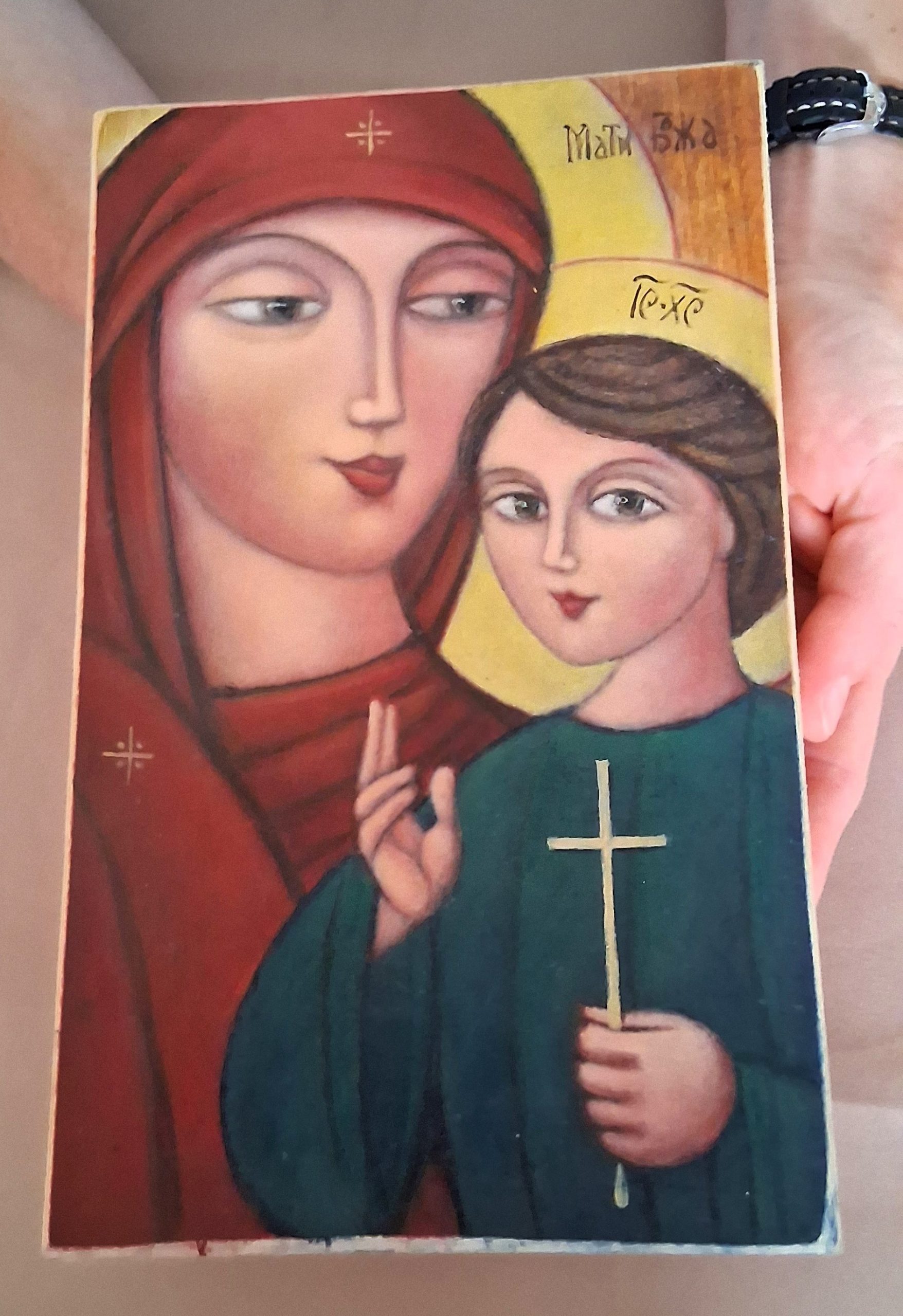
As a token of gratitude, on behalf of the recipients of the vehicles, Taras presented us with a modern icon. A friend of his had painted it. He had fled from eastern Ukraine as an internally displaced person to the area around Lviv, and Taras had found him accommodation in a village. He has given up his previous job and now paints icons, which he sells – but also gives away to units of the Ukrainian armed forces.
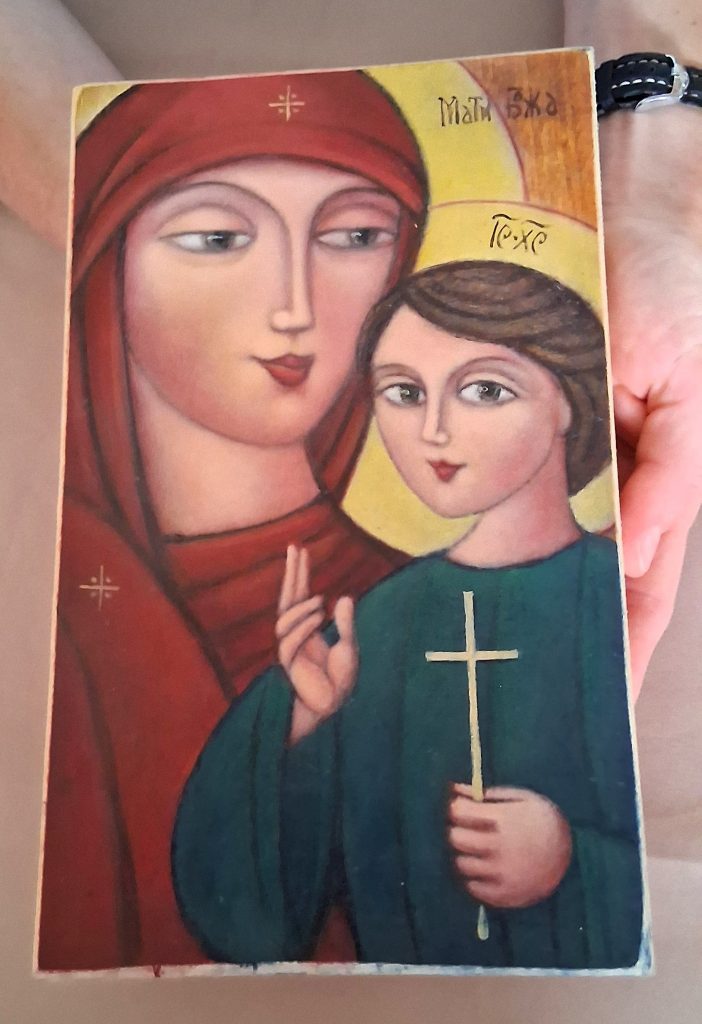
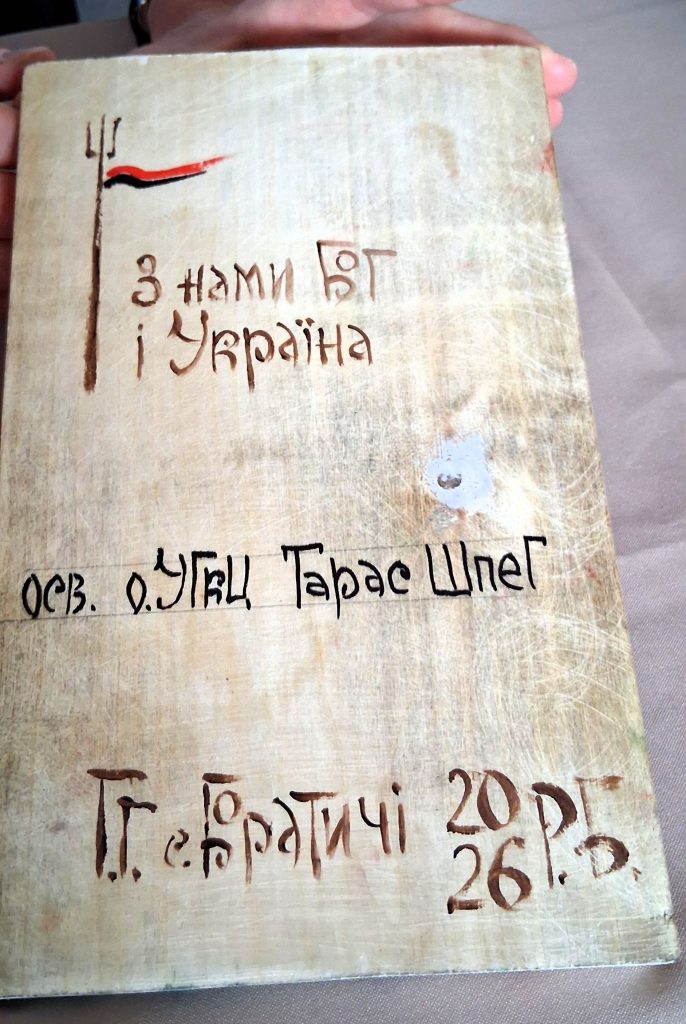
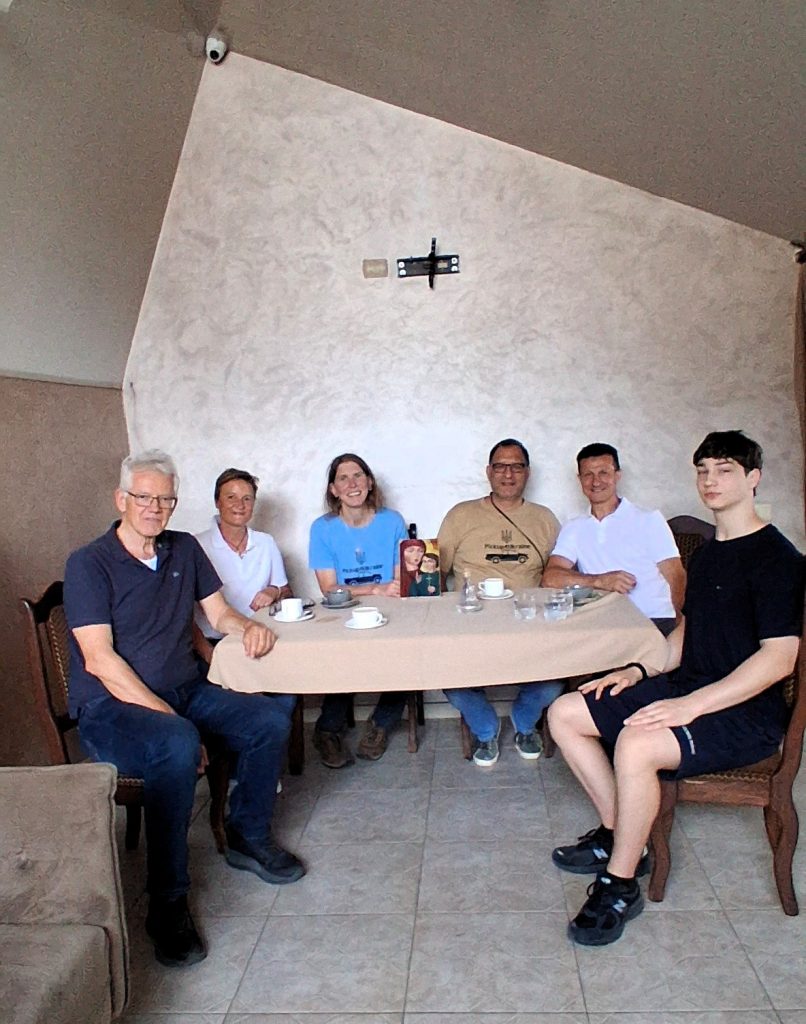
Taras told us that these icons are regarded as bringing divine protection. Ours is painted on a piece of reclaimed oak and was blessed by Taras with holy water. He recounted that at the start of the full-scale invasion he himself would often drive east to bring supplies to the soldiers. Now he is caring for his father, who needs round-the-clock support, and can no longer take on multi-day volunteer assignments outside the region. There was a note of regret in the way he spoke about it – you could sense that he wished he could do more to support the “boys at the front.”
He also shared further stories passed on to him by soldiers at the front – among them the tale of the goat. A group of fighters at the front had been joined by a stray goat; they took her in and cared for her as best they could. Whenever the goat was outside with the soldiers at their position, she showed a remarkable instinct for sensing imminent attacks. The “lads” reported that on several occasions – before the fighters themselves could hear the incoming enemy round – the goat would jump into the bunker. Alerted in this way, they were able to take cover in time.
Taras also spoke of another soldier he had met. During their conversation – held far from the front – the man had constantly looked in all directions, above all upwards, checking whether any drones might be approaching. Taras re-enacted this so vividly, with such expressive gestures, that we could follow him perfectly even without his son’s translation.
Taras then drove us back to the Polish border, and we crossed on foot.
Thanks to our EU passports, we were waved past the queue of waiting Ukrainians. A local commuter train took us to Przemyśl, a small but historically significant town in south-eastern Poland, where we had a few hours to spend before our night train back to Berlin.
The night train then proved something of a trial. We could not book couchette berths, only seats in six-person compartments. With 33 stops on the Polish side alone, there was no peace and quiet to be had. Each station was announced individually over the overhead speakers, and fellow passengers came and went throughout the journey.
We also had a couple on board who seemed extremely on edge, repeatedly moving between two compartments whenever a seat freed up for a few stops. The two had bought their tickets on the train and would not engage with us. At the Frankfurt/Oder border crossing, the reason became clear. They had no valid papers – only an old document showing they had worked in France at some point, and a bank card from some bank or other. The border officers were, of course, not satisfied with this. The couple left the train without any resistance, accompanied by three officers. We have no idea what became of them. At least it seems they had made it as far as Germany.
In Poznań, the train was held for an hour because additional carriages that were supposed to be coupled on arrived late. As a result, we missed our connecting train in Berlin and had to piece together an onward journey to Mannheim from whatever was available.
There, Stephan and Annette were kindly picked up, and Jürgen and Ingar were able to take the S-Bahn home. By early Saturday afternoon, everyone was back home.
In the meantime, the VW transporter has been brought to Kyiv for casevac conversion and unit of our colleague received the two SUVs. The vehicles have taken up their duties.