We’ve now successfully wrapped up our 23rd delivery, and quite a few things went differently than expected. You just have to adapt.
Preparations
First, a word on the preparations. After our big June transport, we’d planned to run a “smaller” convoy this time. It still ended up being pretty big.
Things started going differently even at the planning stage, thanks to supporters who donated their own vehicles to us out of genuine conviction. Dr. H. from North Rhine-Westphalia, for instance, donated a VW van, and the S. family from the Hamburg area gave us a Honda Odyssey.
Assembling seven vehicles takes real effort, too, and beyond the donated vehicles, that only happens with the help of our friends, who sacrifice their free time to search for cars, inspect, test-drive, buy them, drive them to us, and get them registered. A special thanks here to Christian, Andreas, and Oliver for their hard work, their research, and their quick responses!
Since some of the vehicles needed inspection (TÜV) and/or repairs, we needed the help of our friend Roman. Roman came along to look at several vehicle, spotted defects on the spot, and was able to knock down the prices. Afterwards, he helped pick up the vehicles and carried out the necessary repairs himself — some welding here, replacing a clutch there, fixing a turbocharger, and even shepherding a car through its inspection — all on a volunteer basis, without pay. Without his invaluable know-how, we simply couldn’t operate the way we do today.
We also had three more vehicles on this trip that were funded by our Swiss partner organization, 1019.ch: two VW vans to be converted for evacuation use, and another VW T5 for a unit that 1019.ch had connected us with. Fabian Wespi joined us from Switzerland — our thanks go out to Martin Fussen and everyone at 1019.ch for their continued partnership!
Our usual packing day didn’t happen this time — after the bad experience with our 22nd convoy, we need to figure out how to reliably export relief supplies duty-free out of Poland in the future. To avoid problems, we didn’t bring any hospital supplies along this time.
And then, just before departure, word reached us from another aid organization: our contact told us about a new hurdle in Polish customs processing. According to his account, you could no longer get export papers in Poland without first having the coolant properly disposed of from the cars’ air conditioning systems. Skeptical, we tried everything we could think of: searching online for the EU regulation being cited, calling customs agencies, drawing up Plan A, Plan B, Plan B2, and so on. In the end, we couldn’t really get around the problem, and we set off with an uneasy feeling.
For that reason, we stretched the our outbound trip to three days for everyone this time, and we again opted for a smaller border crossing.
Two new participants joined the group this time — the rest of us were old hands. Over two prep calls, we again went over the ground rules and vehicle assignments, and — with a few updates — the security situation in Ukraine, especially in Kyiv. We’re still happy that our hotel in Kyiv has a shelter right in the basement.
Wednesday, August 26, 2026
After a civilized 7:00 a.m. start, our route on the first day took us from home to Katowice, Poland, as a stopover.
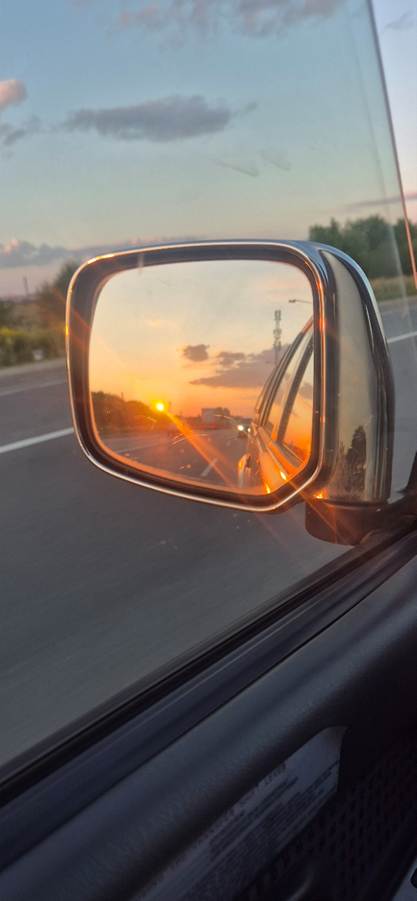
Just before Dresden, the highway was suddenly closed, and we got stuck in a big traffic jam. We figured there had been an accident on the opposite side. Shortly after, though, our side was completely closed, too. We soon found out why: a stray dog was wandering around on the highway, on the other side and also among the cars on our side. Police tried in vain to catch it. After a while they must have succeeded, because the road was reopened at one point.
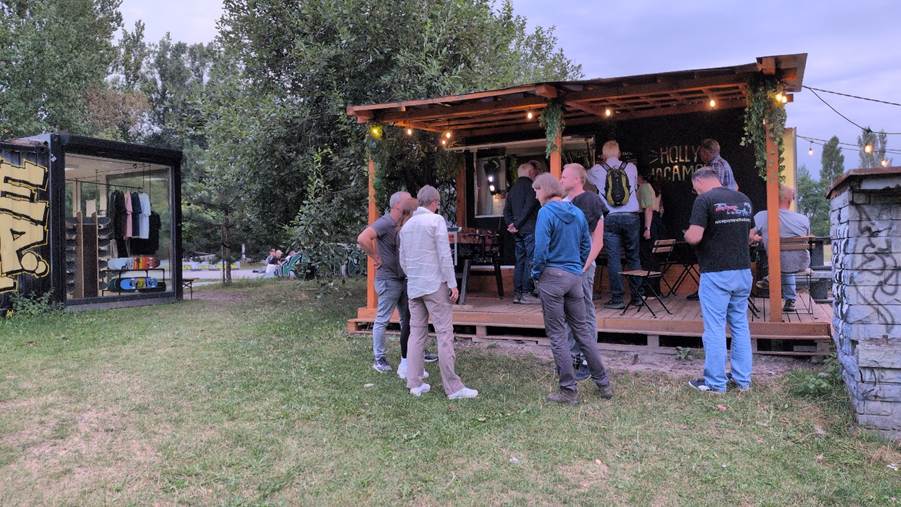
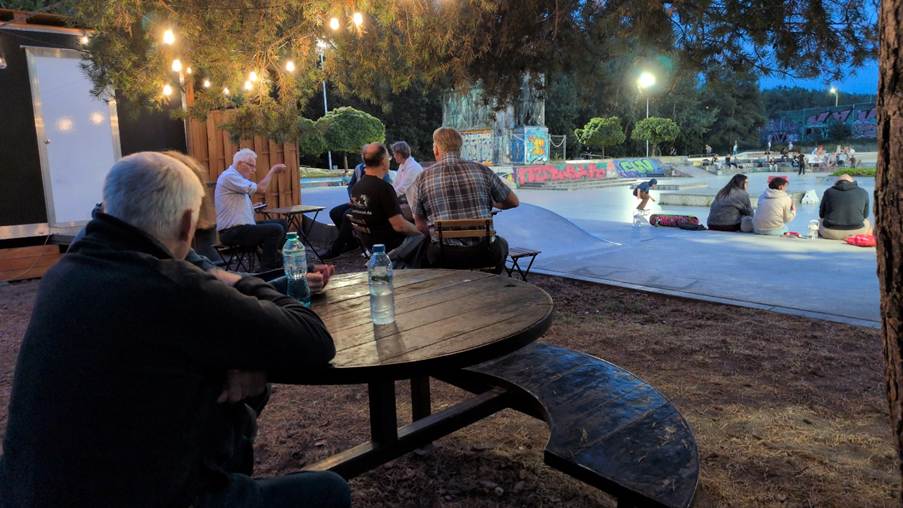
The drive was long but manageable. In the end, we were all glad we could stop and spend the night in Katowice, since the stretch we’d normally cover on one day would otherwise have meant another nearly 300 km, almost all the way to the Polish-Ukrainian border. That left us time for a short evening walk and some tacos from a food truck, parked next to a Soviet-era monument whose plaza has since been turned into a skate park.
Thursday, August 27, 2026
Thursday’s agenda was to cross the border and make it to Lviv[MS1] . We’d planned a stop in Radymno at the customs agency regularly work with — this time without an overnight stay, just an early lunch. Unfortunately, the paperwork process took nearly three hours. That wasn’t only due to delays on the customs side itself, but mainly because the coolant had to be removed from four of our seven vehicles before the customs documents could even be applied for. The agency called in a technician to the parking lot, and one car after another was hooked up to the mechanic’s machine to have its coolant properly disposed of. For each vehicle we got a confirmation document, which then had to be handed back to the agency. Cash only, very annoying.
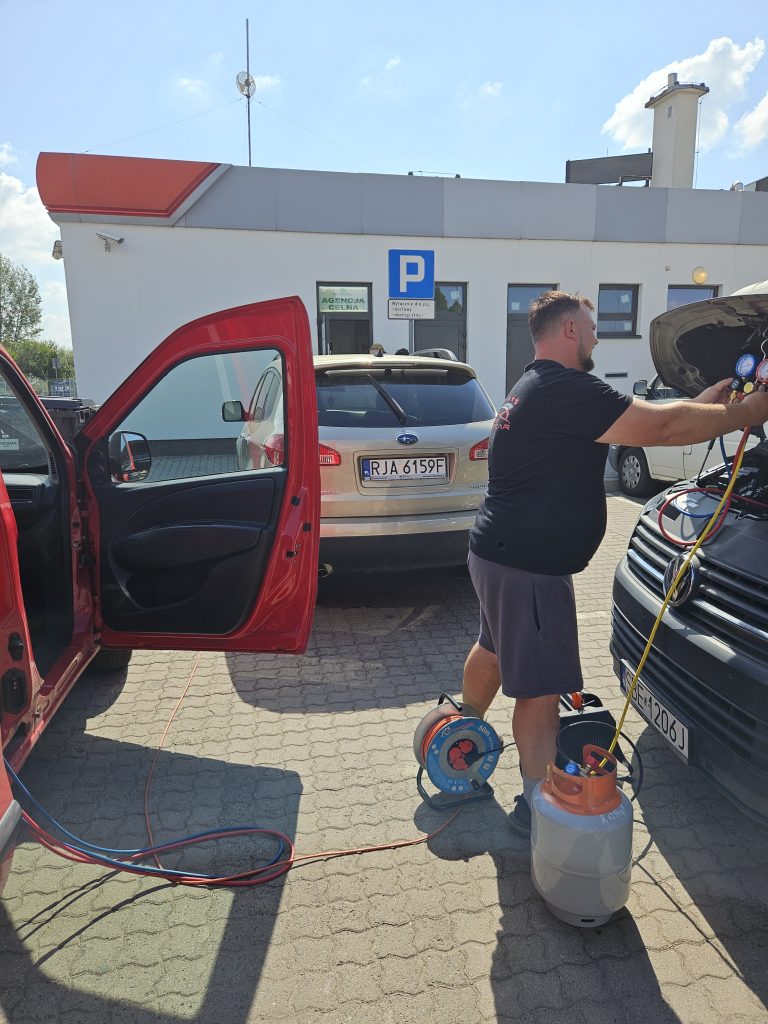
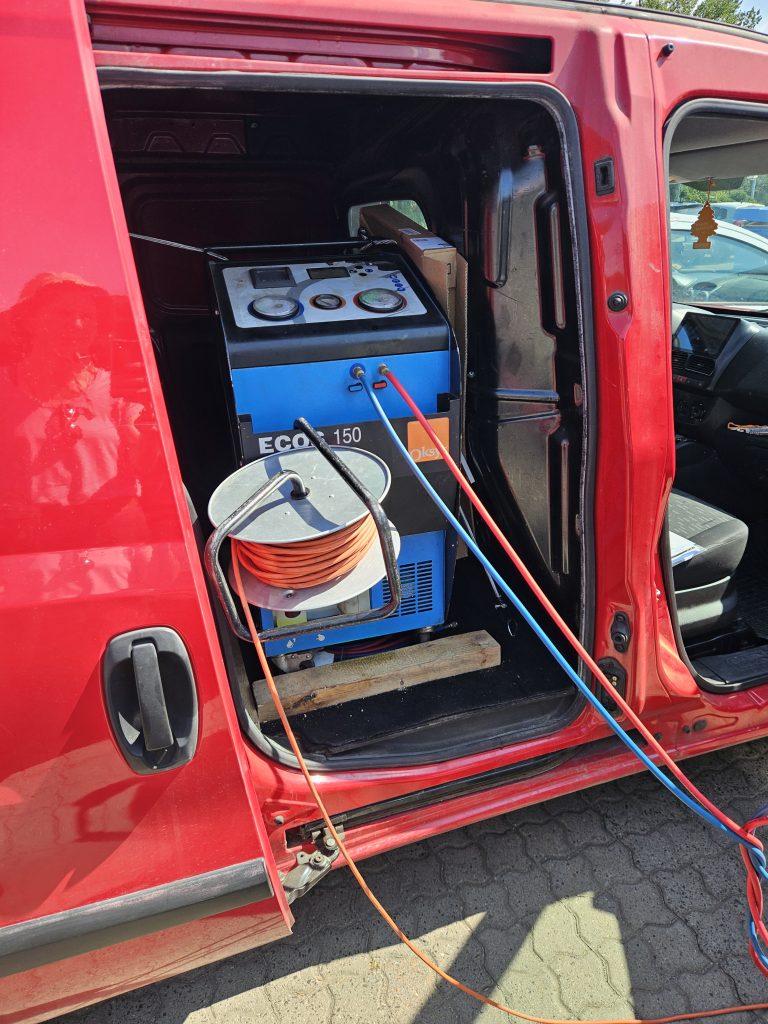
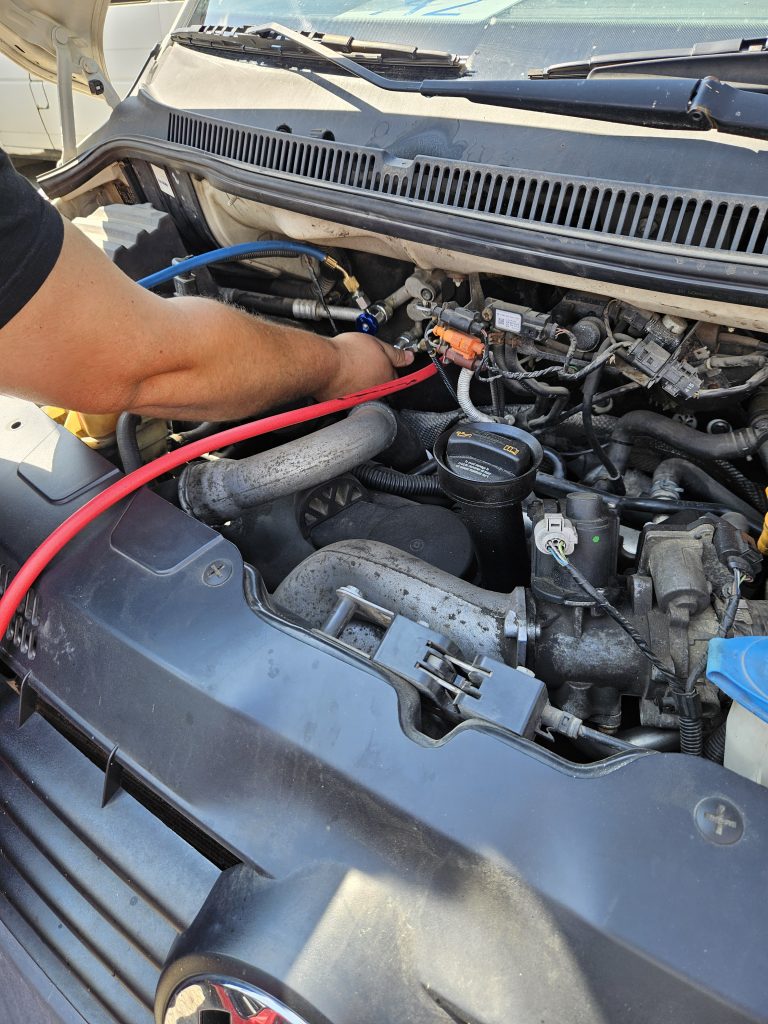
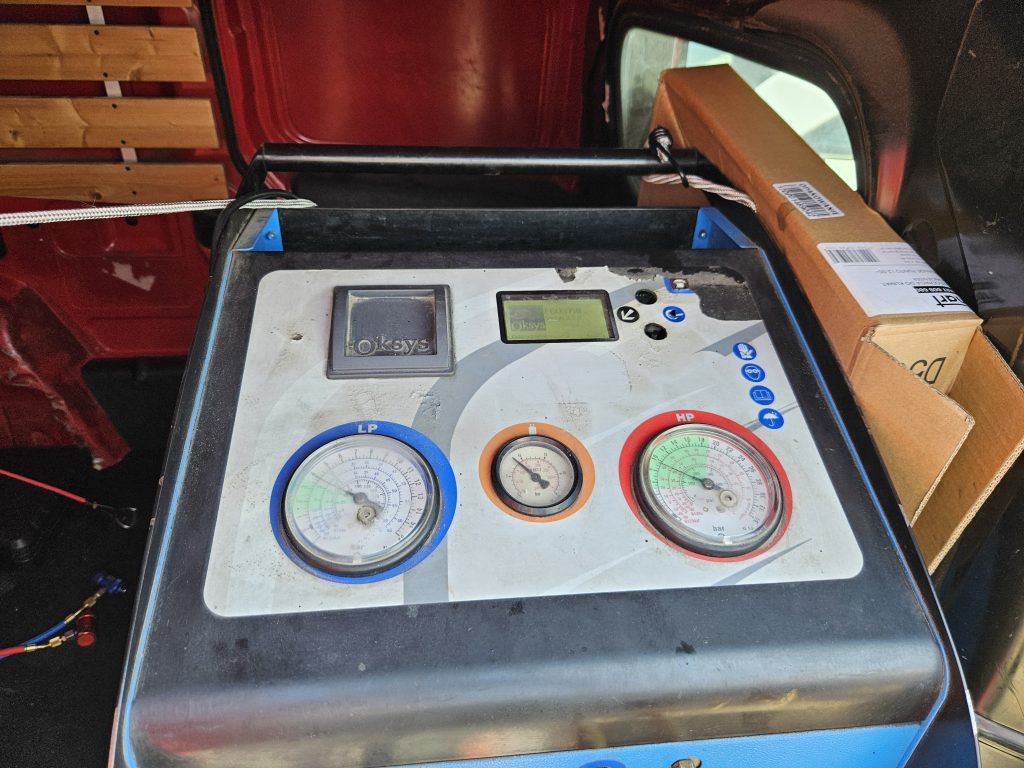
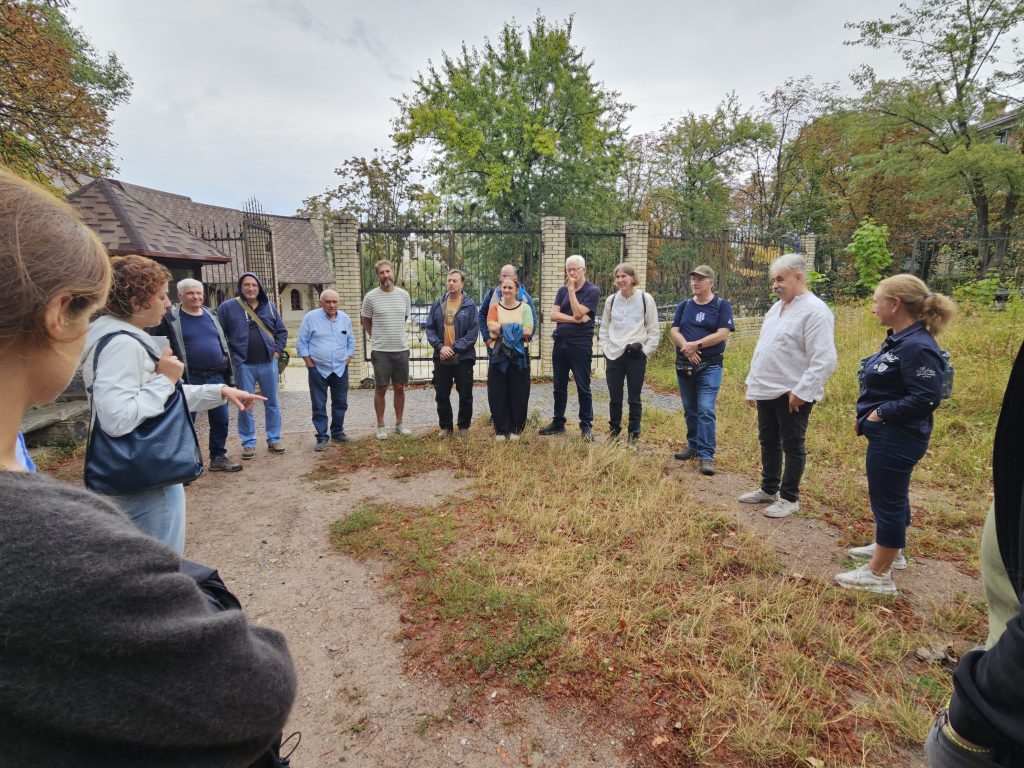
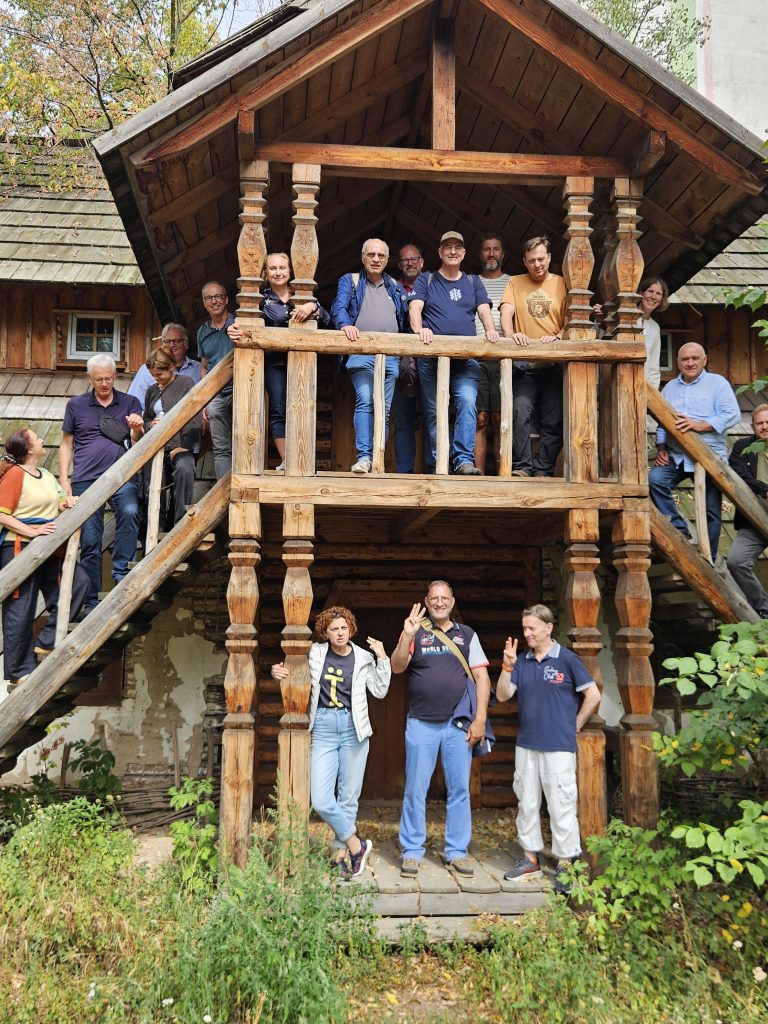
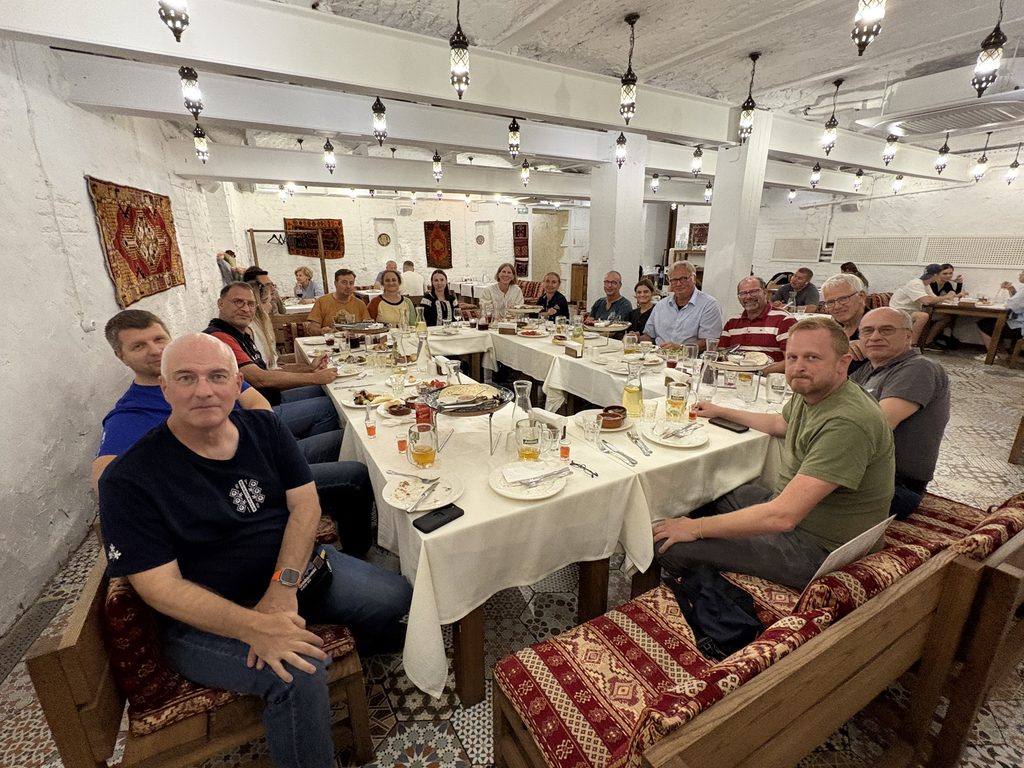
Still, we had plenty of time and daylight left for a group photo.
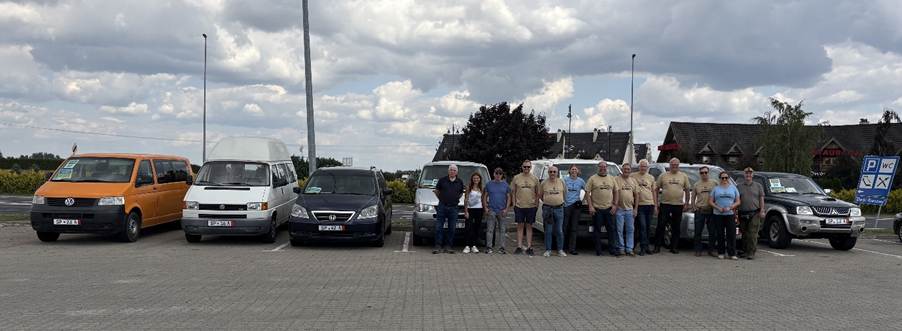
From there, off the main highway toward Korczowa, the drive to the border crossing was a varied one — one Polish village after another. A line was awaited us at Medyka, but a after talking a little with the people ahead of us in line, they let us cut in front. The border crossing itself went smoothly. For one thing, we weren’t carrying any hospital supplies, and for another, Medyka is smaller, easier to navigate, and perhaps a bit more receptive to aid shipments headed into Ukraine.
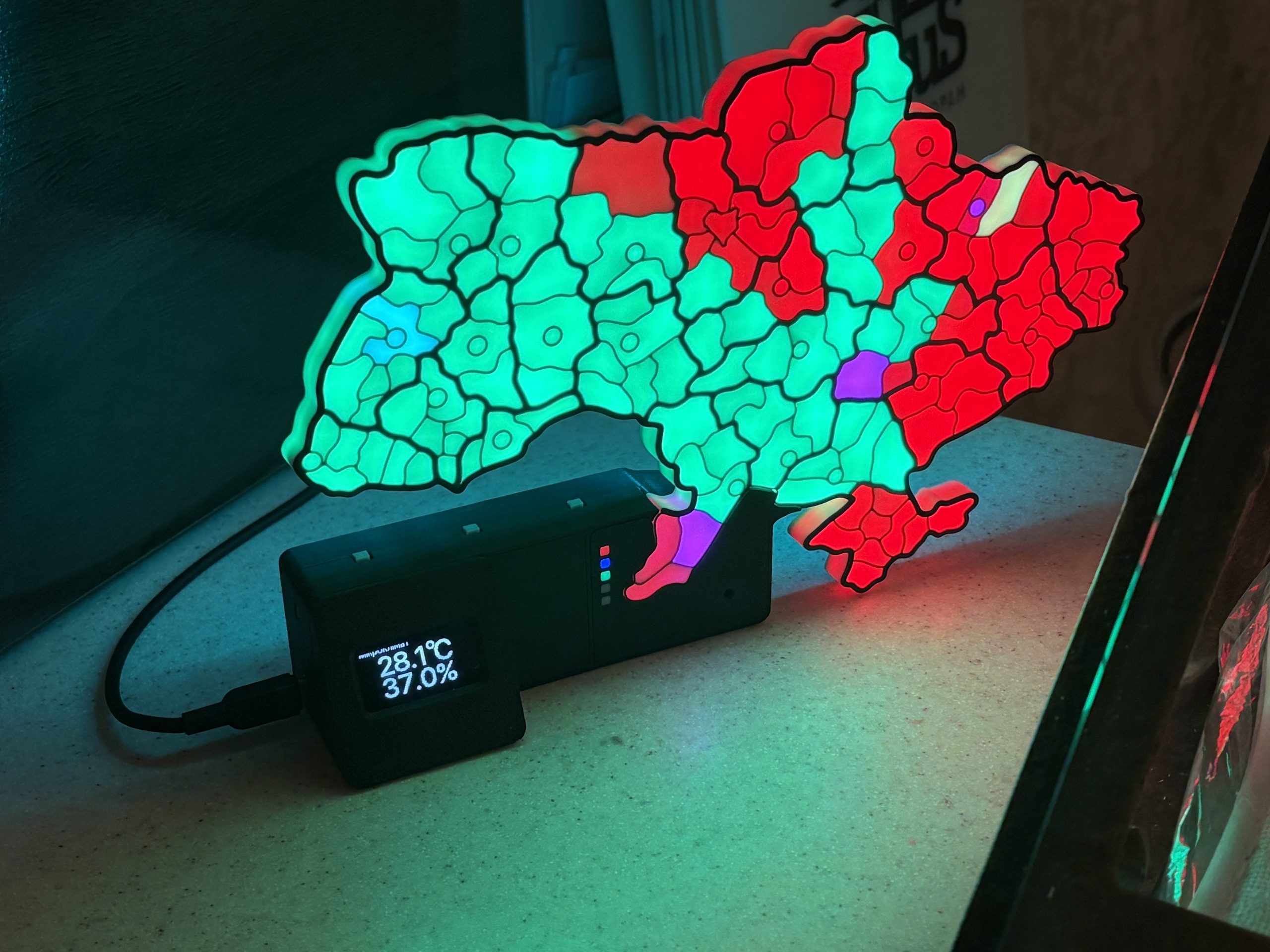
Our first night in Ukraine, near Lviv, was quiet. At the front desk stood an illuminated map that showed the status of air raid alerts across the country in real time.
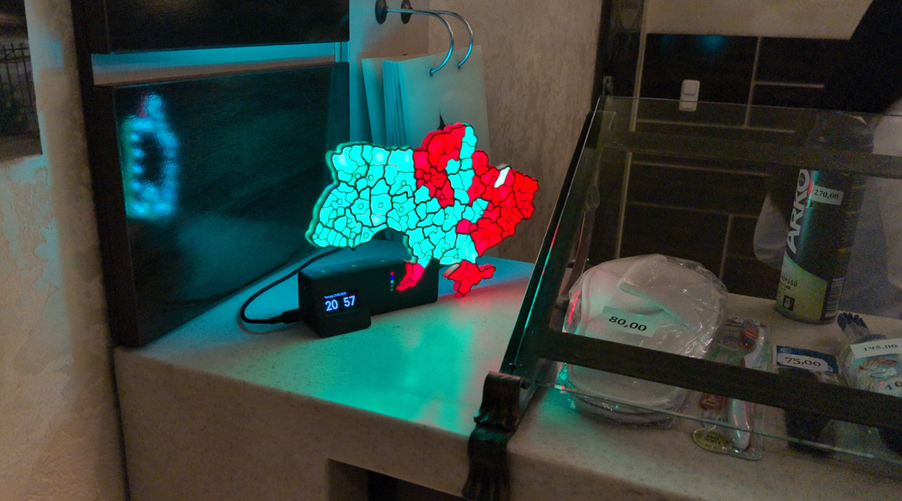
The new normal in Ukraine: an air-raid status display right next to the snacks and drinks for sale. When I couldn’t quite follow the explanation of how to get down to the shelter, one of the hotel’s front-desk staff happily dug out his high-school German and translated for us. Both of us fumbling through a foreign language ended up being a lot of fun. The next morning, he wished us a safe trip and said he hoped to see us again.
Friday, August 28, 2026
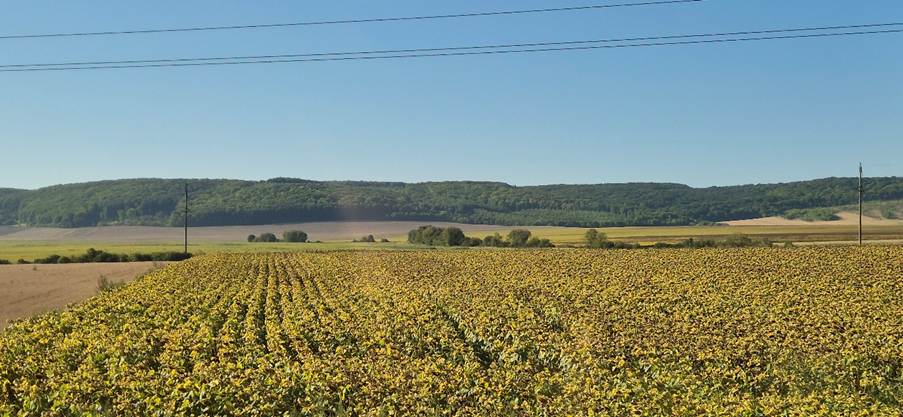
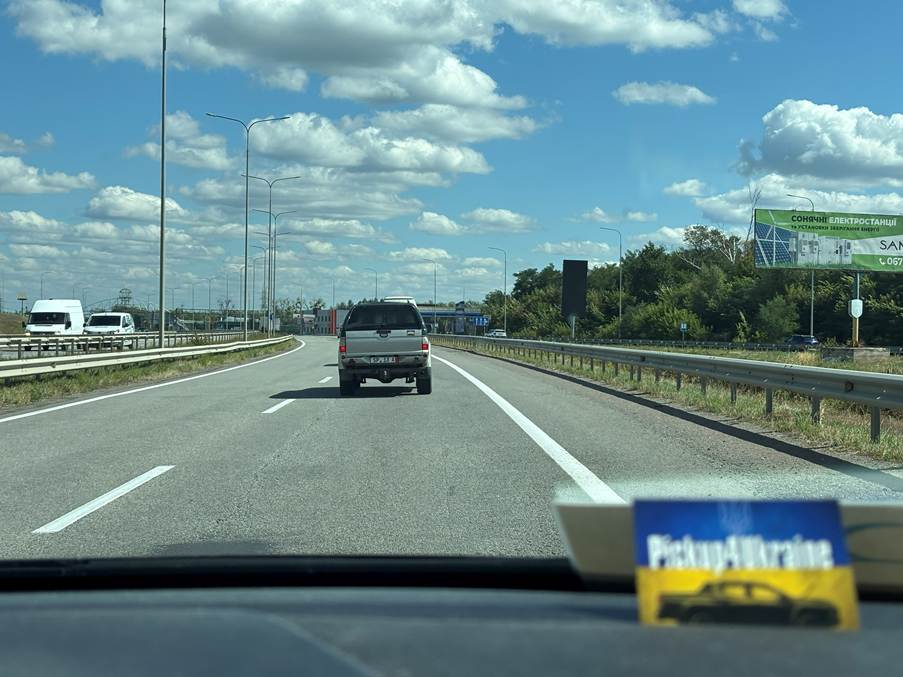
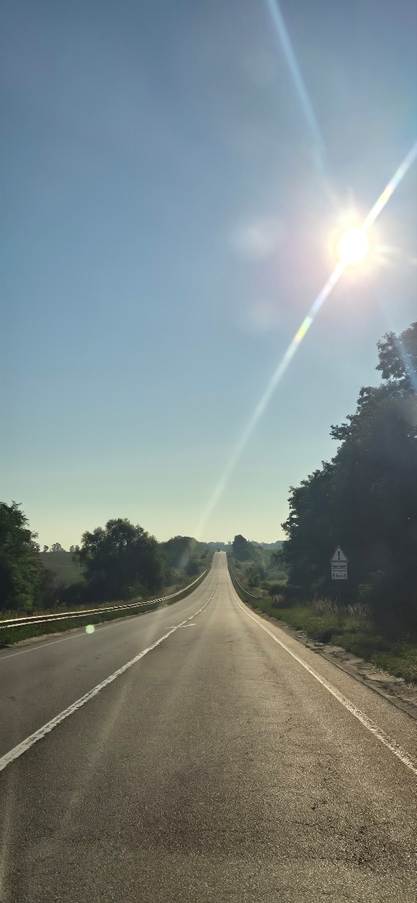
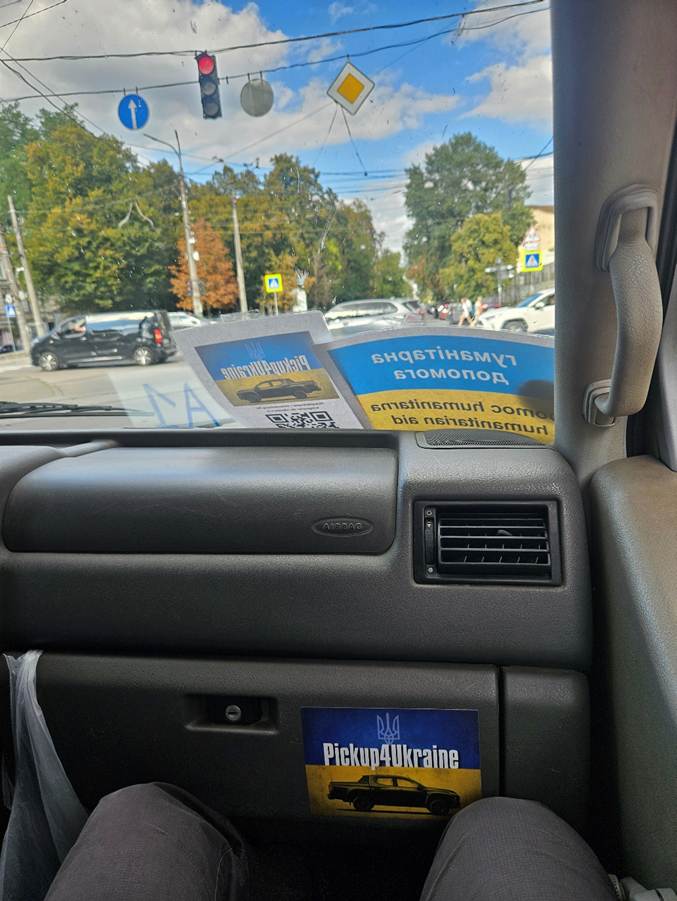
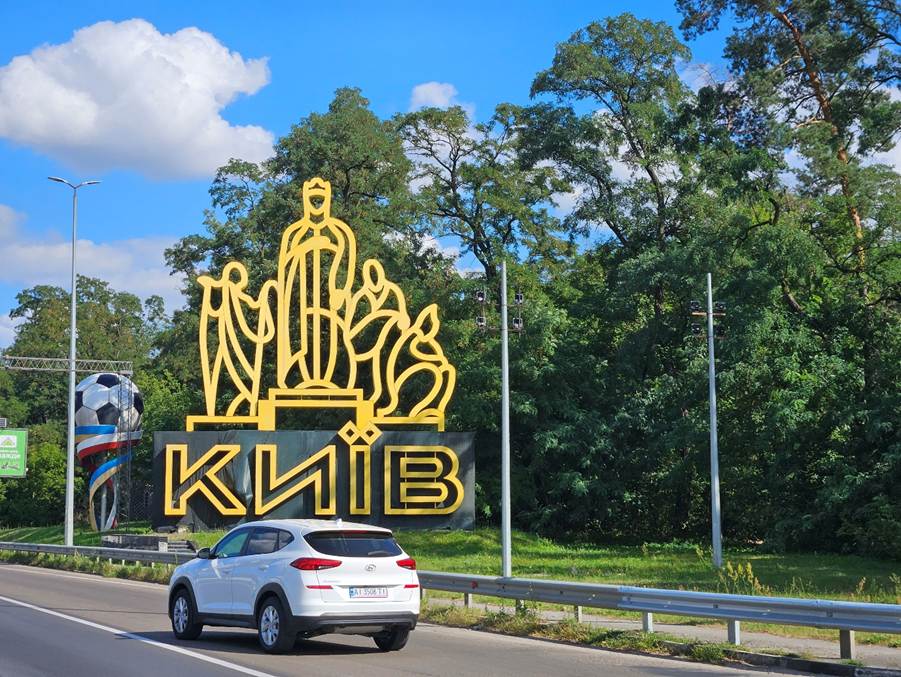
After breakfast at the hotel, we set off for Kyiv. Since we had already gotten the border crossing out of the way the day before, we were well rested and on the road early, a nice change. Road conditions were good, just like in June, and we reached our hotel in Kyiv while it was still light out.
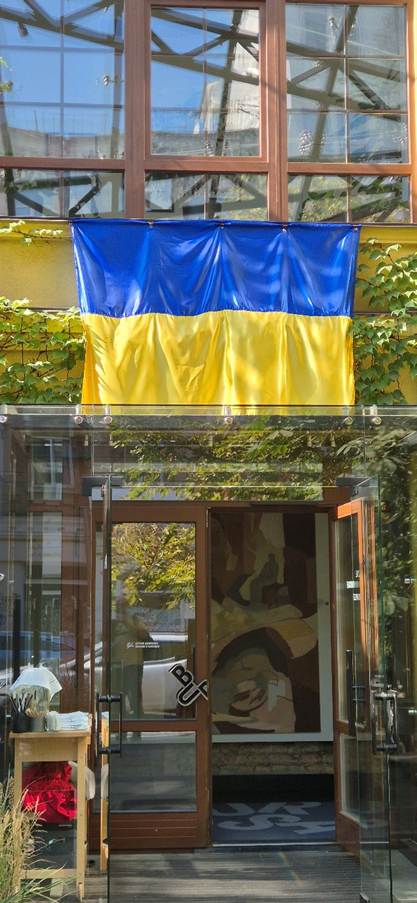
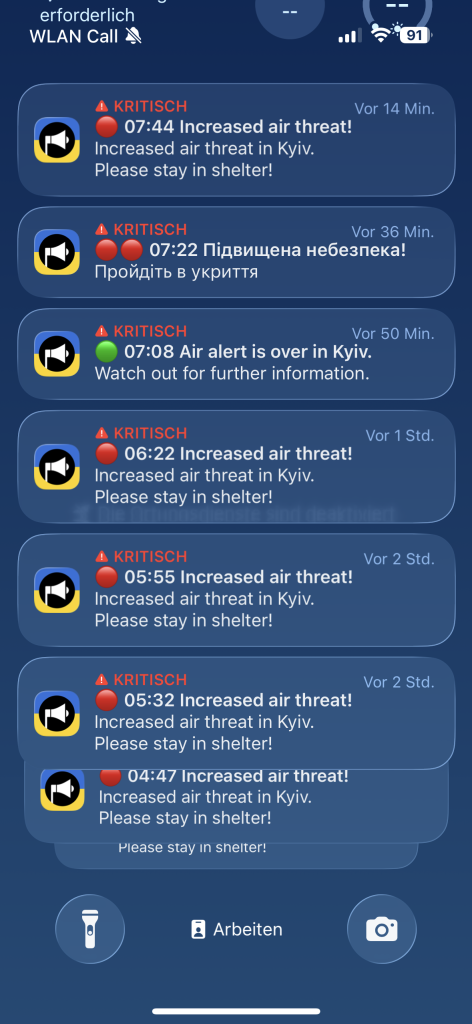
After checking in, some of us wanted to get a quick shower before dinner, while others headed straight down to the basement shelter to set up the folding cots for the night, just in case. Shortly after, we all ended up down there together: the first air raid alert had gone off, and it wouldn’t be the last one that weekend. The alert situation this time was noticeably different from usual, too.
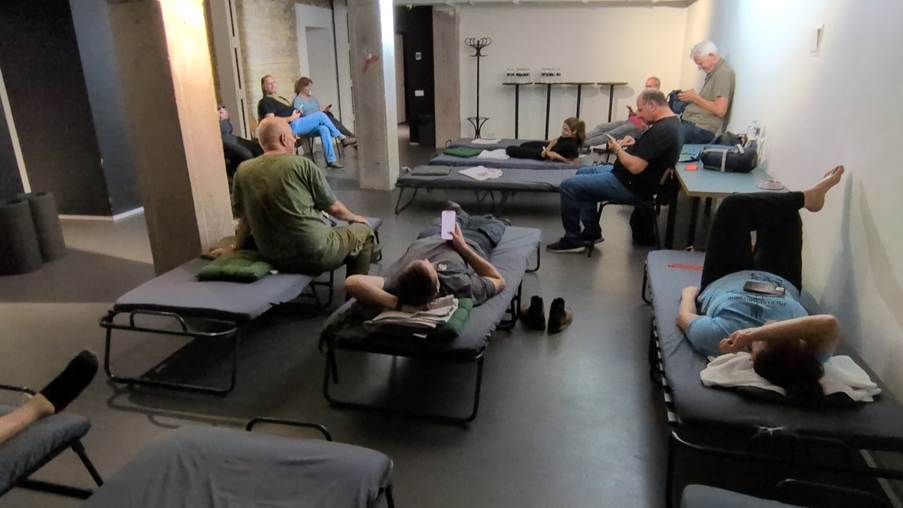
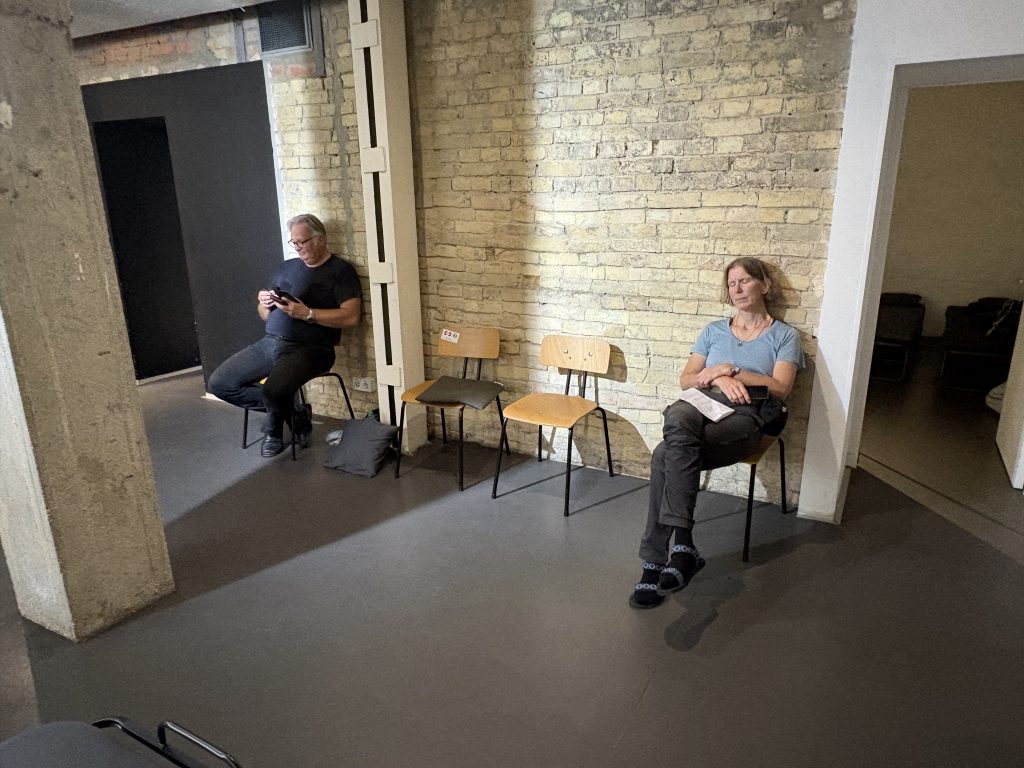
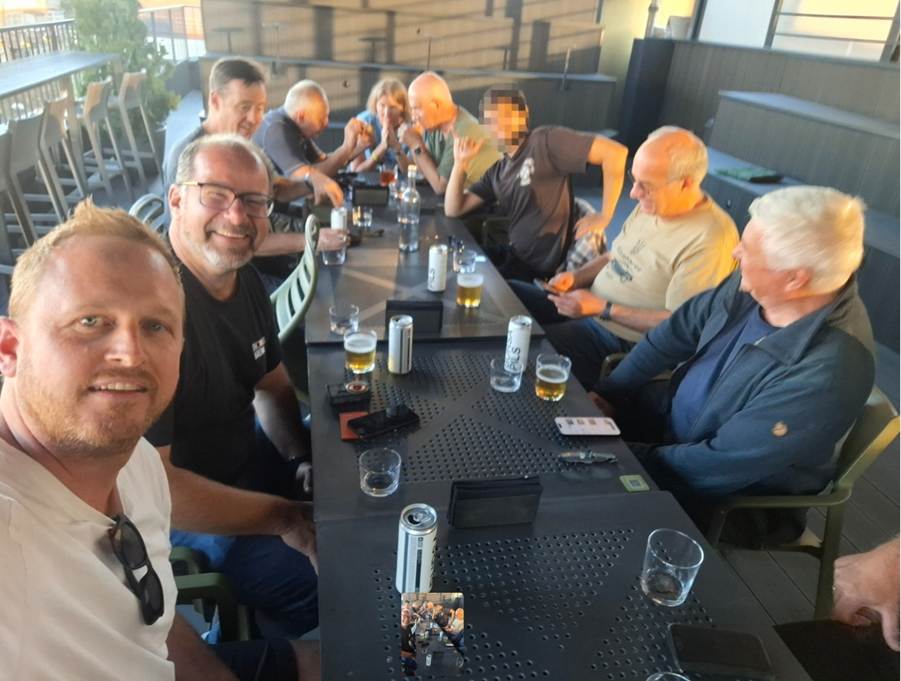
During a lull between alerts, we managed to have dinner up on the rooftop terrace. We met our friend Ruslan there, along with a new recipient, Alexey from the aid organization “Dobromitzvah.”
Late that evening, we got a worried message from Anna Mikulytska about a huge explosion in Myla, a suburb of Kyiv in the Bucha district. A drone had slammed into a warehouse right next to the highway from Zhytomyr to Kyiv, setting off a massive blast that also damaged a nearby senior care home. The highway was closed. We had driven past that very spot just a few hours earlier. Air raid alerts kept coming all night, so some of us simply stayed down in the shelter all night rather than going up to our rooms.
Saturday, June 29, 2026
Today’s agenda called for five vehicle handovers, starting at 11:00 a.m., so we got to enjoy a relaxed breakfast. Relaxed, but with caveats: this weekend we experienced what Kyiv’s residents had already been going through for days — one air raid alert after another, non-stop, thirty minutes on, twenty minutes off, then back on again. There were no warnings of missiles, “just” groups of drones — though typically the jet-powered kind, which fly noticeably faster and higher and are therefore harder for air defense to bring down.
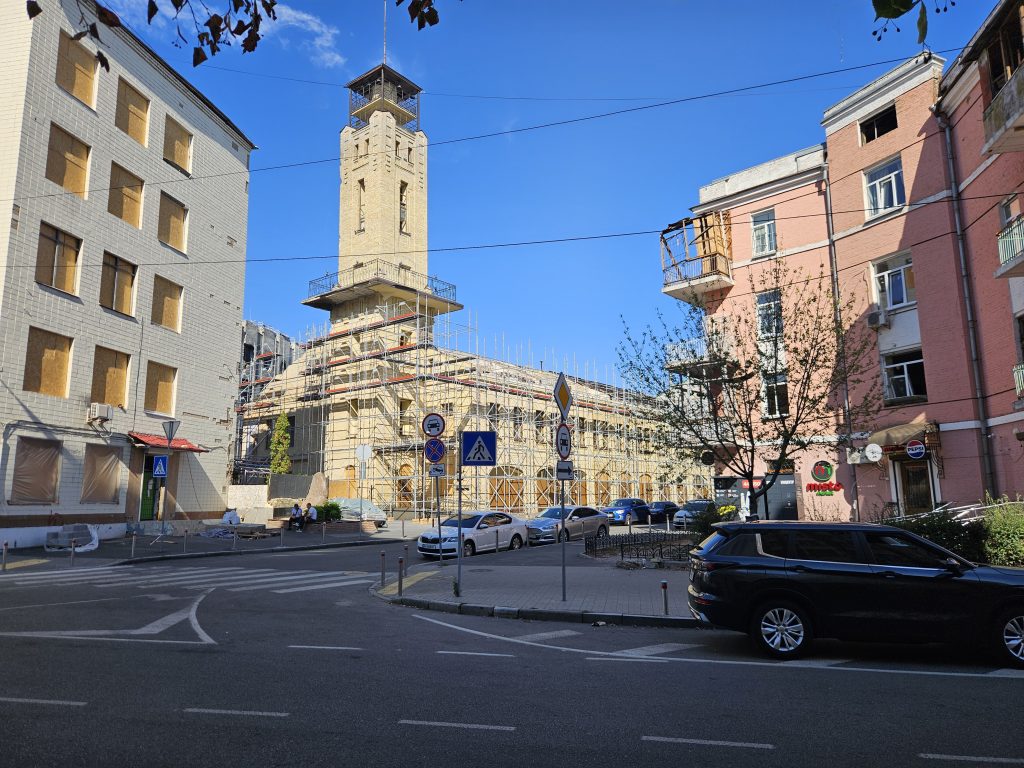
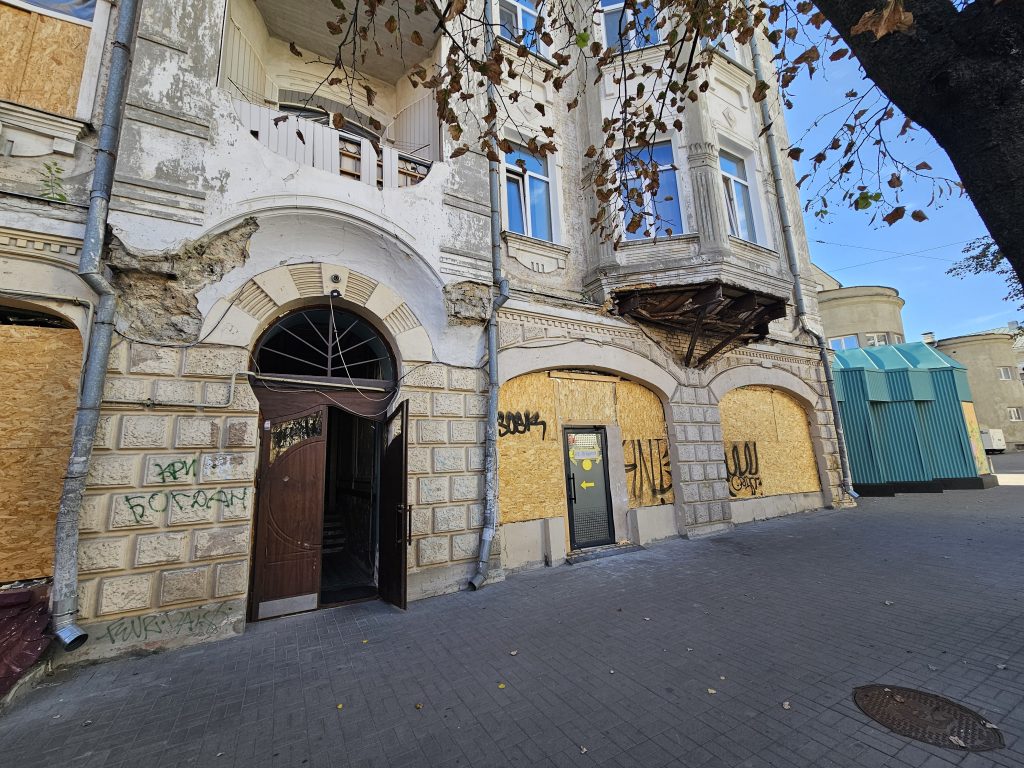
On the way to our handover location, we passed the destroyed Chernobyl Museum. The surrounding buildings had also been badly damaged by a Russian strike some time ago. Reconstruction work is already underway, though: the museum building itself is scaffolded, and the building right next door has already had every one of its windows replaced. In the middle of a war, that’s an encouraging sight.
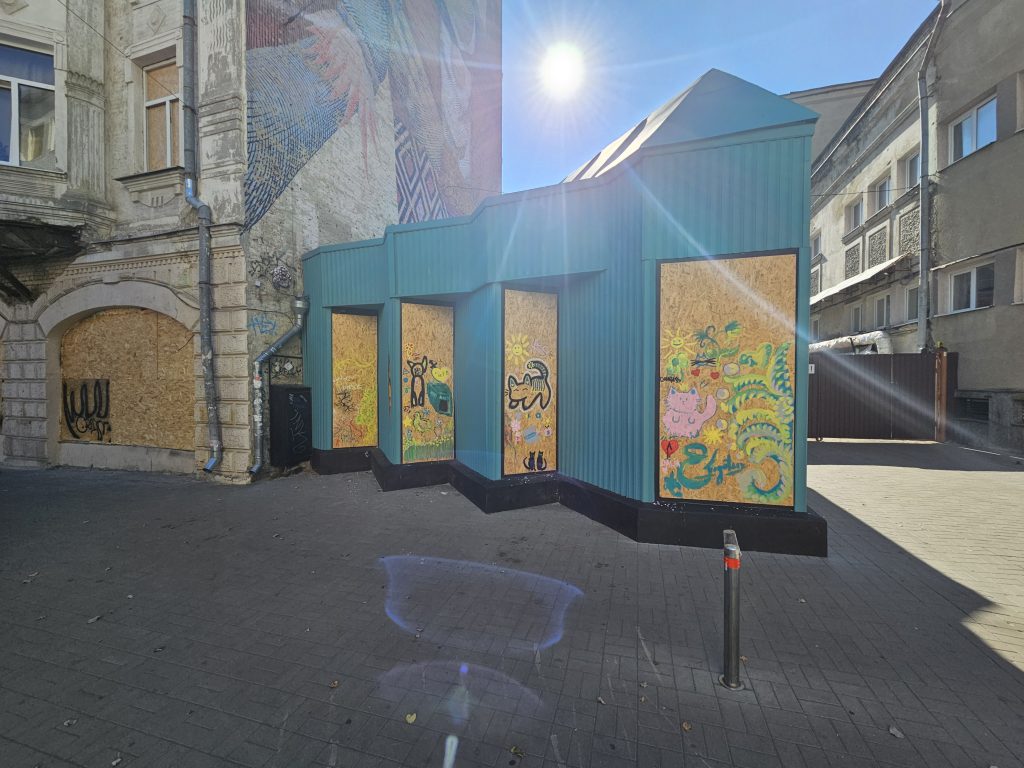
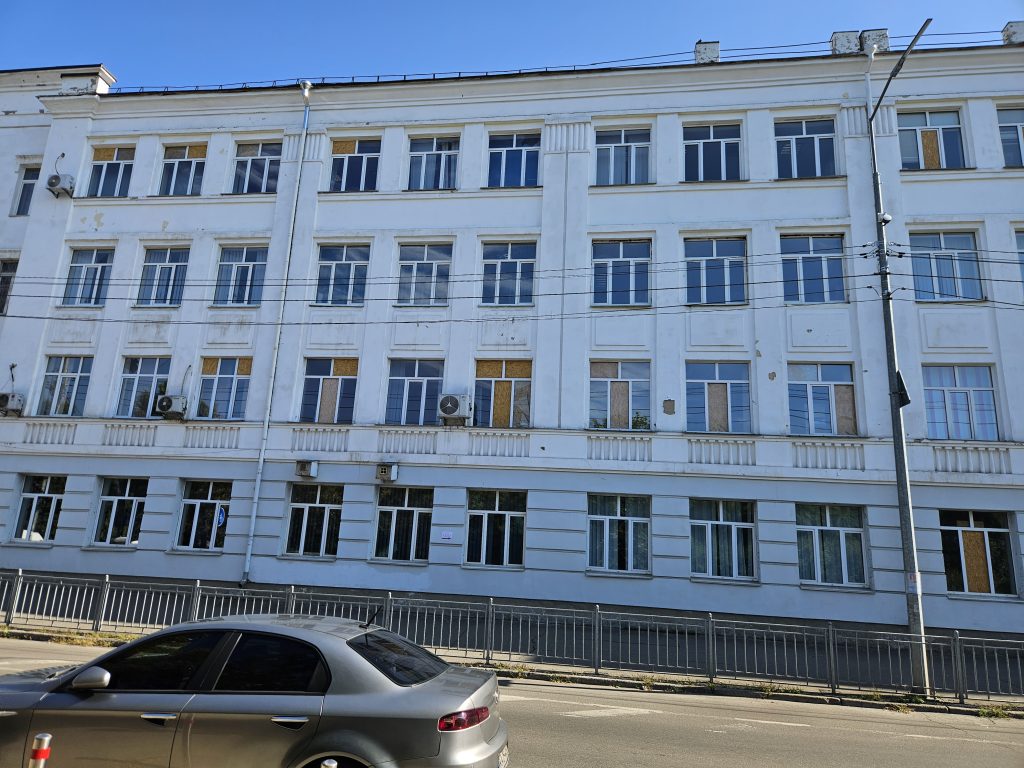
One after the other, we handed over our vehicles. Among the recipients was the paratrooper unit we’ve now delivered several vehicles to over the past three and a half years. The unit of the husband-and-wife team (teachers in civilian life) we’d last met in Dnipro in January 2025 also received another vehicle. Olena, the paramedic, has since had her third child and is now on parental leave. Her husband, Volodymyr, was therefore reassigned from the front to a unit working closer to home, so he can see his family more often.
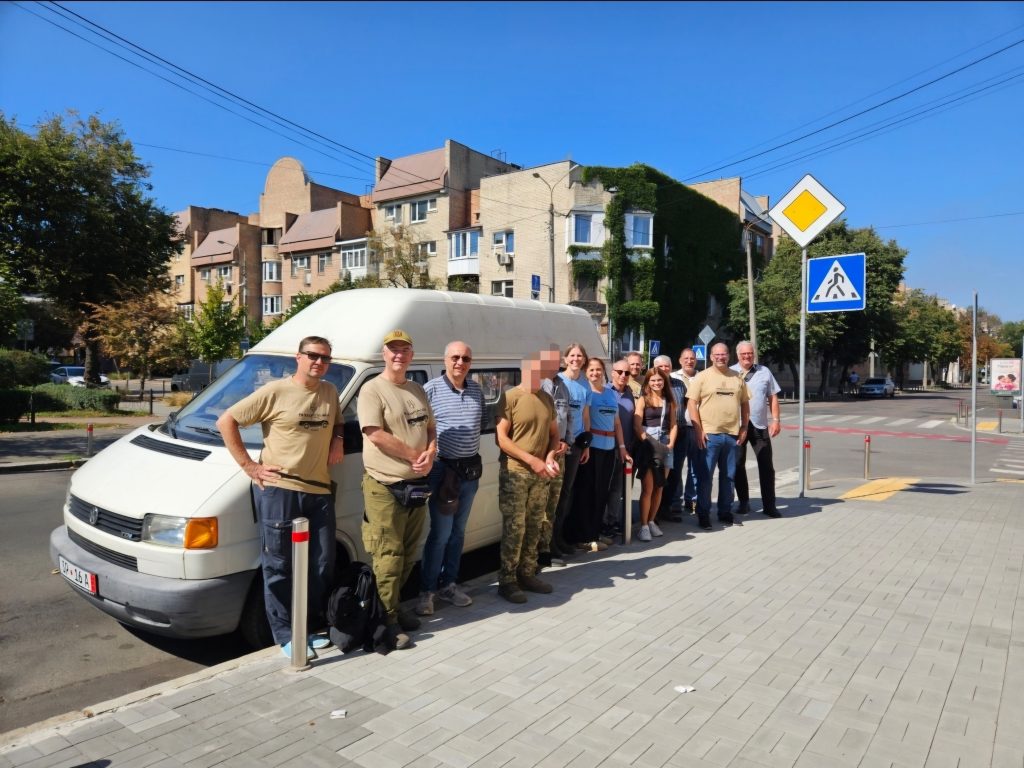
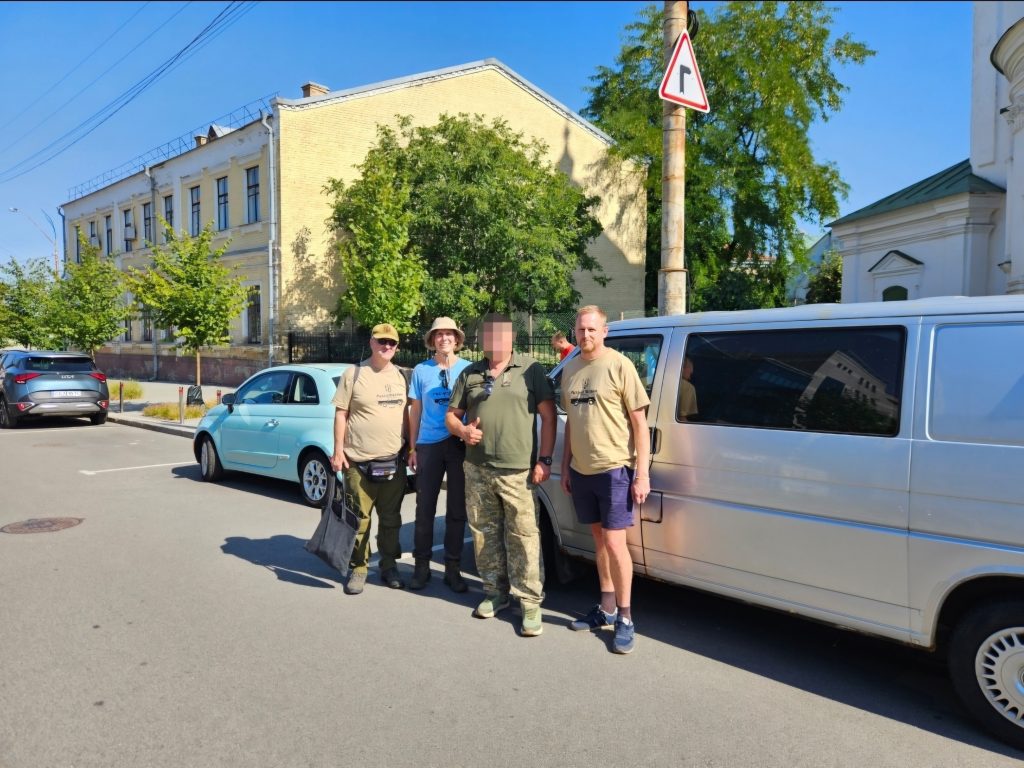
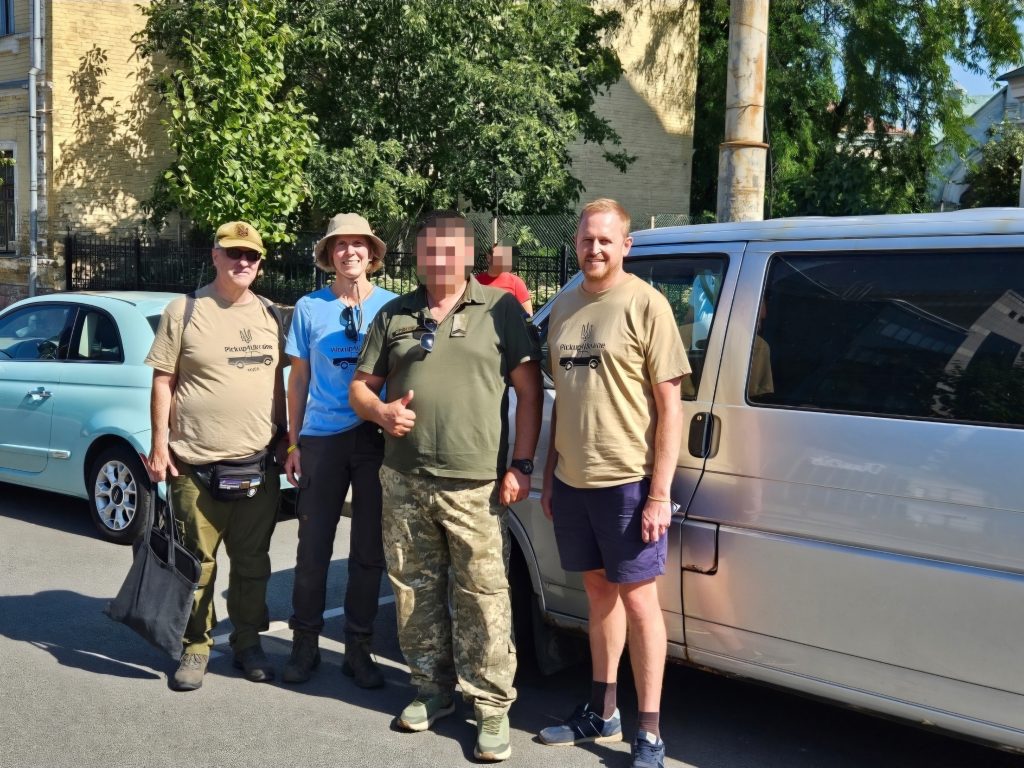
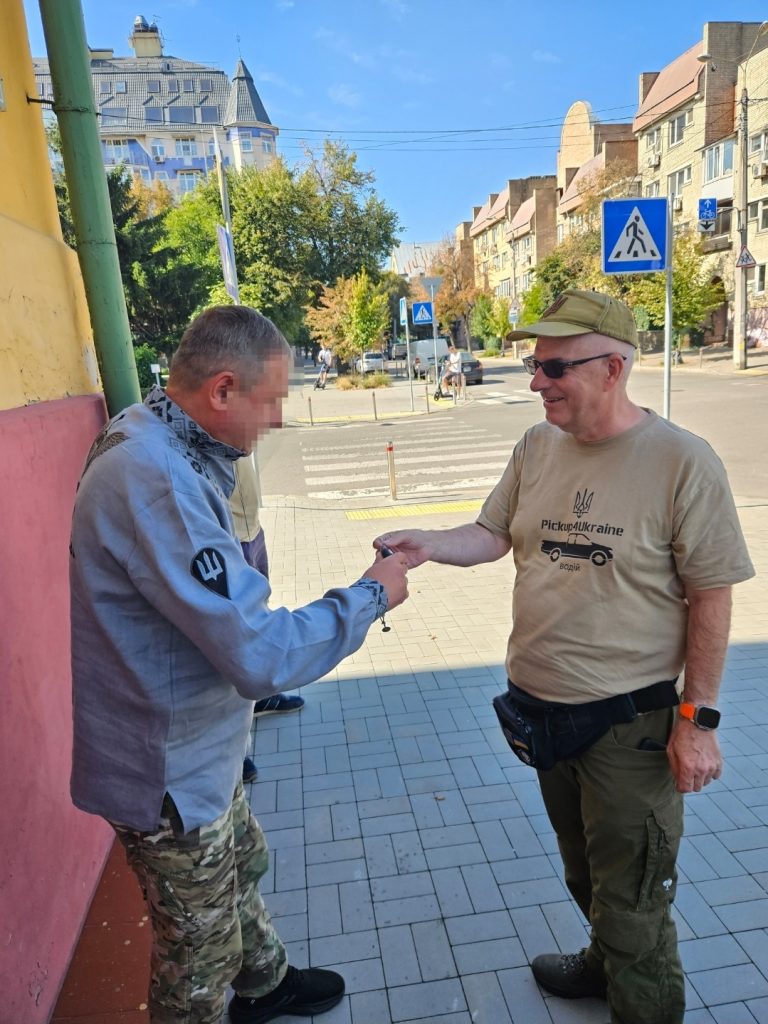
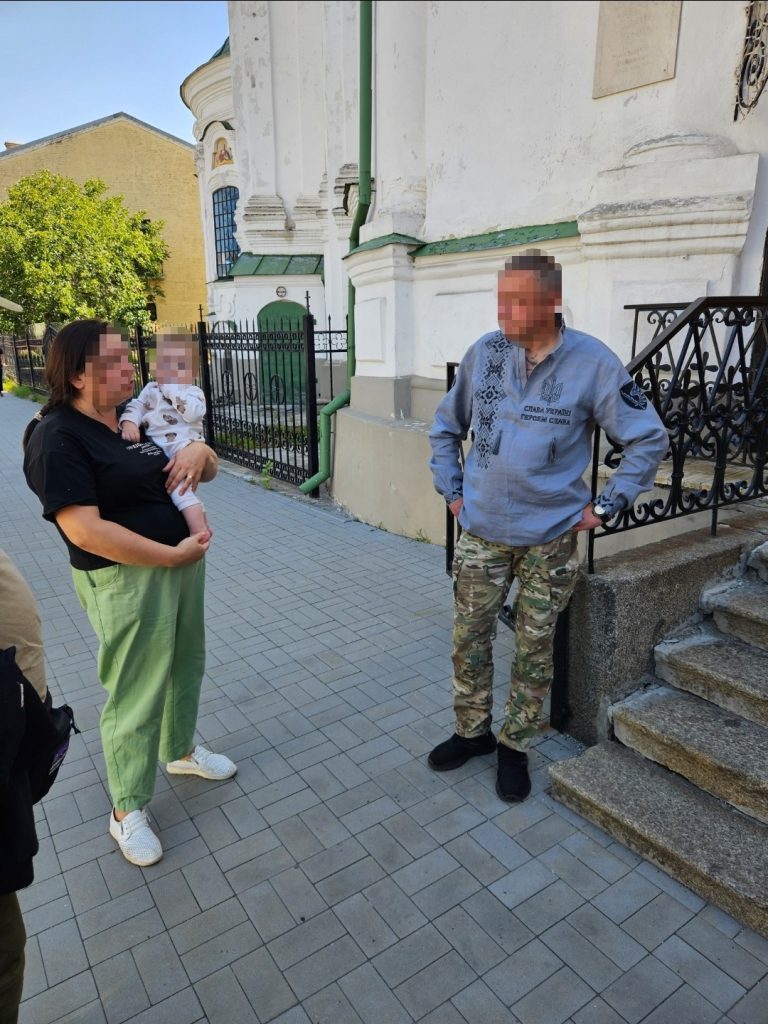
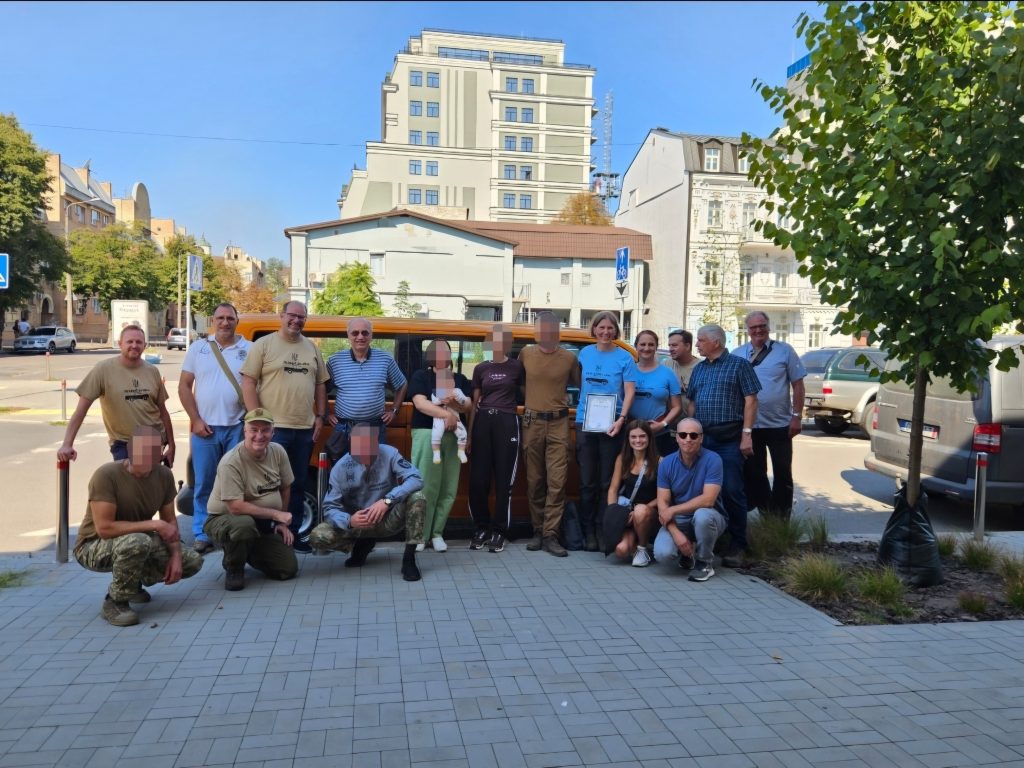
They had some time to spare, so we sat down together at a café. Volodymyr and Olena told us about their work, and Olena spoke in particular about how difficult psychological care has become. While we were sitting in the café, another drone alert sounded. We heard air defense fire and then an explosion. At first, we thought the drone had been shot down, but out on the street we could soon see a large plume of smoke rising in the distance, over a neighborhood to the north. Apparently, it had hit something.
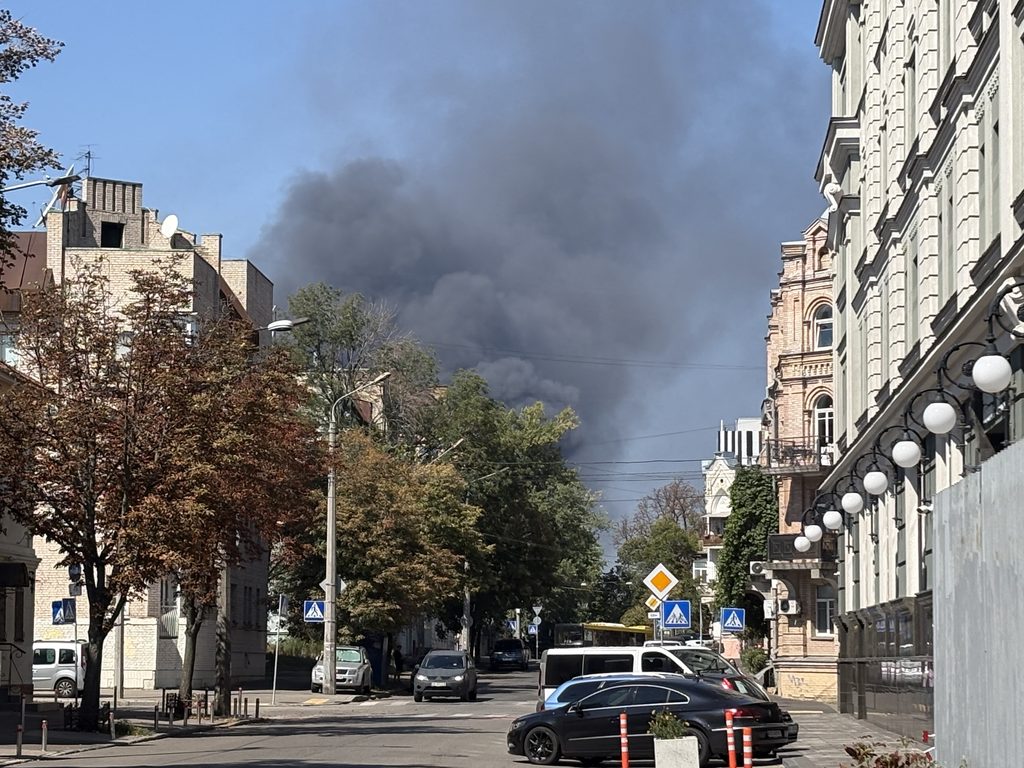
As we made our way into the city afterward, we noticed how empty the streets and squares were for a Saturday morning. People barely sleep at night, and during the day the sirens keep announcing new waves of drones, over and over, without letup.
In the afternoon, we handed over two more vehicles. One went to the unit where some of Ruslan’s friends work as drone pilots. We sat with them for a while — young guys with a real passion for graffiti. They told us that when they need a break from drone work, they spray graffiti on walls in the Donbas and post pictures of it on Instagram afterward. They don’t do joint projects, though, since their styles are too different. Before the full-scale invasion, one of them had studied law in Ukraine alongside Ruslan, then spent a year in China to learn Chinese and study business and economics there. By the time he came back, the full-scale invasion had begun, and he volunteered for the armed forces. The other young man was a trained dancer and choreographer. In his view, that kind of body control genuinely helps with moving under fire, too. He told us that in his free time he still dances modern ballet and improvises with his girlfriend and showed us Instagram posts of that as well. Their answer to the question, “What will you do after the war?” hit us hard: “Mmh, prepare for the next war?” They don’t believe a just, lasting peace is coming anytime soon.
In the evening we met up with Nadia and Ruslan from Lawyers’ Move at a restaurant that’s fittingly located underground — that way, you don’t have to head to a shelter when the alert sounds. Historian Ihor Zhaloba stopped by and told us about his recent trips to Germany and the talks he’d given there over the past few months.
That night, too, some of us again ended up spending the whole night down in the hotel basement. Rather than lying in a hotel bed waiting for the next siren, it’s easier to switch off your phone, tune out the alerts, and sleep underground.
Sunday, August 30, 2026
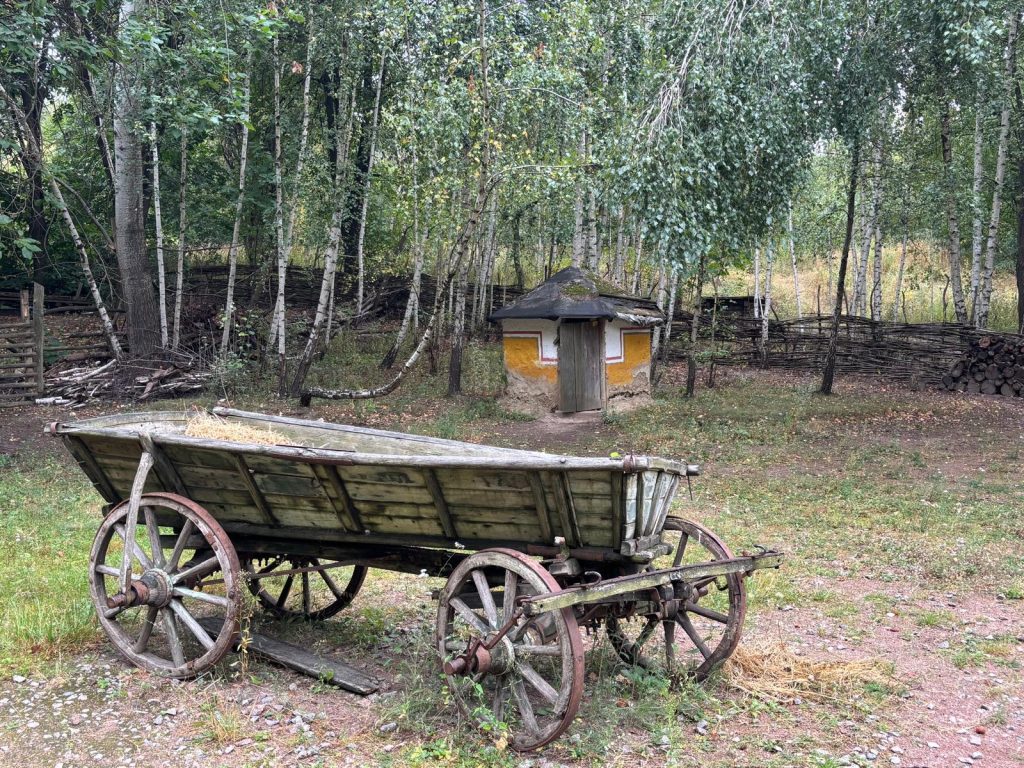
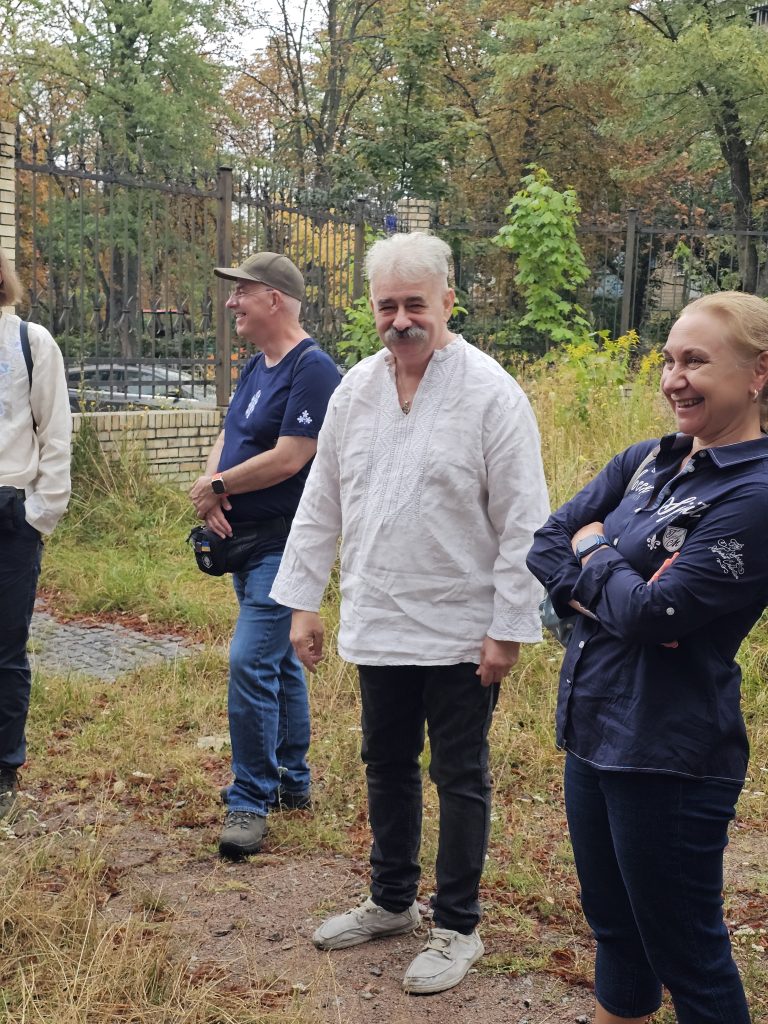
On Sunday morning, our Ukrainian SAP colleagues picked us up at our hotel. Anna Mikulytska had arranged a guided trip to a reconstructed Cossack village. Before the tour began, we passed a group of visitors on their way out, all dressed in festive embroidered blouses — they’d just toured the museum themselves. A few of them chatted briefly with Anna, mainly curious about what our group, obviously foreigners, was doing in Kyiv. When Anna explained that we regularly bring vehicles for the army, they thanked us profusely and then, right outside the museum entrance, broke into a multi-part patriotic folk song for us, before thanking us once more with heartfelt gestures. It was a deeply moving moment. We only contribute a small piece of the logistics. It’s Ukraine we owe thanks to — for continuing to defend all of us against Russian aggression.
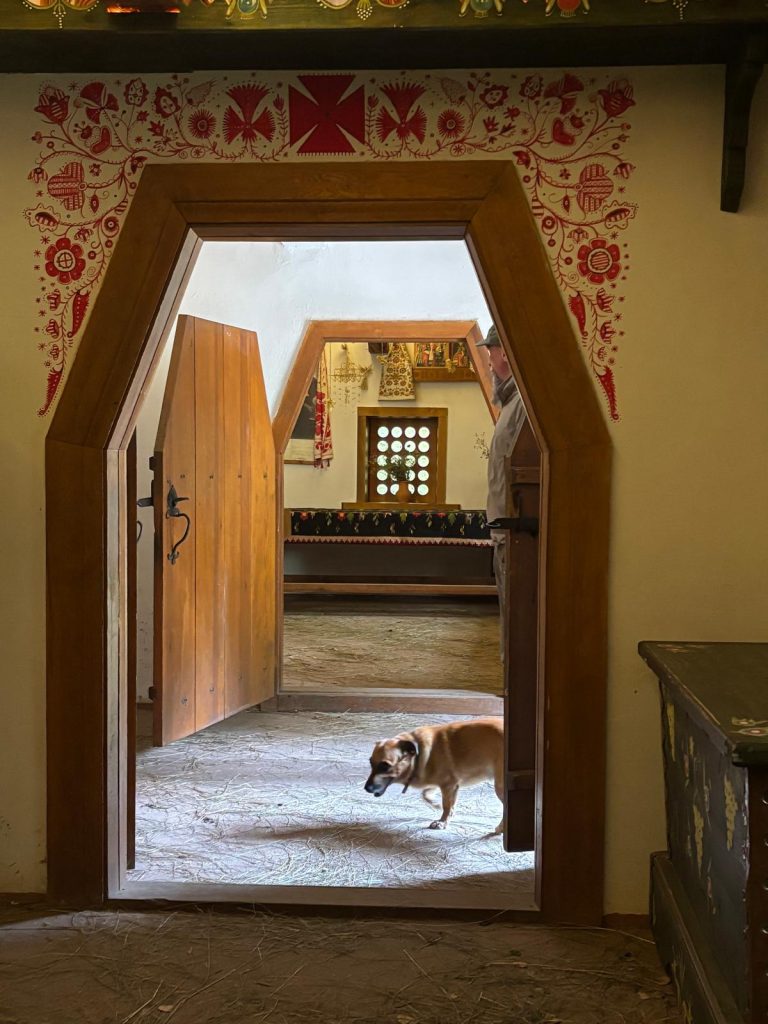
The next air raid alert started up, and the guide asked whether we still wanted to tour the museum. We told him we’d do whatever he did. So, the tour began. It was long-winded but entertaining, and Anna didn’t translate all of the sometimes wildly improvised explanations and connections. We learned a bit about the great migrations, about how, in the end, we all belong to the Ukrainian family, and details about Cossack settlements, where warriors’ houses were allowed trapezoid-shaped doors to signal that the head of the household paid his taxes in a different form than everyone else.
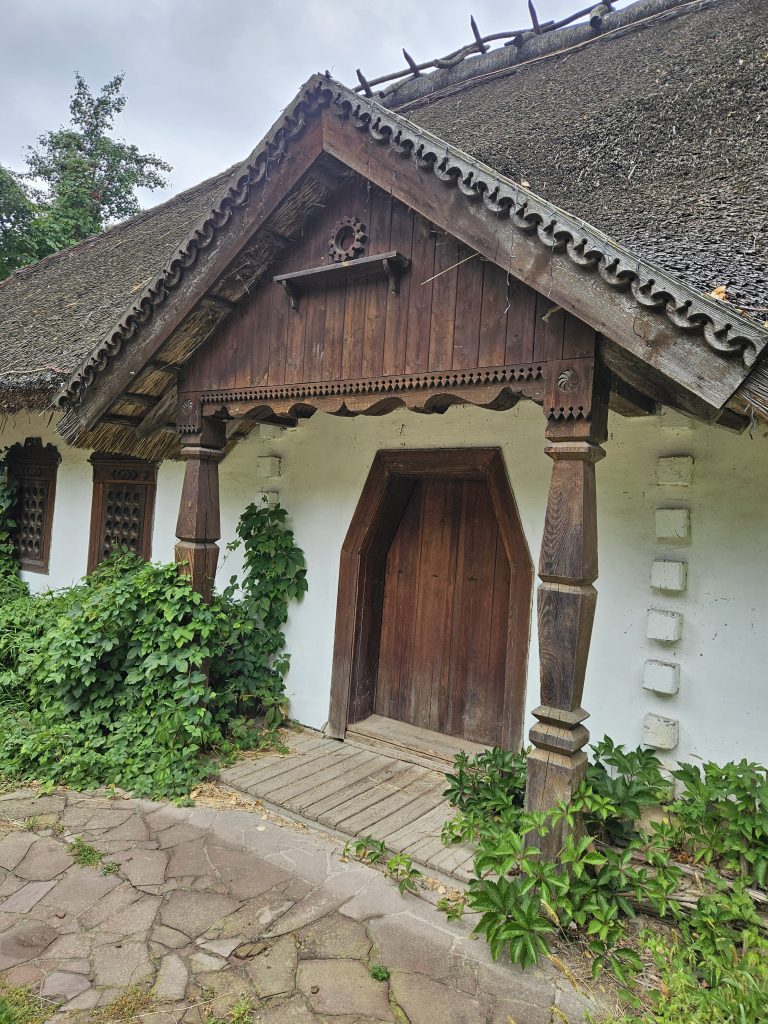
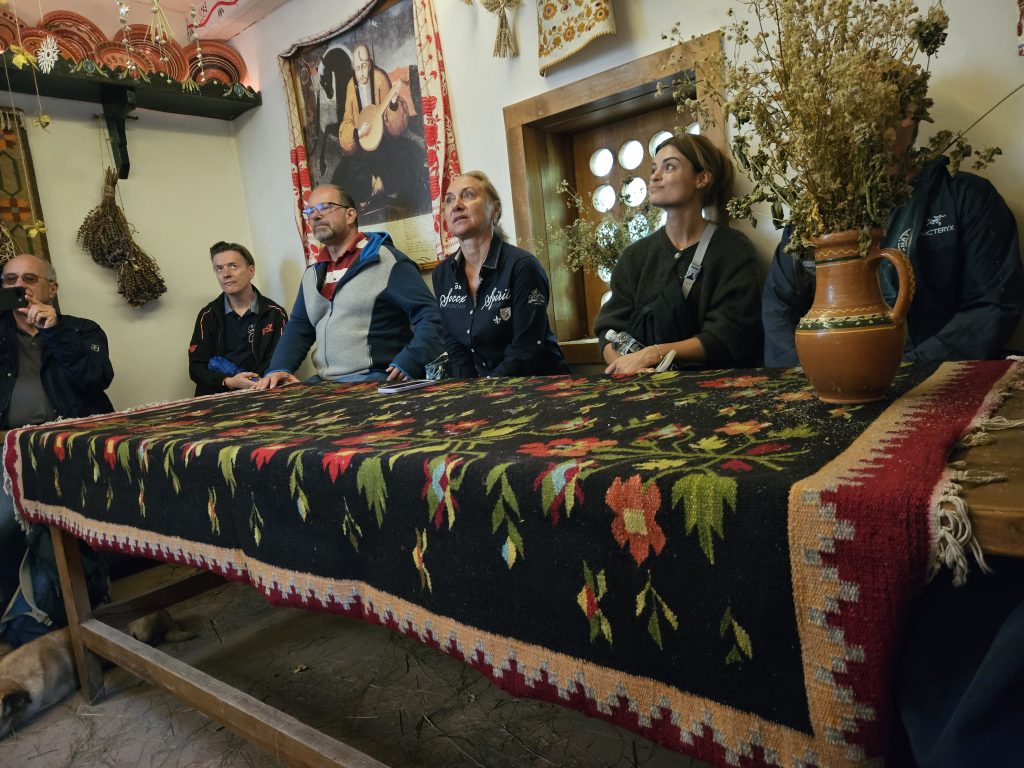
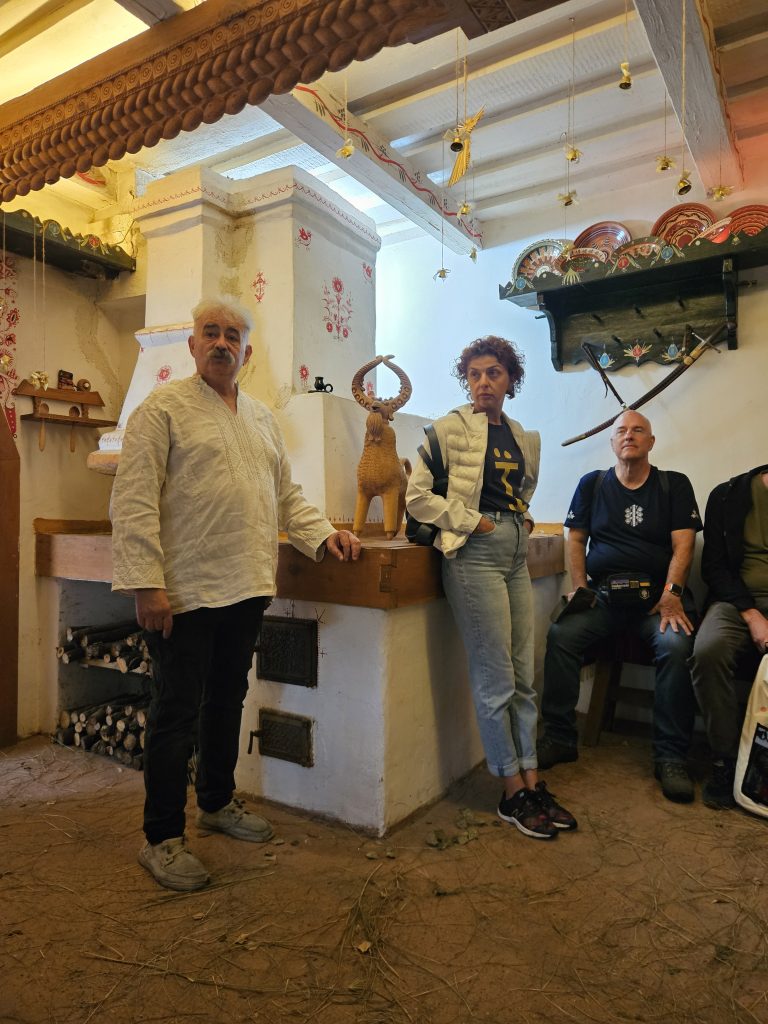
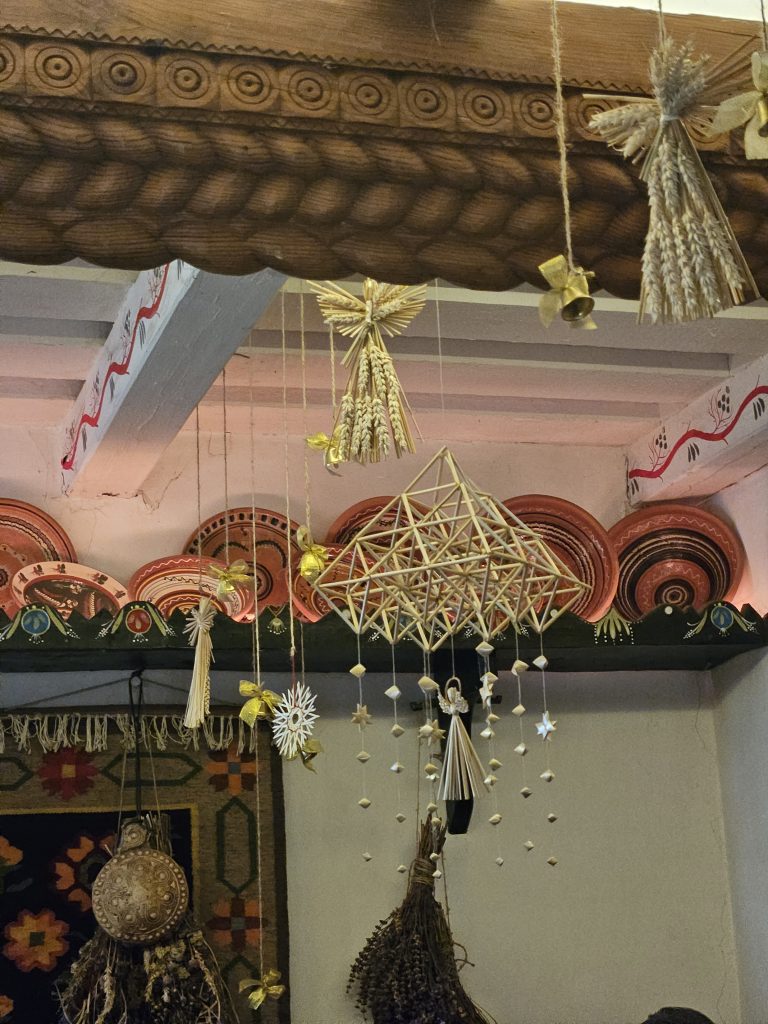
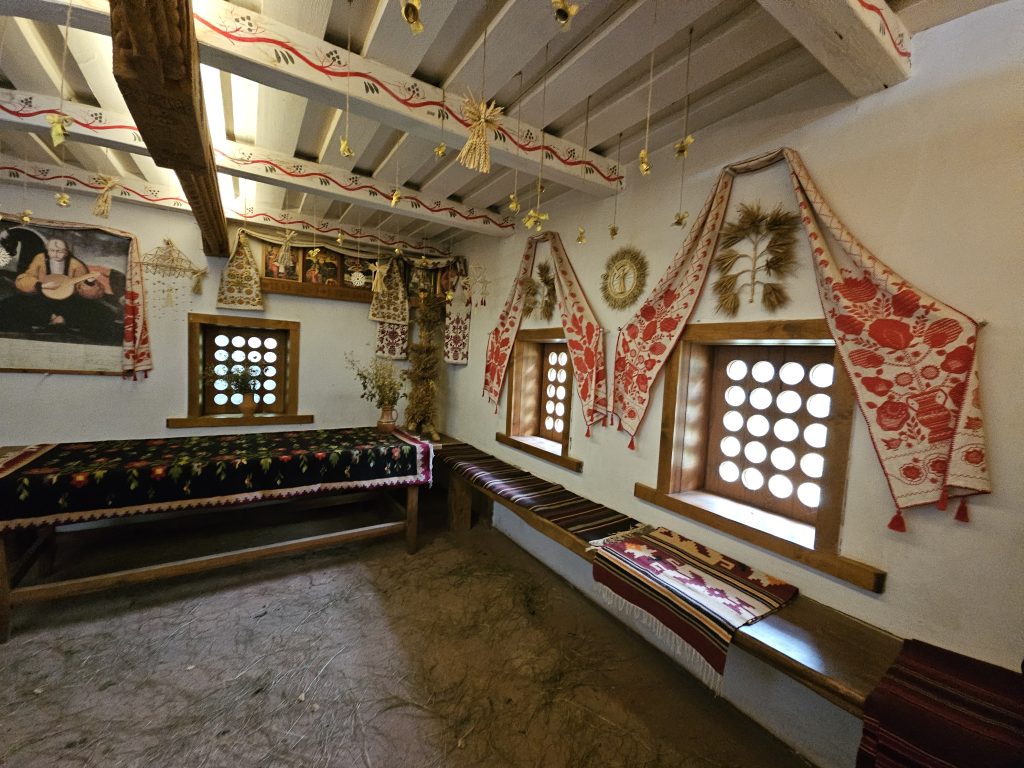
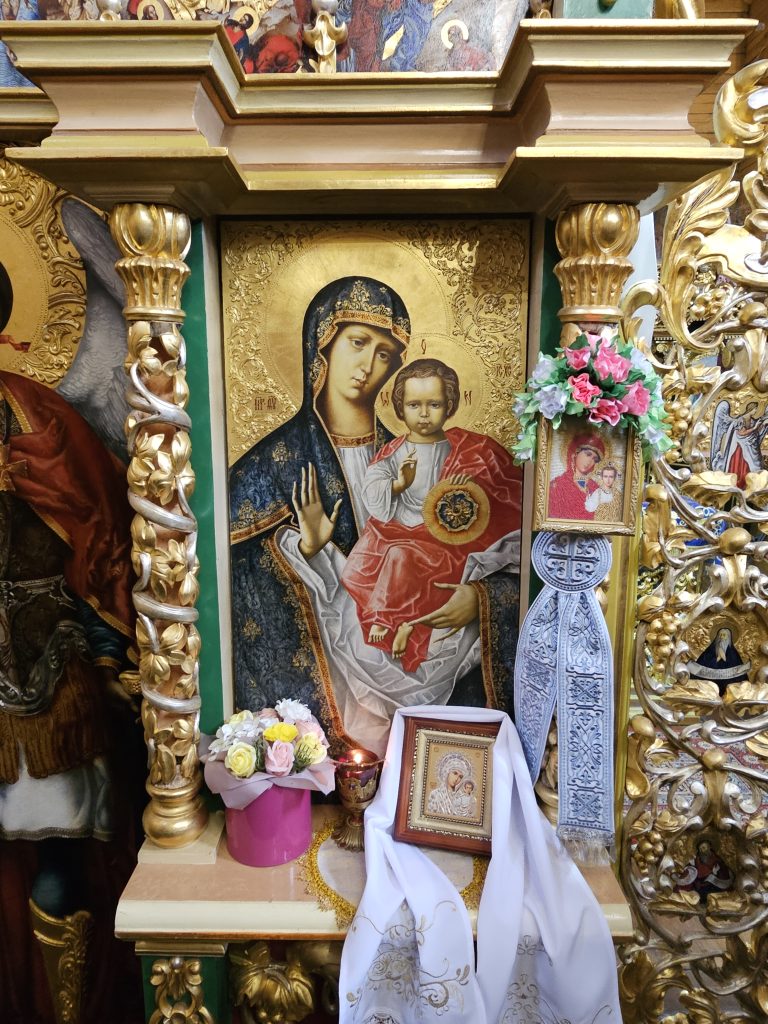
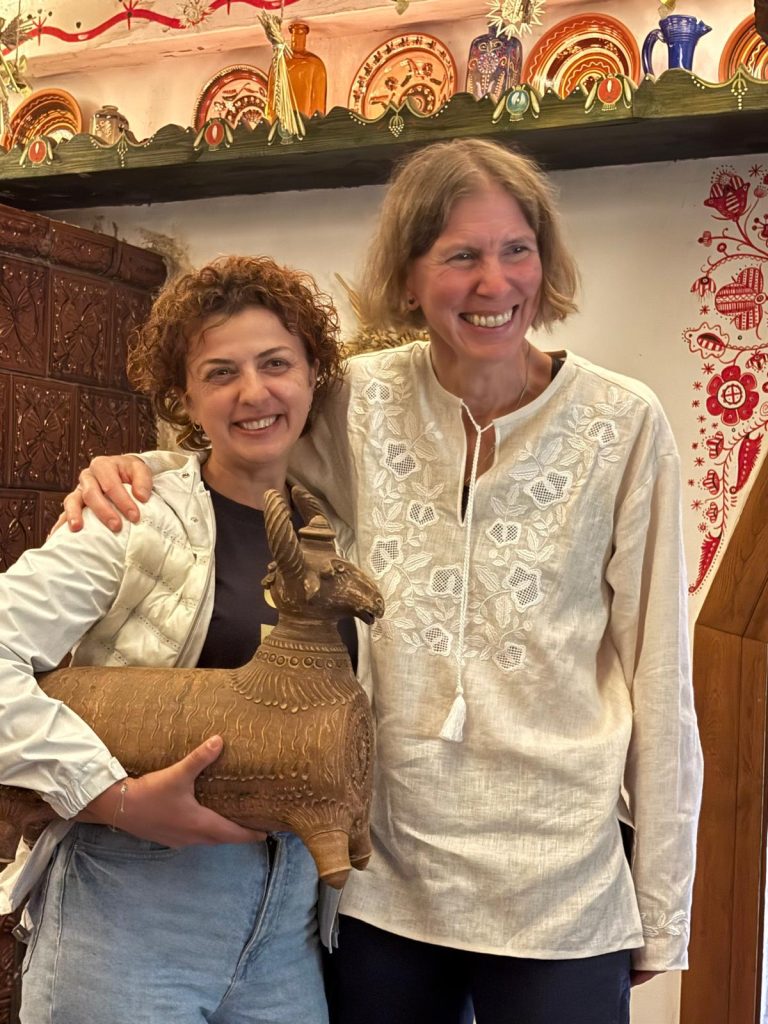
At one point, we could hear what sounded like an airplane above the low-hanging clouds — in all likelihood a jet-powered drone. Aside from drones, missiles, and air defense fire, Ukraine’s airspace is currently otherwise empty.
For dinner, Anna had once again booked a restaurant with underground seating. We enjoyed Crimean Tatar food, and more SAP colleagues joined us. By now, these gatherings genuinely feel like being part of one big family.
The Trip Home
The trip home went off without a hitch. Just as our train toward Przemyśl was about to depart, the sirens at the Kyiv train station sounded again, warning of another air attack. The train still left right on the minute anyway. From there, everyone made their own way home via Krakow — some by plane, others by another overnight train — before arriving back in Germany.
We are already preparing for the next trip.
