
Coming just after the fourth anniversary of the outbreak of the full-scale invasion and the third of our own first trip to Ukraine, our twentieth delivery occurred under surprisingly springlike circumstances. Just as the country is emerging from an exceptionally harsh winter, Pickup4Ukraine arrived with eight more trucks and vans hard on the heels of the four delivered earlier in February. Thanks to the fantastic generosity of our donors and the hard work of our friends and supporters, we have maintained the momentum of the past year.
We started Pickup4Ukraine wanting to support the people defending their freedom and ours. Standing up for principles and making a contribution are important to us. What we did not quite expect is just how personal this work would become, not just in the sense that it is our personal work, but rather how important the people we meet in Ukraine would become to us, whether they are soldiers, doctors, or volunteers. What started as an abstraction became personal, with a depth and intensity I, for one, had not anticipated. For all those involved, whether from the German or from the Ukrainian side, there are consequences, both positive and negative. In this report, I would like to convey an impression of those consequences.

Preparations
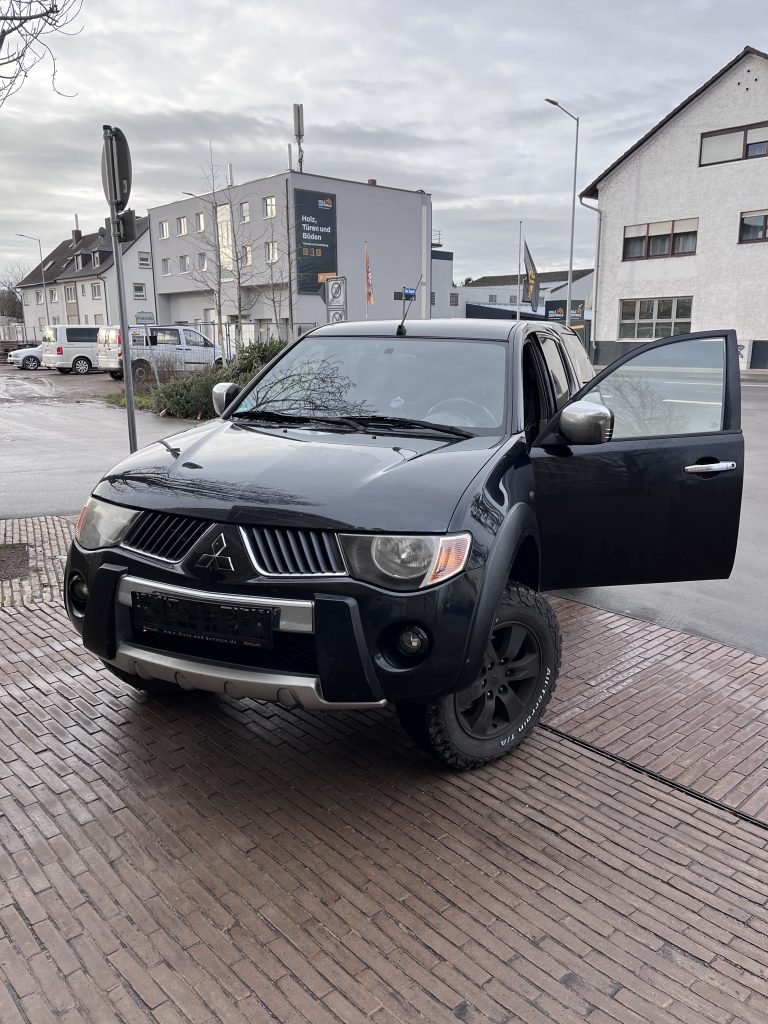
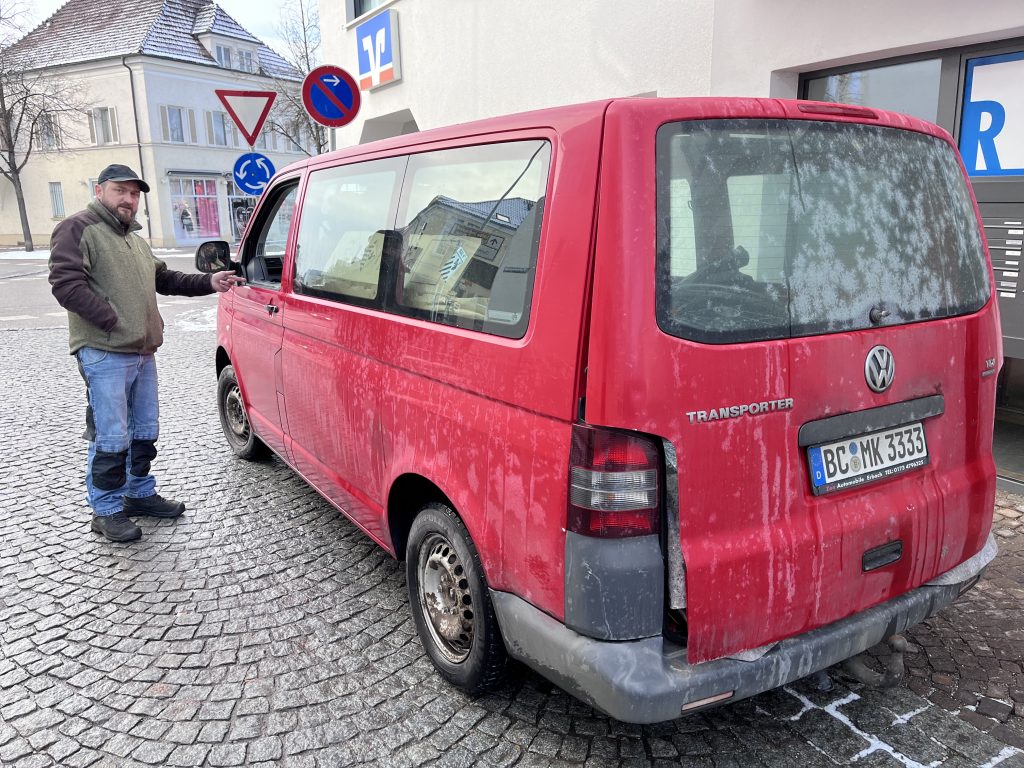
Thanks to your generous support during the holiday season of 2025, we could start looking for a lot of vehicles to try to cover our extensive waiting list. In addition, the continuing financial cooperation with 1019.ch enabled us to continue delivering casevacs, expanding our coverage. Word travels fast in Ukraine, and vehicles are probably the most sought-after aid brought in by volunteers. We started planning in mid-December for a February delivery of at least ten trucks and vans. Taking account of the holiday break, that was a considerable challenge. Thanks to the combined contributions of our team, we made it. As it turned out, scheduling conflicts forced us to split our delivery in two halves, with Annette leading the first with four vehicles, followed by a convoy of eight more that I organized.




The Drive to Ukraine, Wednesday-Friday
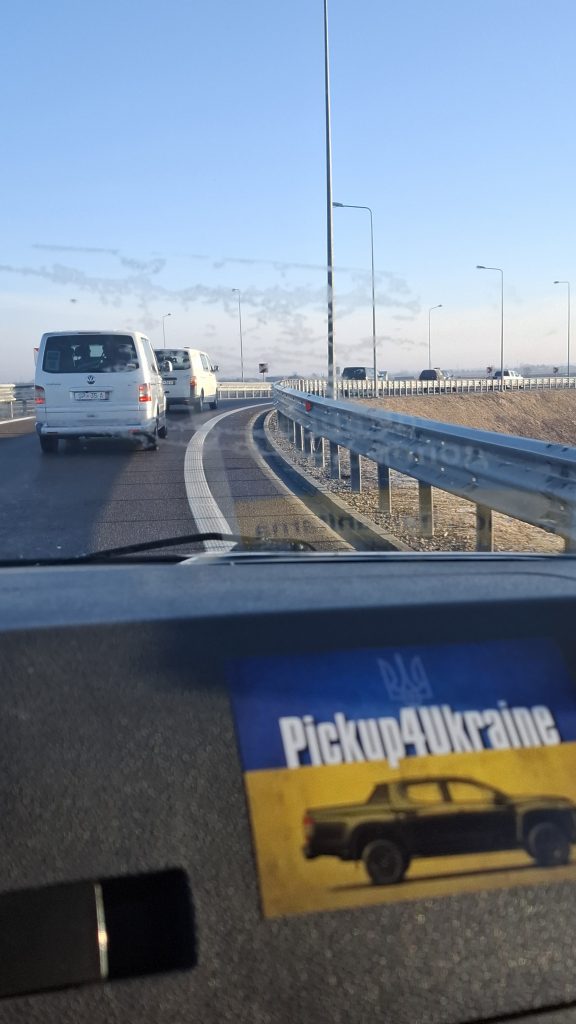
As tried on the Delivery 19, we allowed ourselves an additional half day for the trip to the Ukrainian border. Our practice over the last couple of years has been to make the 1300 km (800 mile) trip in a single day, which made for an ungodly long drive and, at least for this writer, frayed nerves. Breaking the first leg into two gave us the peace of mind that if something happened along the way (a serious risk when driving vehicles around 20 years old), we could still recover and not wreck the timetable. As it turned out, there was a problem with the turbocharger on one VW bus, but thanks to the intrepidness of Christian and Dave (and Roman providing remote support), it did not set us back. Frank S. joined us along the way, and we made it to our goal just across the border in Poland without further incident.
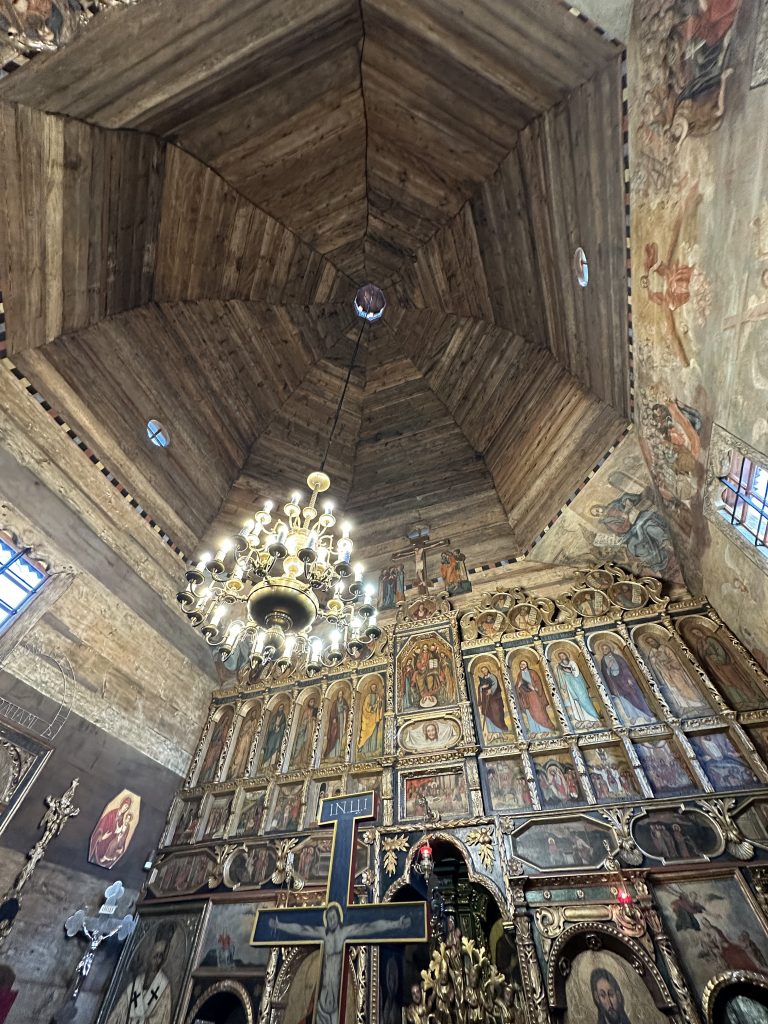
Similarly happy was our transversal of Poland on the second day. Accompanied by good weather and free of mechanical breakdowns, we reached our destination by mid-afternoon and decided to use the time to visit a piece of Ukrainian heritage on modern Polish soil, the Greek Catholic church in Chotyniec, part of the UNESCO World Heritage Site of Carpathian wooden churches in Poland. This gem, sitting isolated in a remote village, is not exactly a tourist magnet. It is closed in the winter months, allowing us to see only its unique exterior and take a peek through an upper-story window to imagine what is inside. Just as we were preparing to leave, a woman drove up who introduced herself as a caretaker. Locals had seen our group looking around and had alerted her. She graciously opened the church, let us look around, and told us about it. The exterior gives little clue of what lies inside the church, and what might have been a mildly interesting visit instead became a small revelation, making instantly clear why this place is a world-heritage site: a glittering iconostasis and vivid murals of the last judgement from the 18th century, all unmistakably in the orthodox tradition, inhabiting a different world than the modern Polish Catholic surroundings. After thanking the custodian effusively and with this preview of Ukraine firmly anchored in our minds, we then returned to the business of refueling, checking in our hotel in Radymno, obtaining our export documents, and enjoying the traditional dinner at Dwór Kresowy, our “borderline” experience.
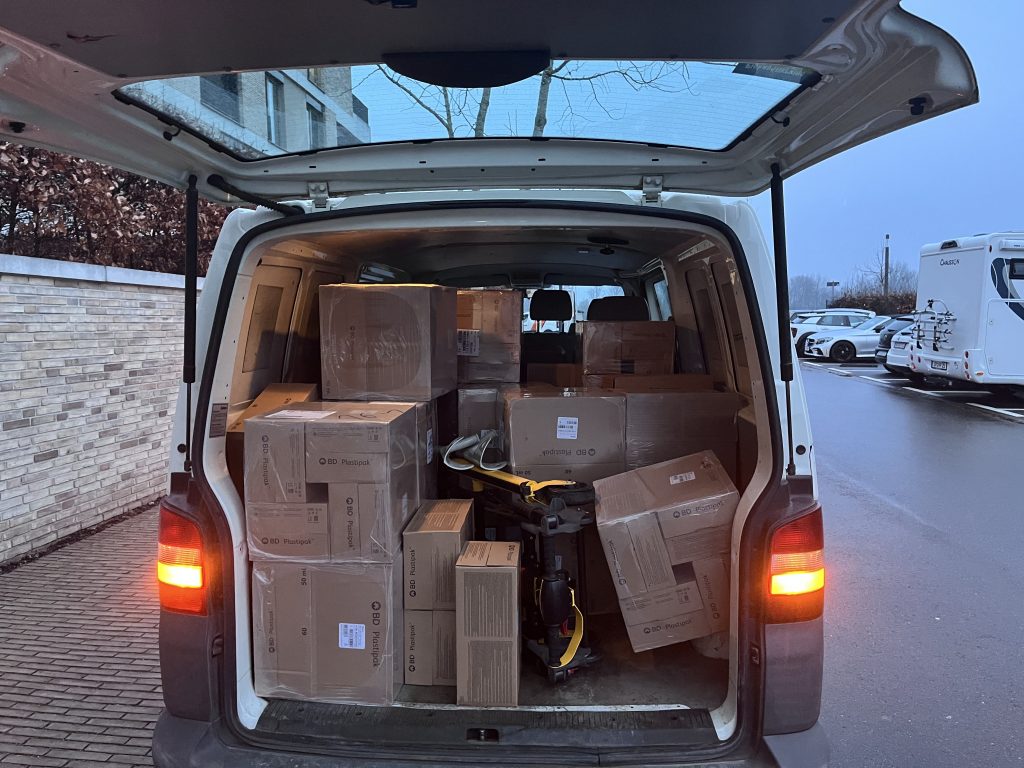
The last leg of our drive is now the longest and, for me, the most nerve-racking. No matter how carefully we plan, there is always the risk of delays at the border. Last July, an extended discussion with Polish customs held up our convoy for a couple of hours; in December, the classification of an ATV caused us to break up the convoy and left Stefan F. and me waiting for twelve hours and unable to make it to Kyiv. We have adopted the approach of selecting our cargo carefully and distributing it to a degree among the vehicles to avoid the appearance of transporting “freight,” which can lead to a diversion to another border crossing and long waiting times.
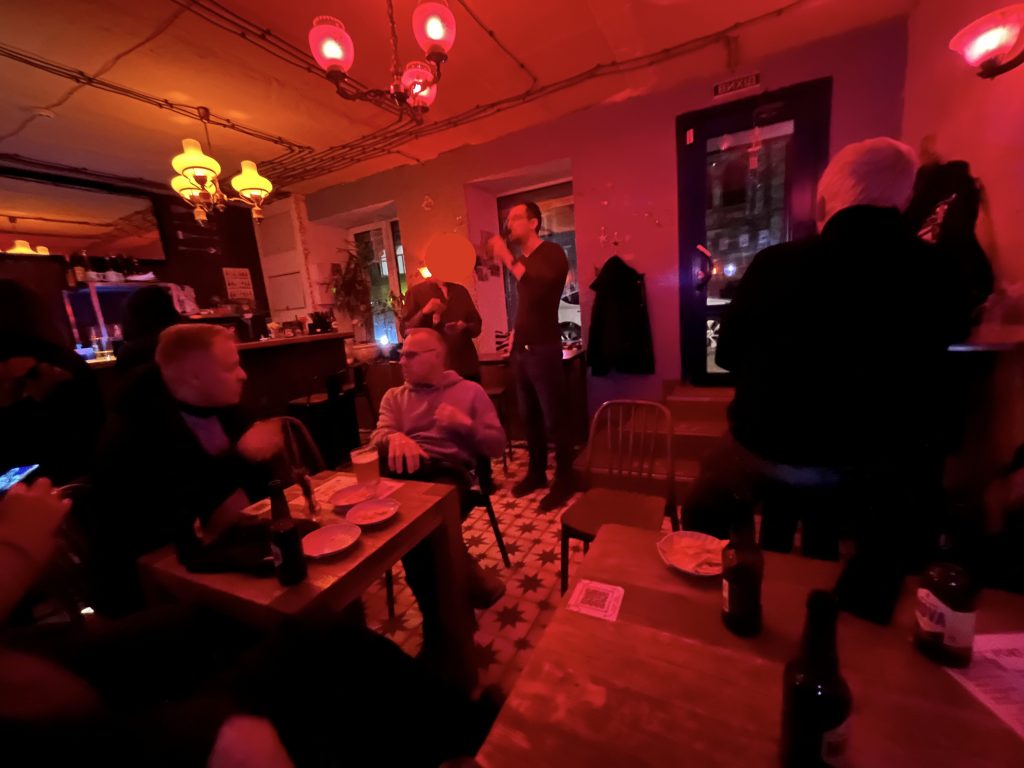
This time, our luck held. In under two hours, our entire column cleared both Polish and Ukrainian customs. After a short break to regroup, we were off to Kyiv. The route goes through Lviv, a traffic nightmare, adding at least an hour to our trip. The second challenge, as Annette had warned us from the trip two weeks before, were the numerous potholes caused by the extreme cold of the historically harsh winter. The highways, usually in decent condition, had been transformed into obstacle courses. Despite our good luck with the weather and at the border, it wasn’t until around 8:30 that we reached our destination. By the time we to the hotel, we discovered that the restaurant was no longer serving. Fortunately, Ruslan had come to meet us and found a local bar that offered at least some snacks. Afterwards, having just settled into our rooms, the air-raid siren sounded, sending us to the shelter, where we had to set up the folding beds—of which there were not quite enough. Yet again, luck was on our side, and the alert was over after only about 20 minutes. We were able to pass the rest of the night in peace.


In Kyiv
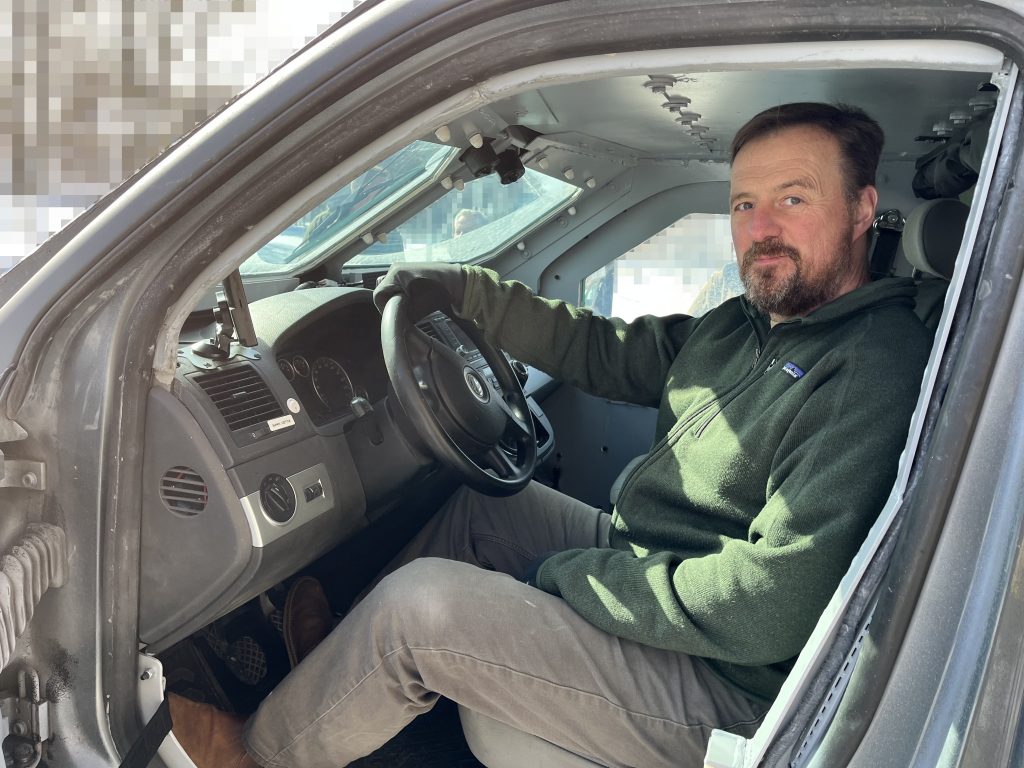
Saturday was the day we had to get a lot done: sort and send the medical supplies, get two vehicles to the workshop for conversion, and hand over the remaining six to the soldiers who would be using them. To do this, we split up our group, with Dave taking the smaller group to the workshop, where they were afforded with the opportunity to see how the conversion from a stock VW bus into a life-saving casevac works. Our partners at 1019.ch funded the two vehicles delivered, continuing the successful cooperation that started last year.
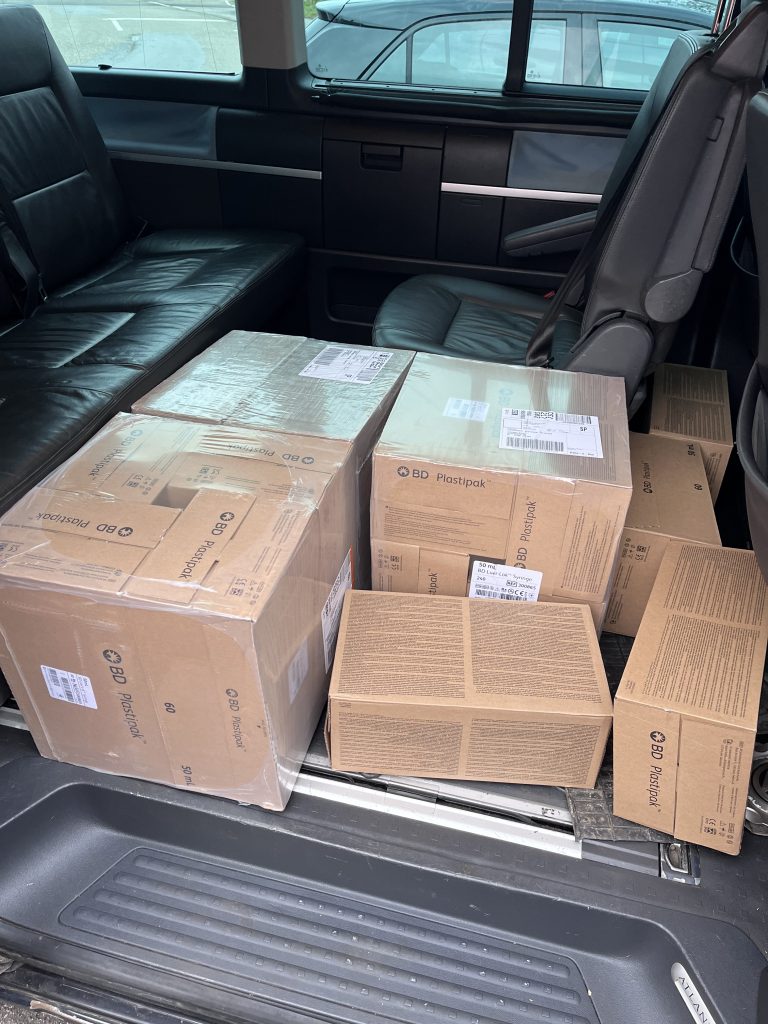
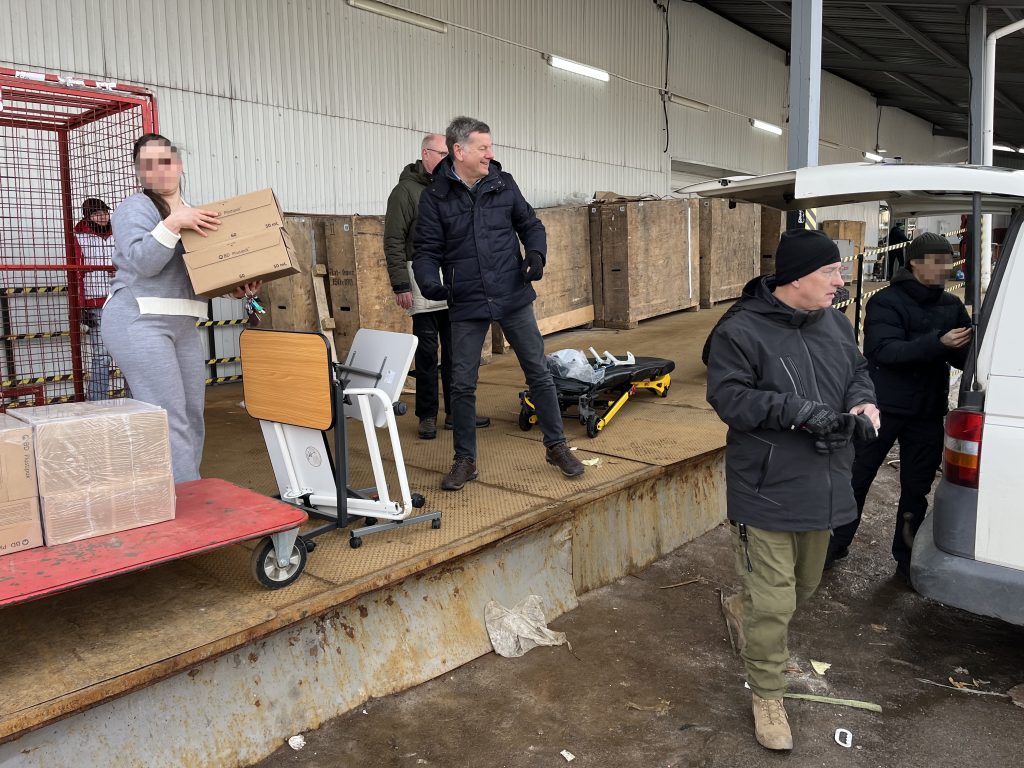
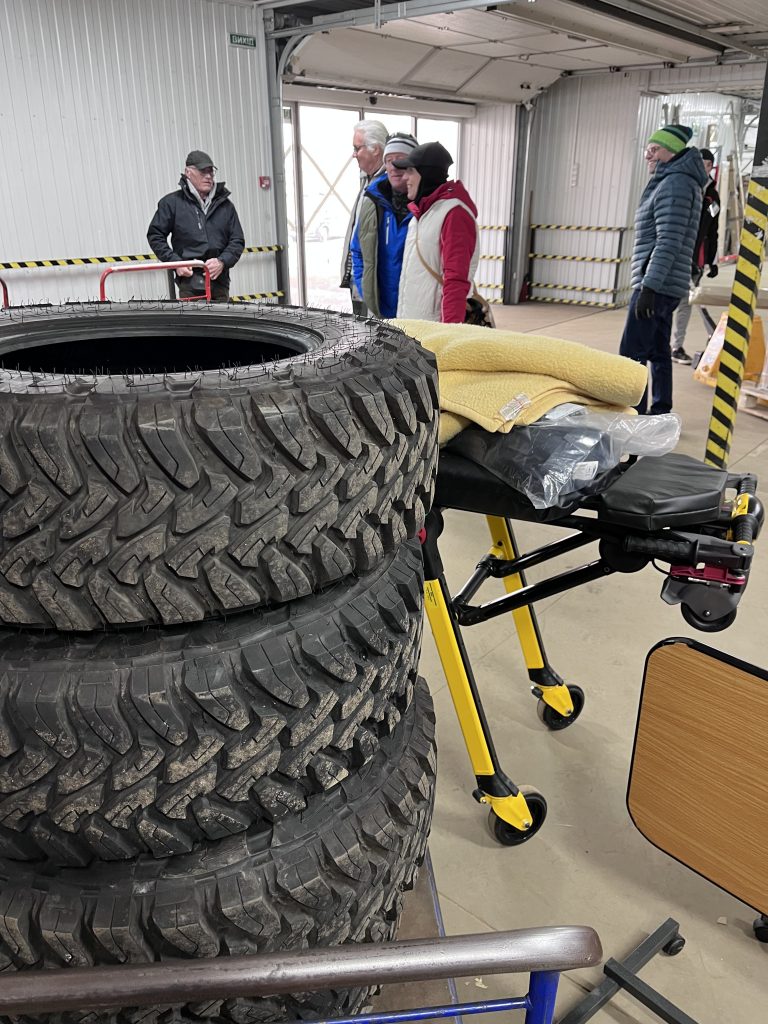
In the meantime, the rest of our group met with Maria Zivert at a branch of Nova Poshta, the logistics provider that is a mainstay of Ukrainian society. Maria, head of our partner organization “Ukraine’s Frontline Hospitals,” swiftly decided which of the medical supplies would go where: syringes and hospital furniture to Kramatorsk, other supplies to Dnipro or to Mykolaiv. In addition, Roman and Fabian F. had obtained a set of tires for a neighbor of Roman’s serving on the northern border of Ukraine. Nova Poshta offers to send humanitarian aid at no charge, a tremendously generous and patriotic contribution to Ukrainian society…and on Monday, the confirmation was already in hand that the tires had reached their destination, yet another striking example of what people can achieve when they put their minds to it.
Our plan was then to return to the Podil neighborhood, have coffee with Maria, and wait an hour or so until the first soldiers showed up to collect their trucks. What I repeatedly fail to take into account, despite long experience doing this, are the enthusiasm and impatience of the guys on “new car day.” Often, the guys show up early, hours early, to get their vehicles. Yet another factor is that they have to get back to work. They get a ride or take a train to Kyiv and then, after collecting the keys and the documents, have to get right back on the road. We had not even reached the café to wait before the first calls came.
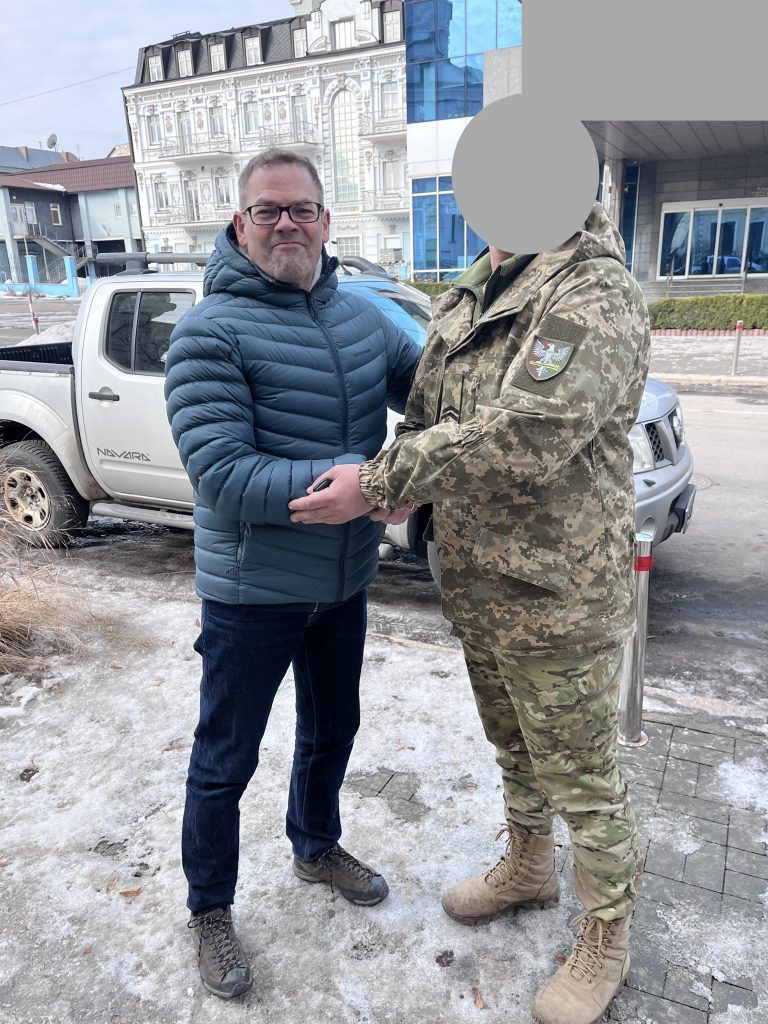
Our first recipient had a personal connection: Mykola, the neighbor of an SAP colleague of ours, Yuriy. Yuriy had asked us several months ago if we could help, and, naturally, we agreed. Mykola, serving in the Coastal Defense, gave a speech describing how much the solidarity of friends and especially friends from abroad are for those serving and how it fuels their determination never to surrender their freedom. Even for me, accustomed to Ukrainians’ outlook, it was a moving experience that brought home what a difference we can make with something as simple as a used car.
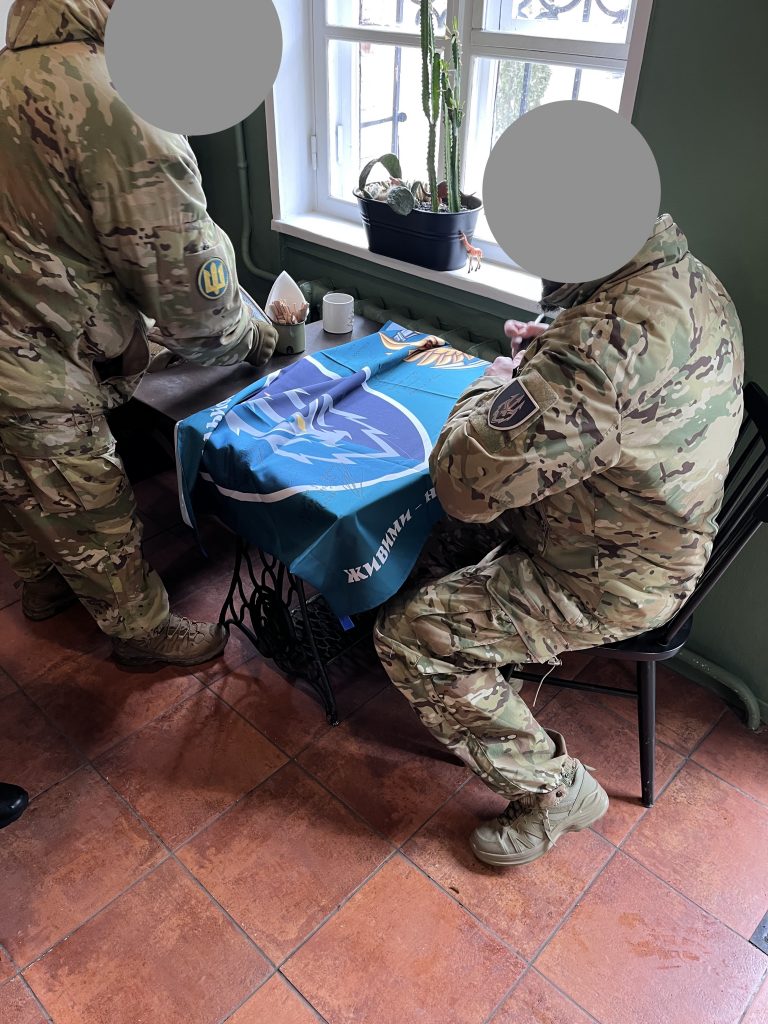
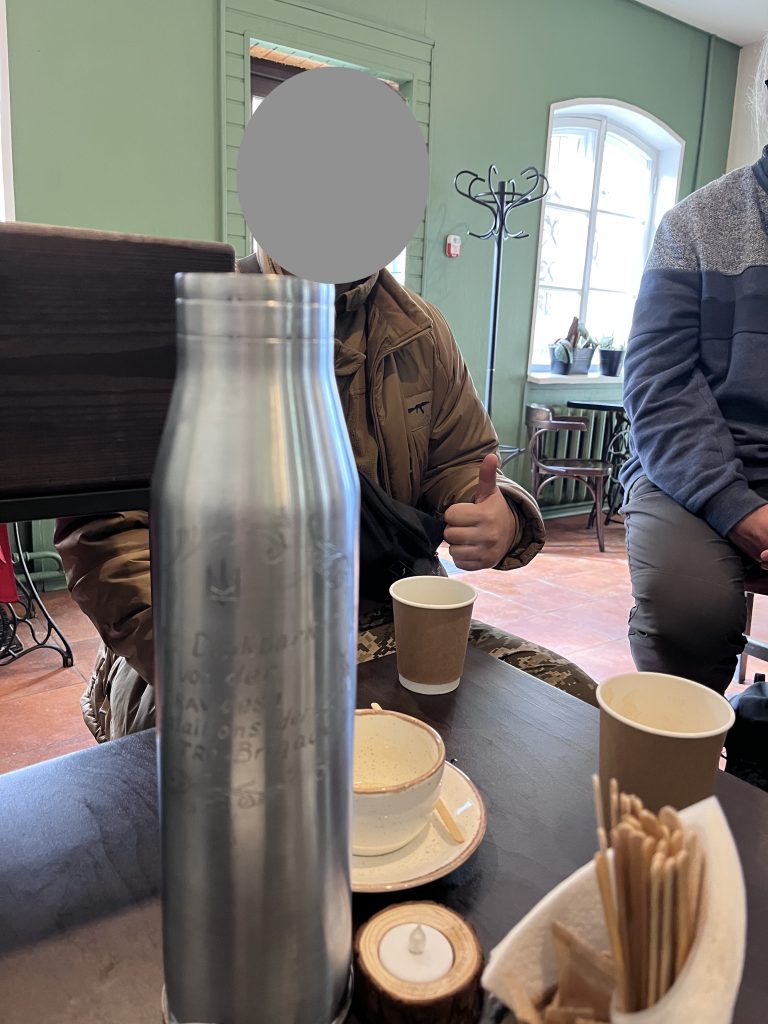
We were still drinking coffee and talking to Mykola when the next “client,” Serhiy, arrived. We originally met Serhiy in 2024 in Kryvyi Rih, and again last year. This acquaintance was the result of a chance encounter. Annette and I had just arrived at our hotel in Lviv two years ago when the hotel employees, recognizing us from previous trips, asked if we could help their friend. Now, we were delivering the fourth vehicle to his Territorial Defense Brigade. Serhiy did not have time to linger, though, since he had to make it to Odessa by that evening. He presented us with a beautiful hand-engraved shell casing that I could not take back to Germany…customs would seize it.
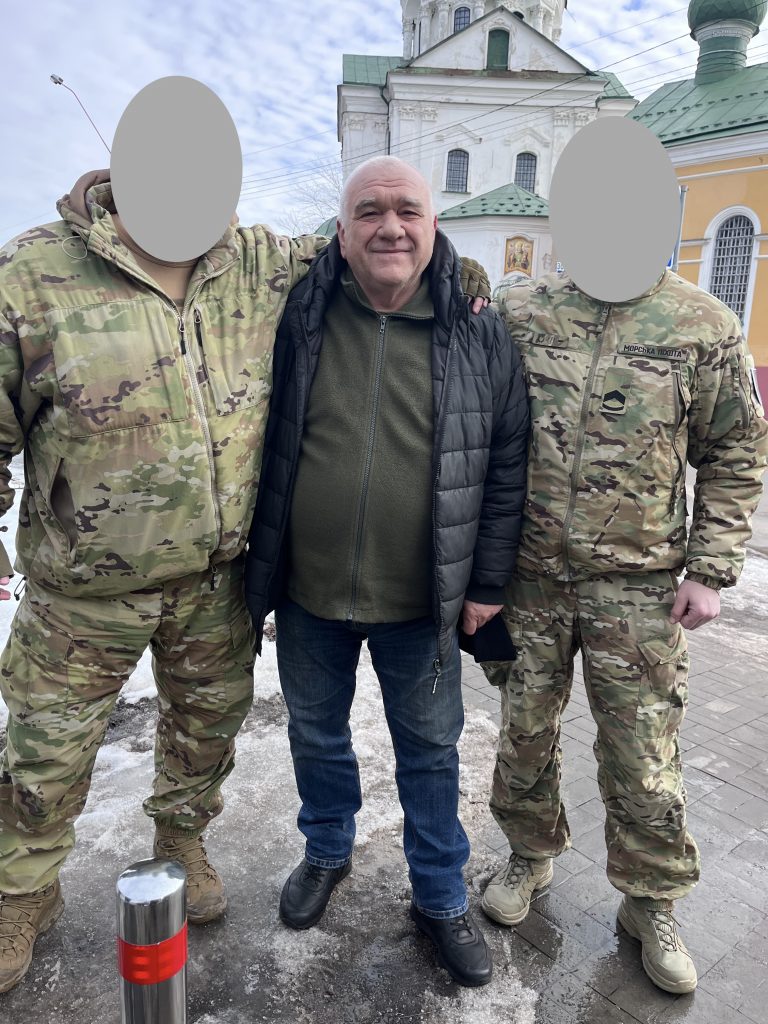
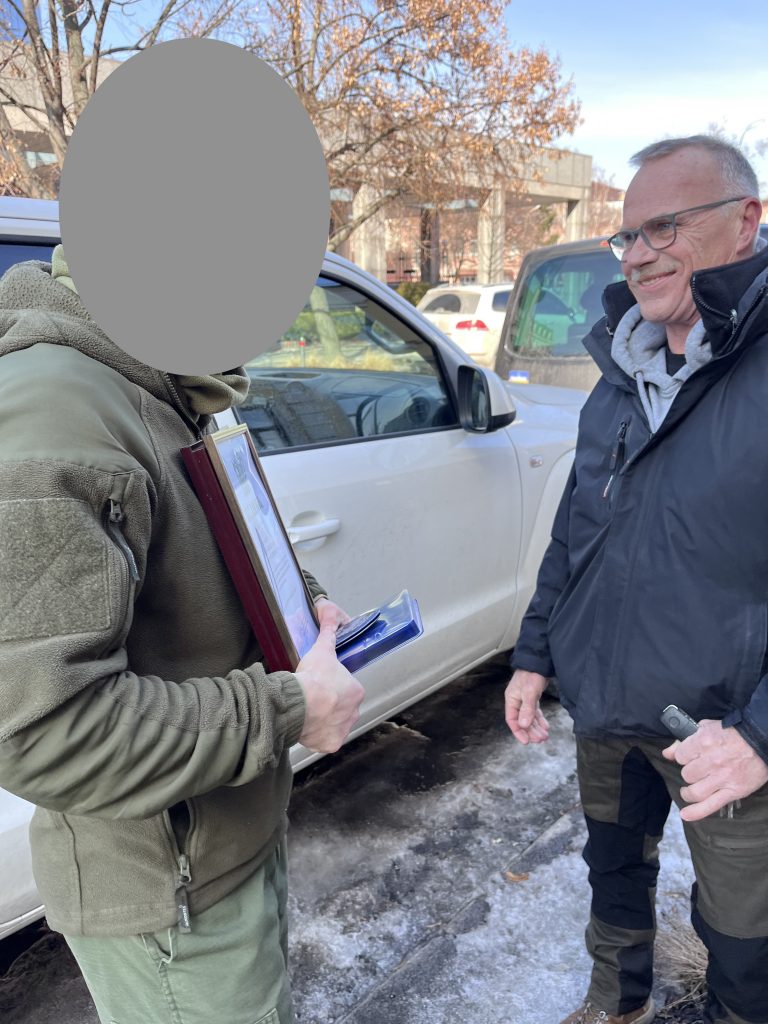
We had originally planned at last to meet in person a friend of another SAP colleague with whom we have been in touch since 2024. Valeriy, serving in Donbas, had to send a substitute, however, because he was recovering in the hospital from a chemical weapons attack. Russians’ use of chemical weapons is an underreported phenomenon of this war, a war crime that is received with a shrug in the west. It was all the more frustrating that our face-to-face meeting was stymied by a war crime. The one good thing that resulted from this replacement is that we got to meet Kyrylo, a soldier from Valeriy’s unit, drone company. Kyrylo speaks excellent English, and he took the time not only to explain to our group why pickups are so important for what they do but also to explain the work of a drone unit. Since he was in town for a couple of days, he was able to answer a lot of our questions, giving us a first-hand view and assessment of what day-to-day life at the front is like. For one of our group, this meeting had special meaning. Frank S., a retired career soldier in the German army and veteran of deployment in Afghanistan, had sold Pickup4Ukraine his VW Amarok pickup (at a generous discount), and, hearing about what we do, decided to join us, drive his truck to Ukraine, and present it to the Ukrainian soldiers who would actually use it. Pickup4Ukraine has from the beginning been about person-to-person contacts; this was the first time, however, that someone presented what had for years been his own vehicle to a Ukrainian soldier. Better than anyone among us, he understands what it means to put one’s own life on the line. Kyrylo and those with him were impressed that Frank came all the way to Kyiv for this occasion and grateful for an excellent pickup!
One more personal experience stood out this day. Since 2023, we have been in contact with the teachers Olena and Volodymyr from the Tulchin region, hearing about their experiences at the front but also about their personal lives from them and from our mutual friends. Word gets around fast at the front that foreign volunteers can help with vehicles, and Volodymyr referred a friend from home serving in the neighboring unit to us. We presented him with a VW bus and had a brief talk about our mutual friend before he had to return east.
By this time, it was late afternoon, and, after coffee and a brief rest, it was time to meet Ruslan for dinner at a craft beer restaurant in Podil. With our work now done, we could now relax and enjoy Kyiv a bit. I had one bit of personal business, though. For a while, I had been wanting to meet the author of an article I read last year on Politico, “Ukraine’s War Effort Relies on Old Pickup Trucks,” Veronika Melkozerova. Veronika regularly contributes pieces military, political, and civil society topics in Ukraine, offering unflinching, trenchant views of Ukrainians’ experiences and attitudes in this long war. It was good to meet her and especially gratifying that Lena had the opportunity to meet and talk to her, reporter to reporter.



Sunday
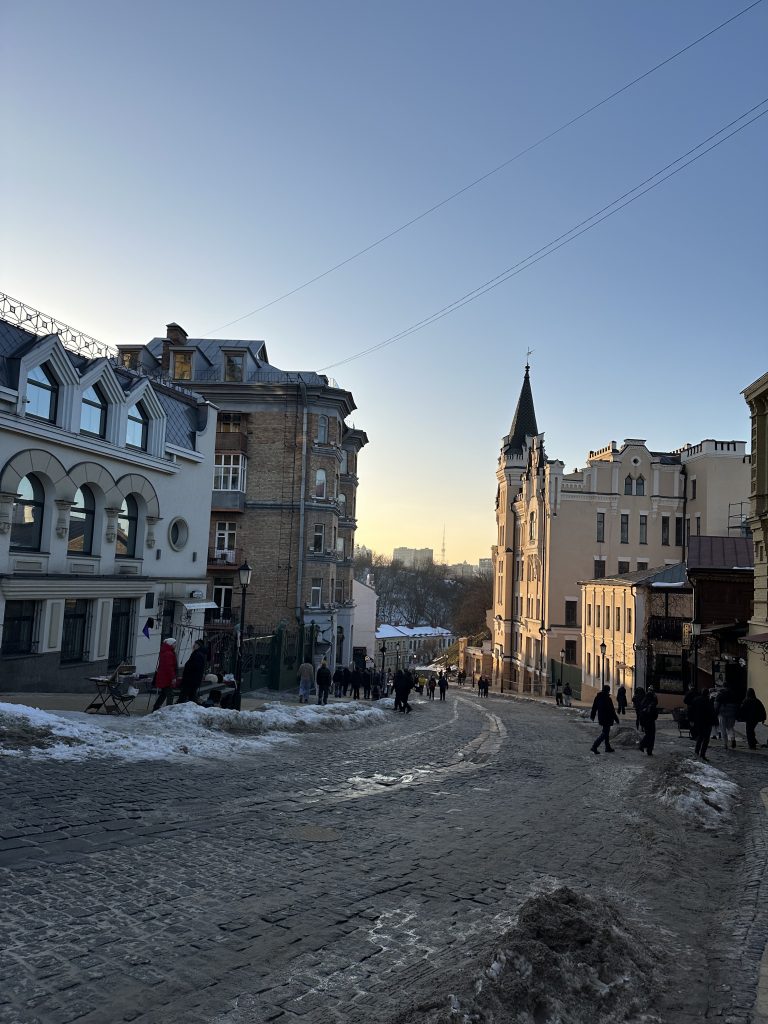
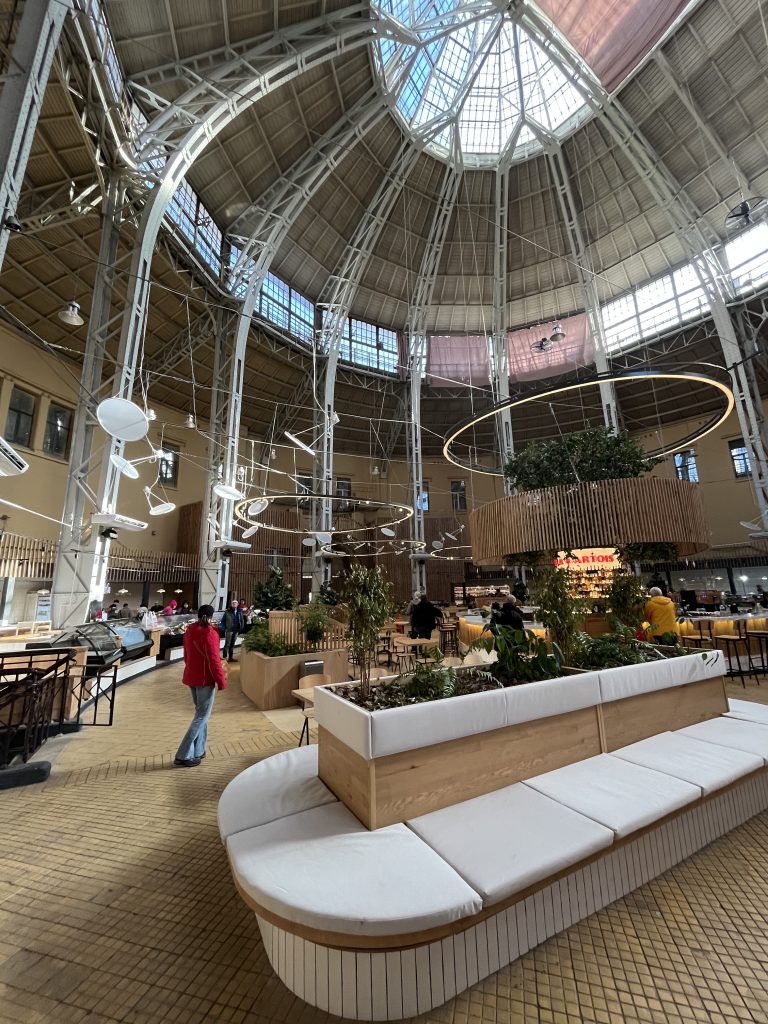
It has become tradition that our friends and colleagues from SAP Ukraine organize an activity to allow us to meet, talk, and get to know Ukraine. On top of all this, they organize our transport to the train station and take our luggage. After the days on the road and a hectic day of handovers, we get treated like royalty and get to see our friends again. This time, we took the metro to Khreshchatyk, where Anna led us past the Maidan (and the soberingly growing field of flags commemorating those killed in the war,) pointing out the historical and architectural highlights on the way to the newly remodeled Bessarabian Market, just recently reopened. This landmark, previously a bazaar offering spices, produce, fresh fish, and meat, has been transformed into something more closely resembling a food court—decidedly upscale and modern, but perhaps lacking a bit of its previous character, something our Ukrainian hosts noted with a twinge of regret.
We then walked to the Museum of the City of Kyiv, where we were confronted by yet another grim reality of this war: the plundering of cultural treasures in occupied Ukraine. The exhibition “The Return of Memory” presented reproductions of artworks the Russians stole from the Kherson Museum of Art in 2022, an act of cultural terrorism. The curator of the exhibition, Dmytro Dotsenko, explained the works and their historical context as well, and he told about the systematic theft of the bulk of the collection. Most of it is now in Crimea. The careful documentation and reproduction of the artworks display with cool precision the sense of loss and the pain of a huge crime. The theft of the Kherson collection, devastating as it is, is just one of countless crimes that will have be solved and accounted for after this war.
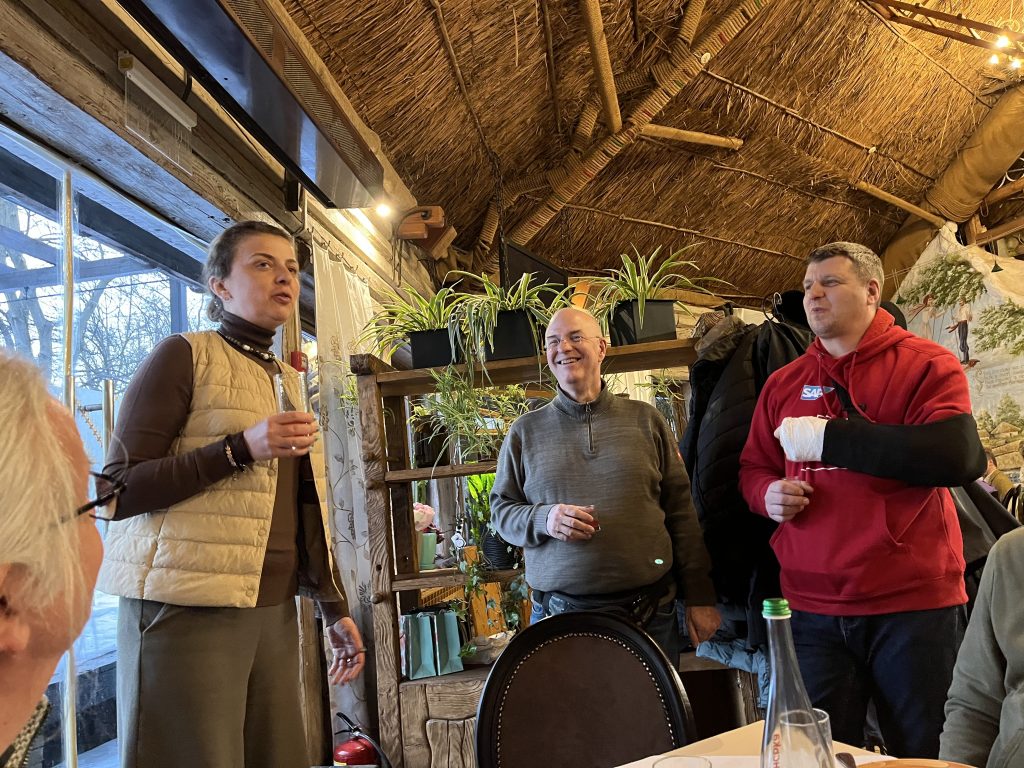
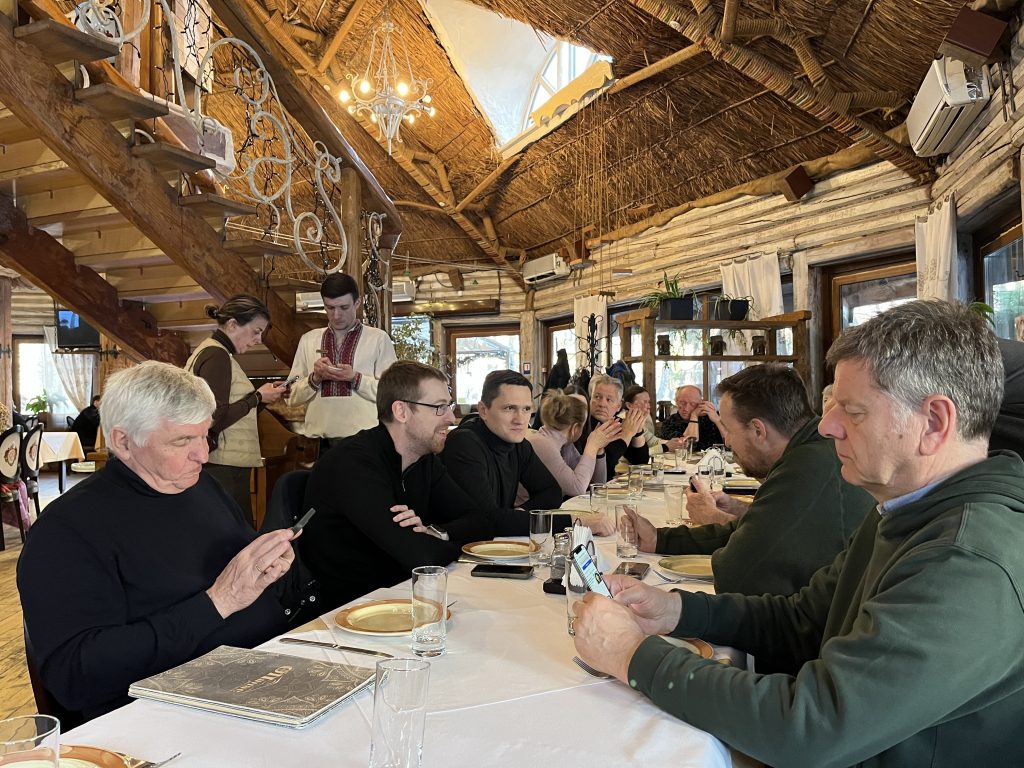
Walking through central Kyiv and enjoying the thaw after the exceptionally cold winter, we made our way to dinner, enjoying conversation with yet more of our colleagues. Anna Mikulytska presented us with plaques commemorating three years of Pickup4Ukraine; during these three years, we have progressed from a project to buy one pickup to an organization working full-time to finance, procure, and deliver vehicles for the Armed Forces, 89 so far.
Taking leave of our friends, we boarded the train and had a mercifully uneventful trip to Przemyśl, arriving very early in the morning, and then taking the connecting train to Kraków, where we had time to look around before heading home.
Over these three years, the thing that is most precious to me is, unfortunately, the thing that is simultaneously the most difficult. It’s personal now. What started out as a compulsion to do the right thing in an abstract sense has turned deeply personal. We have met many, many people over these years, whether they are volunteers, doctors, co-workers, or soldiers. Many are now our friends. When we hear about missile attacks on Ukrainian cities, it is our friends under attack. When a town in Donbas becomes a battleground, our friends are there. When a message from a soldier we know comes over the phone, I hesitate sometimes to open it, fearing bad news. Yet what could be a more powerful motivator than to work for our friends, to know that they are getting something they urgently need? After four years of war, are friends are tired, but they refuse to give up. One of them, Sasha, said this time that he has never felt more optimistic. If he feels that way, so can we. We cannot and will not disappoint them. Spring came early to Kyiv.
Pickup4Ukraine is deeply grateful for the contributions of the many people who contribute to our work, to those who support financially, especially our partners at 1019.ch. All of this is only possible when people put their money where their mouth is. We express our gratitude to Kati and Rainer Siebold for their continued support with medical supplies. Roland C. drummed up support at a Speyer hospital to collect more medical supplies. Through the combined efforts of Andreas P., Dani L., Dave S., Fabian F., Jürgen B., Markus W., Oliver K., Roland C., and especially Roman I., we were able to meet and even exceed our goal and buy a total of twelve vehicles by February—a lot of work. Our friends and partners with Lawyers’ Move, Nadia and Ruslan, as well as Anya, Anya, and Maria from Ukraine’s Frontline Hospitals, made sure we had a smooth entry in to Ukraine.
Sixteen drivers spent their time and their money to take all of these to Ukraine. Our sincere thanks to all of you!


